Inspect Empty Cans Before Filling Problems Start
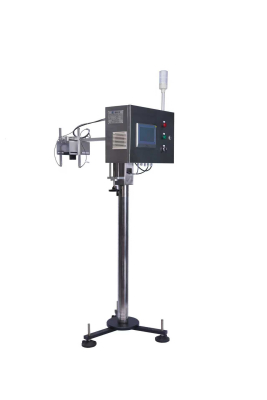
An Empty Can Inspection Machine is most valuable before the filler, where damaged, contaminated, or misshapen empty cans can still be removed before they interrupt the next process. The MT-YLG-KG-C1-01 Empty Can Detector is designed for fully automatic, non-contact, online inspection of two-piece cans from 100 mL to 600 mL, with a rated inspection speed of 1000 cans per minute.

Why Inspection Before Filling Matters
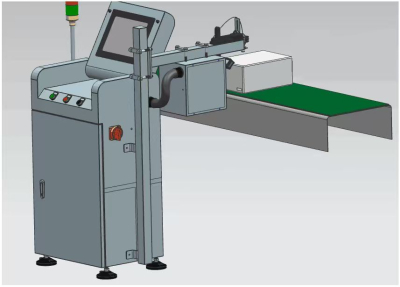
For high-speed canning lines, the inspection point is critical. This Empty Can Inspection Machine is installed on a single-lane conveyor section before the filling machine, allowing defective empty cans to be identified and rejected online. Its inspection scope includes mouth deformation, mouth cracks, V-shaped edge notches, flaps, dents, external contamination, internal foreign matter, and collapsed or under-pressurized cans.
The system applies machine vision technology with an independently developed image inspection system. For buyers evaluating line compatibility, the key point is straightforward: the equipment is intended for packaging lines not exceeding 1000 cans/min and for two-piece cans within the stated volume range.
Core Specifications Buyers Should Confirm
| Item | Specification |
|---|---|
| Equipment model | MT-YLG-KG-C1-01 |
| Equipment name | Empty Can Detector |
| Container type | Two-piece cans |
| Container volume | 100 mL – 600 mL |
| Inspection speed | 1000 cans/min |
| Installation point | Single-lane conveyor before the filler |
| Noise level | ≤85 dB, depending on container type, machine load, and acoustic environment |
| Power supply | 220V, 50Hz, single-phase |
| Total power consumption | Approx. 1.0 kW |
| Control voltage | 24 VDC |
Special voltage requirements should be confirmed in advance because changes may affect equipment specifications, lead time, and pricing. The Empty Can Inspection Machine also requires operating conditions of 5°C–40°C, 50%–65% RH, and an altitude range of 5–3000 m above sea level.
How the System Works Online
The working process of the Empty Can Inspection Machine follows a clear sequence. First, a positioning sensor detects the incoming can, records its ID, and synchronizes encoder data through the control system. Next, the camera captures the can image, and the processor analyzes the inspection result. The result is shown on the HMI and transmitted to the control unit. When a defect is identified, the PLC activates the rejection mechanism to remove the corresponding can.
This workflow supports online inspection without contact with the container. It also keeps defect handling connected to the can ID, helping the system reject the specific defective can detected by the vision station.
Defect Scope and Accuracy
The Empty Can Inspection Machine focuses on the can mouth, can body, inner wall, and bottom area. The can mouth inspection covers curling notches, flange deformation, depression, ovality, and dirt on the edge. The body and internal inspection cover dents, scratches, surface contamination, internal foreign objects, bottom foreign matter, holes in the tank bottom, and collapsed cans.

| Detection area | Defect type | Stated accuracy or threshold | Rejection rate |
|---|---|---|---|
| Can mouth | Curling notch | 1 mm × 1 mm | ≥99.9% |
| Can mouth flange | Upward/downward protrusion or horizontal deformation | ≥2 mm height or ≥4 mm length | ≥99.9% |
| Can mouth | Ovality | ≥1 cm | ≥99.9% |
| Can edge | Dirt | 2 mm × 2 mm, thickness ≥1 cm | ≥99.9% |
| Inner wall | Dirt in middle area | 3 mm × 3 mm, thickness ≥1 mm | ≥99.9% |
| Tank bottom | Foreign matter or hole | 3 mm × 3 mm | ≥99.9% |
| Can body | Deformation | 4 mm, ±1 mm | ≥99.9% |
The listed false rejection rate is ≤0.05%. The inspection method is single-station and single-lens, with strict control of the can mouth, large flat cans, and large foreign objects. Because later processes may include hot water washing and nitrogen filling, the stated detection accuracy for small foreign objects and minor can wall deformation is lower.
Installation Checklist
Before installing an Empty Can Inspection Machine, buyers should prepare a straight conveyor section of 2 m. Cans should maintain approximately 2 cm spacing, without compression or overlap, to support stable inspection. Factory floor flatness, load-bearing capacity, and site conditions should comply with national standards. After delivery, equipment and parts should be stored with proper lubrication and upkeep to prevent damage that could affect installation, commissioning, or operation.
For projects comparing empty container inspection options, the related Can Inspection System page provides additional product context, while the Empty Can Body Detection Machine page presents the same inspection direction in more detail.
FAQs
What cans are suitable for this Empty Can Inspection Machine?
It is suitable for two-piece cans with a container volume range of 100 mL to 600 mL.
Where is the machine installed?
It is installed on a single-lane conveyor section before the filling machine.
What speed does the system support?
The rated inspection speed is 1000 cans per minute, for lines not exceeding 1000 cans per minute.
What power supply is required?
The standard power supply is 220V, 50Hz, single-phase, with total power consumption of approximately 1.0 kW and 24 VDC control voltage.
What conveyor preparation is needed?
A 2 m straight conveyor section is required, and cans should keep about 2 cm spacing without overlap or compression.