Make Carton Coding Errors Visible Before Cases Leave the Line
High-speed paper carton lines can lose traceability fast when an inkjet code is missing, unreadable, duplicated, or printed in the wrong place—or when a straw is missing. An inline inspection station is often the last practical point to catch these issues before products move into secondary packaging.

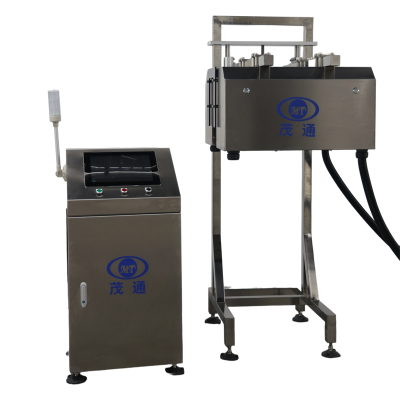
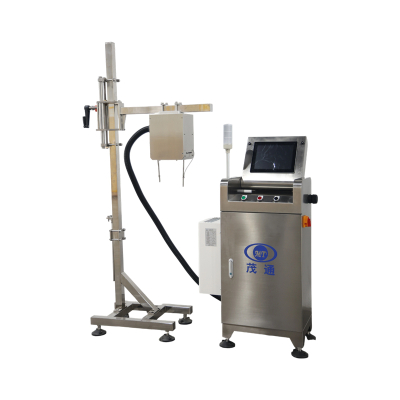
The Tetra Pak Detection Machine is designed for online, non-contact, real-time inspection of paper-packaged products. It combines inkjet printing quality checks, code content verification through character recognition and decoding, straw presence verification, and automatic defective-product rejection in one inline system. The specified throughput supports up to 24,000 packages per hour, aligning with continuous production requirements.
What the Tetra Pak Detection Machine checks inline
The Tetra Pak Detection Machine covers eight inspection functions that focus on printing integrity, code correctness, package orientation, and straw presence.

Code presence and inverted package detection
The Tetra Pak Detection Machine performs code presence verification to identify cartons with missing inkjet printing. It also flags inverted packages, so incorrect orientation can be handled during inline inspection rather than downstream.
Blurred codes, incorrect codes, and missing characters
Inkjet codes can become illegible due to distortion or other printing problems. The Tetra Pak Detection Machine includes the ability to detect blurred codes, identify incorrect code content, find missing characters, and perform character recognition and decoding of printed information. Together, these functions allow the system to evaluate both print quality and code content without contacting the package.
Duplicate codes and position deviation
The Tetra Pak Detection Machine supports duplicate code detection and position deviation detection for printing outside a preset range. This is typically used to keep code placement consistent carton-to-carton and to prevent multi-code issues from entering distribution.
Straw presence verification
Beyond coding, the Tetra Pak Detection Machine provides straw presence verification for missing straws. This enables one station to check both the inkjet code and whether the straw is present, then route defective packages to rejection.
How the inline vision workflow is organized
The Tetra Pak Detection Machine is described as using a positioning sensor, a Gigabit Ethernet digital camera, image-processing equipment, and a rejection controller.
A typical inline sequence is organized as follows:
For production teams, this structure is mainly about two outcomes: real-time visibility through the HMI and contained handling of defects through synchronized rejection.
Integration guidance that keeps rejection accurate
Recommended installation location
The Tetra Pak Detection Machine is specified for installation 0.5–1.0 meters downstream of the tube applicator, enabling simultaneous inspection of both inkjet codes and attached straws.
Encoder-synchronized rejection control
The rejection system is described as using an encoder mounted on the conveyor’s synchronous motor. This arrangement is intended to keep rejection accuracy stable even during line stoppages or speed fluctuations. The Tetra Pak Detection Machine also supports continuous rejection for successive defective packages and automatic line shutdown when preset defect thresholds are reached.
Production features used for daily operation and traceability
The Tetra Pak Detection Machine includes additional functions aligned with long-run stability and audit-friendly production management.
| Tetra Pak Detection Machine capability | What it supports on the line |
|---|---|
| Up to 24,000 packages/hour | Inline inspection at high line speeds |
| 360° inkjet code inspection | Comprehensive coverage with no blind spots |
| Zero-delay detection | Reduced false rejects associated with scratches, jams, or manual handling |
| Daily defect photo storage | Traceability for rejected products |
| Adjustable retention period | Retention aligned with plant requirements |
| Industrial-grade cooling and air conditioning | Stability in extended high-temperature operation |
| 24/7 remote monitoring and control | Remote access to inspection monitoring and operation |
| Multi-level HMI access control | Controlled operation by role |
In practice, plants evaluating a Tetra Pak Detection Machine often focus on whether defect images can be reviewed efficiently and whether rejection remains stable during real production variability.
Where this equipment typically fits in a wider inspection plan
For buyers comparing configurations, the Tetra Pak Detection Machine is commonly considered alongside other inline options in the same family, such as a broader Tetra Pak Inspection Machine category, a dedicated Tetra Pak Straw Detection Machine, or a focused Tetra Pak Code Inspection Machine. Some lines also evaluate straw placement needs via Tetra Pak Straw Position Detection.
For full specifications, installation requirements, and supported inspection functions, refer to the product page for the Tetra Pak Detection Machine.