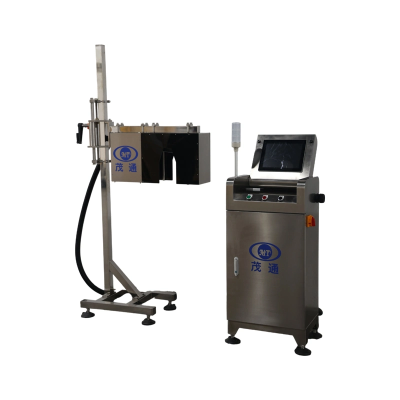
Set Empty Can Inspection Machine Conditions Before Startup
An Empty Can Inspection Machine performs fully automatic, non-contact, online inspection before cans enter the filling stage. For buyers planning a high-speed beverage or food packaging line, the machine itself is only part of the decision. Stable inspection also depends on altitude, temperature, humidity, conveyor layout, storage handling, and factory floor readiness.

Why Site Conditions Matter Before Inspection Starts
The Empty Can Inspection system is designed for two-piece cans with a product volume range of 100 mL to 600 mL. It uses machine vision technology to identify can mouth deformation, dents, foreign particles on the can body, internal foreign matter, and under-pressurized or collapsed cans.
For production lines running at high speed, the Empty Can Inspection Machine should be treated as an inline quality-control station, not a stand-alone accessory. Its specified inspection speed is 1000 cans per minute, and it is intended for packaging lines not exceeding that speed. Proper preparation helps the machine maintain stable image capture, accurate positioning, and reliable rejection of defective cans.
Core Operating Environment Requirements
Before commissioning an Empty Can Inspection Machine, buyers should confirm the following site parameters:
| Requirement | Specified Range |
|---|---|
| Operating altitude | 5–3000 m above sea level |
| Temperature range | 5°C–40°C |
| Relative humidity | 50%–65% RH |
| Noise level | ≤85 dB, depending on container type, machine load, and site acoustics |
| Power supply | 220V, 50Hz, single-phase |
| Total power consumption | Approx. 1.0 kW |
| Control voltage | 24 VDC |
These figures should be checked early in the project. Temperature and humidity affect the operating environment around the image acquisition area, while site acoustics and machine load may influence the actual noise level. If a special voltage is required, it should be confirmed in advance because specifications, delivery time, and price may vary.
Factory Floor And Conveyor Preparation
The factory floor must meet national standards for flatness and load-bearing capacity. This requirement is practical: an uneven or unstable foundation can affect conveying stability, and conveying stability directly supports consistent inspection.
The Empty Can Inspection Machine is installed on a single-lane conveyor before the filling machine. The customer must provide a 2 m straight conveyor section, and cans should maintain approximately 2 cm spacing without compression or overlap. This spacing is critical because the positioning sensor records each incoming can, synchronizes encoder data, and supports accurate matching between the captured image and the rejection signal.

A stable single-lane layout with the correct gap between cans allows the positioning sensor and encoder to work together, so each image and rejection signal is linked to the right container.
The conveyor setup is not just a mechanical detail. At high line speeds, even small spacing inconsistencies can reduce timing accuracy between sensing, image capture, analysis, and reject activation. Early planning on conveyor geometry helps avoid later adjustments during commissioning.
How The Detection Workflow Operates
The workflow of the Empty Can Body Detection Machine follows a clear inline sequence:
1.A positioning sensor detects each can, records its ID, and logs encoder data through the control unit.
2.The camera captures the can image, and the image processor analyzes the result.
3.Inspection results are displayed on the HMI and sent to the control unit.
4.If a defect is identified, the PLC activates the rejection mechanism to remove the corresponding can.
The Empty Can Inspection Machine can inspect can mouth defects such as curling notches, flange deformation, depressions, ovality, cracks, V-shaped edge notches, and flaps. It can also detect dents, scratches or surface contamination, internal foreign matter, and structural problems such as collapsed cans. Under the stated inspection conditions, the listed rejection rate for specified defects is ≥99.9%, with a false rejection rate of ≤0.05%.
Storage Before Installation And Commissioning
Storage is often overlooked, but it can influence installation quality. Upon delivery, all parts and equipment should be stored according to national standards. Adequate lubrication and maintenance are required during storage to prevent surface damage or deformation that could affect installation, commissioning, or long-term operation.
A practical pre-commissioning checklist includes:
Important Inspection Scope Note
This Empty Can Inspection Machine uses a single-station single-lens inspection method. Its main purpose is to control the can mouth with strict precision, large flat cans, and large foreign objects. Because later processes may include hot water washing and nitrogen filling, small foreign objects can be washed away by hot water. For that reason, detection accuracy for small foreign objects and minor can wall deformation will be lower.
FAQs
What container type is suitable for the Empty Can Inspection Machine?
It is suitable for two-piece cans with a volume range of 100 mL to 600 mL.
Where should the machine be installed?
It should be positioned on the single-lane conveyor before the filling machine.
What conveyor condition is required?
A 2 m straight conveyor section is required, and cans should keep about 2 cm spacing without squeezing or overlap.
What is the operating temperature range?
The specified operating temperature range is 5°C–40°C.
What should be checked before storage ends and installation begins?
Check lubrication, surface condition, component protection, floor flatness, load-bearing capacity, conveyor spacing, and site utilities.