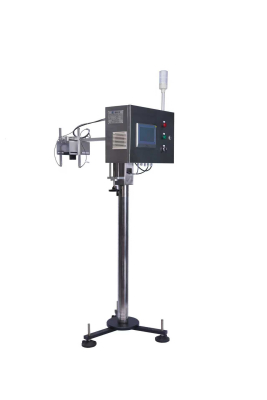
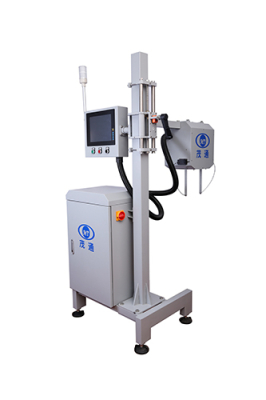
Inspect Empty Cans Before Filling Problems Start
Our Empty Can Inspection Machine is designed for high-speed quality control before the filling station. Using automated, non-contact online inspection, it checks two-piece empty cans for mouth deformation, dents, body contamination, internal foreign matter, and under-pressurized or collapsed cans. For production lines handling 100 mL to 600 mL cans, the system supports a rated capacity of 1000 cans per minute, helping operators remove defective containers before they affect downstream filling and sealing.

The Empty Can Inspection Machine is positioned as an inline vision solution for can makers and beverage or food producers who need consistent, repeatable empty can inspection with minimal operator intervention.
Why Inspect Empty Cans Before Filling
Small container defects can become expensive once cans enter filling, nitrogen filling, washing, sealing, or packaging. A damaged mouth may affect lid fit. A dented body may disturb conveying. Foreign matter inside the can can create quality concerns that are far harder to correct later.
The Empty Can Inspection Machine places inspection before the filler on a single-lane conveyor. This position allows the system to identify nonconforming cans early and trigger automatic rejection before the cans continue into the next production stage.
Core Machine Profile
The system is identified as an Empty Can Detector, model MT-YLG-KG-C1-01. It is suitable for two-piece can packaging lines with speeds up to 1000 cans/minute and is installed upstream of the filling machine.
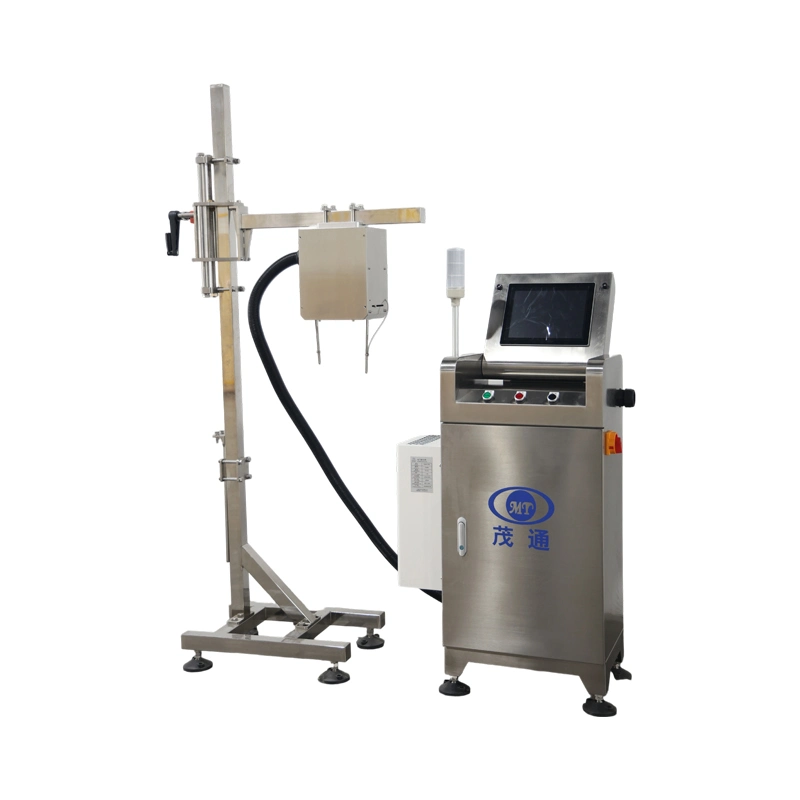
Key parameters of the Empty Can Inspection Machine include:
What the Empty Can Inspection Machine Detects
The Empty Can Inspection Machine focuses on defects that matter most before filling. Its inspection scope includes the can mouth, can body, internal surface, bottom area, and structural integrity.
Main inspection areas
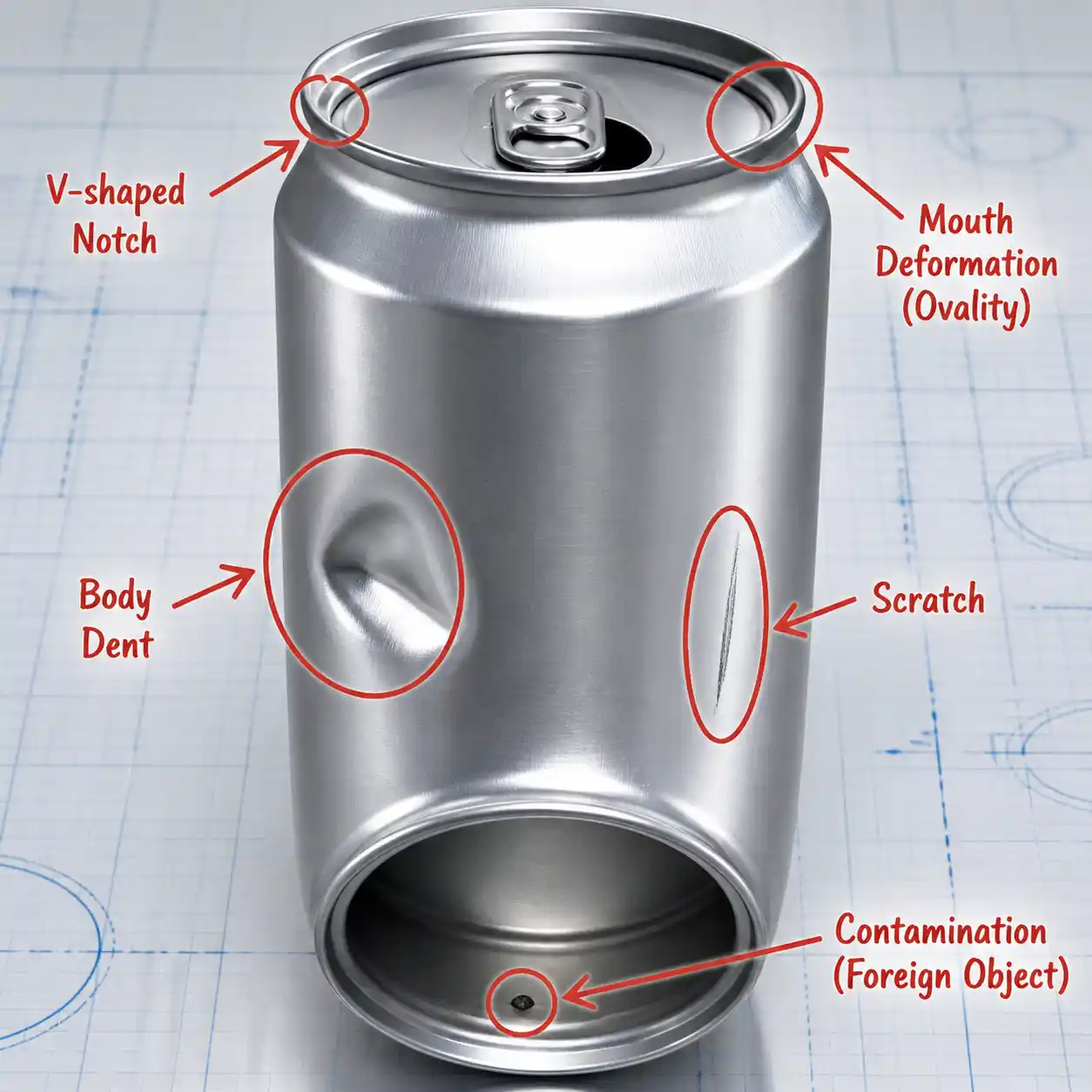
The Empty Can Inspection Machine uses a single-station, single-lens inspection method. Its main purpose is to control can mouth quality with strict precision, while also identifying large flat cans and large foreign objects. Because later processes may include hot water washing and nitrogen filling, the detection accuracy for small foreign objects and minor can wall deformation is lower than for the key controlled defects.
Inspection Workflow
The workflow of the Empty Can Inspection Machine is built around sensor triggering, image capture, processor judgment, and PLC-controlled rejection.
1.A positioning sensor detects each incoming can, records the can ID, and synchronizes encoder data through the control unit.
2.The sensor triggers the camera to capture the can image.
3.The image processor analyzes the image and sends the result to the HMI for real-time display.
4.When a defect is identified, the control system prepares the rejection action.
5.The PLC activates the rejector to remove the corresponding defective can from the line.
This process allows the Empty Can Inspection Machine to support continuous online inspection while keeping rejection tied to the correct can ID.
Installation and Operating Conditions
Stable inspection depends not only on the equipment, but also on the production line conditions around it. The customer site must provide a 2 m straight conveyor section, and cans should maintain about 2 cm spacing without being squeezed or overlapped. This spacing is critical for accurate image capture and reliable rejection.
Site and environment requirements
| Item | Requirement |
|---|---|
| Operating altitude | 5–3000 m |
| Operating temperature | 5°C–40°C |
| Relative humidity | 50%–65% RH |
| Noise level | ≤85 dB, depending on container type, power, and site acoustics |
| Power supply | 220V, 50Hz, single-phase |
| Total power | Approx. 1.0 kW |
| Control voltage | 24VDC |
| Conveyor condition | 2 m straight section with about 2 cm can spacing |
Factory floor flatness and load-bearing capacity should comply with national standards. Equipment and components should also be stored with proper lubrication and protection to prevent corrosion, surface damage, or deformation that could affect installation and operation.
Practical Value for Can Lines
For buyers comparing inspection options, the most important point is whether the equipment matches the actual line speed, container type, installation space, and defect control priorities. The Empty Can Inspection Machine is built for two-piece cans in the 100 mL to 600 mL range and line speeds up to 1000 cans per minute. It is especially relevant when inspection must occur before filling and when defective cans need to be removed automatically without manual sorting.
FAQs
What container type does the Empty Can Inspection Machine support?
It is designed for two-piece cans with a product volume range of 100 mL to 600 mL.
Where should the machine be installed?
The Empty Can Inspection Machine is installed on the single-lane conveyor before the filling machine.
What is the rated inspection capacity?
The rated capacity of the Empty Can Inspection Machine is 1000 cans per minute, suitable for production lines operating at or below this speed.
What defects can it detect?
It detects mouth deformation, cracks, V-notches, flaps, dents, body contamination, internal foreign matter, bottom defects, and under-pressurized or collapsed cans.
What conveyor condition is required?
A 2 m straight conveyor section is required, with cans separated by about 2 cm and not compressed together.