Keep Glass Bottle Filling Accurate With Station One Vision
For glass bottle production lines, a stable liquid level is more than a visual detail. It affects product consistency, downstream handling, and final quality control. Bottle Fill Level Detection is designed to inspect liquid level defects automatically and without contact, helping identify low-level glass bottles before they continue through the line.

Why Bottle Fill Level Detection Matters on Glass Bottle Lines
The Glass Bottle Liquid Level Online Inspection System applies machine vision technology to perform automated, non-contact inspection of liquid level defects in glass bottles during production. In its standard configuration, the system is rated for up to 1,000 bottles per minute and is suitable for glass bottles with filling volumes from 100 mL to 1,000 mL.
For plants running high-speed packaging lines, Bottle Fill Level Detection provides a defined inspection point where each bottle is checked against liquid level requirements. The goal is straightforward: detect low liquid level defects, transmit inspection results to the control system, and support accurate rejection of non-compliant bottles.
Station One Workflow From Sensor Trigger to Rejection
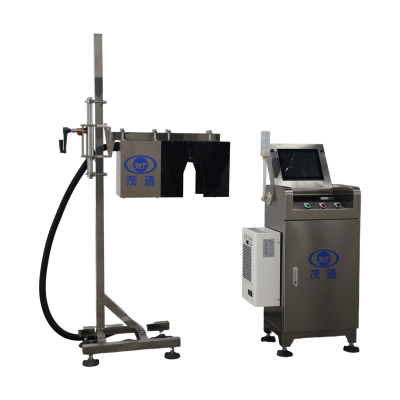
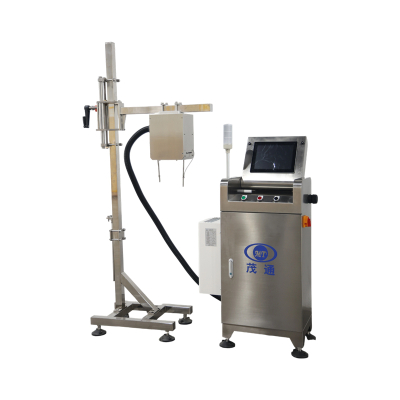
Station 1 is the key inspection point in the system. The camera in Station 1 is responsible for detecting the liquid level of glass bottles, while the positioning sensor, encoder value, control unit, PLC, and rejector work together to maintain bottle tracking.
The workflow follows a clear sequence:

This sequence allows Bottle Fill Level Detection to combine visual inspection with position tracking, which is especially important when bottles are moving continuously at high speed.
Installation Conditions That Support Stable Inspection
For reliable performance, the system is specified for glass bottle packaging lines and is installed on a single-lane conveyor immediately after the filler. The inspection location should include at least 2 cm spacing between adjacent bottles and a 2-meter straight conveyor section without obstructions before the inspection point.
The liquid condition at the detection point is also important. The system requires clear stratification and a visible boundary line between the liquid and the headspace. A distinct boundary gives the machine vision system a stable reference for liquid level analysis and helps improve repeatability in daily operation.
Key Performance and Operating Specifications
The system specification for liquid level inspection is summarized below:
| Specification | |
|---|---|
| Project name | Glass Bottle Liquid Level Online Inspection System |
| Applicable container | Glass bottles |
| Filling volume range | 100 mL–1,000 mL |
| Rated capacity | Up to 1,000 bottles/minute |
| Liquid level accuracy | ±2 mm |
| Rejection rate for low liquid level | ≥99.9% |
| False rejection rate | ≤0.05% |
In daily production, Bottle Fill Level Detection helps teams apply the same inspection criteria across every bottle passing Station 1. The combination of bottle ID, encoder value, and PLC-controlled rejection reduces the risk of removing the wrong bottle when the line is running at speed.
Site and Power Requirements to Check Before Integration
Before installation, the production site should meet the required environmental and electrical conditions. The system is specified for an altitude range of 5–3,000 m, an operating temperature of 5–40°C, and operating humidity of 50–65% RH. Factory floor flatness, load-bearing capacity, and related site conditions should comply with national standards.
Typical electrical requirements include 3 × 380V AC ±10%, 50 Hz, 3PH+N+PE for the main power supply, 220V AC, 50 Hz, single-phase for lighting, and 24 VDC for control voltage. Total power consumption is approximately 1.0 kW, while the specified noise level is ≤85 dB, depending on operating conditions.
FAQs
What does Bottle Fill Level Detection inspect?
It inspects liquid level defects in glass bottles, with a focus on detecting low liquid level conditions through automated, non-contact inspection.
Where should the inspection station be installed?
The system is specified for installation on a single-lane conveyor immediately after the filler, with 2 cm bottle spacing and a 2-meter straight, unobstructed section before inspection.
What role does Station 1 play?
Station 1 contains the camera responsible for detecting the liquid level of glass bottles. It works with the positioning sensor, encoder tracking, control unit, PLC, and rejector to complete the inspection and rejection sequence.
How are defective bottles removed?
If a bottle receives an unqualified result, the PLC sends the instruction to the rejector, which removes the bottle with the corresponding ID at the correct conveyor position.
What bottle sizes are supported?
The system is suitable for glass bottles with filling volumes from 100 mL to 1,000 mL.
What inspection accuracy is specified?
For liquid level inspection, the stated accuracy is ±2 mm, with a rejection rate of ≥99.9% and a false rejection rate of ≤0.05%.