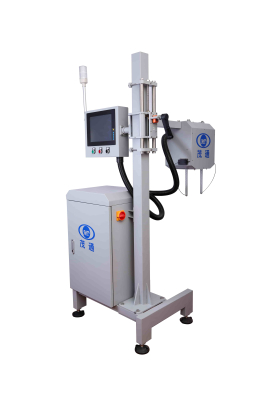
Set Cap and Liquid Level Inspection Machine Utilities Early
A Cap and Liquid Level Inspection Machine is used on bottling and packaging lines to check two quality points that directly affect finished product consistency: cap condition and liquid fill level. For buyers, however, inspection performance is not determined by the machine alone. Before installation, the site utilities must match the required electrical and air supply conditions, otherwise stable startup, signal timing, and rejection performance may be affected.

Core Operating Parameters Buyers Should Confirm
The following operating parameters should be reviewed during line planning, procurement, and commissioning. They define the basic site conditions needed for a Cap and Liquid Level Inspection Machine to operate in a controlled production environment.
| Parameter | Required Condition | Buyer Responsibility |
|---|---|---|
| Power supply | 220V, 50Hz, single-phase | Provided by the customer |
| Total power consumption | Approx. 2.4 kW | Reserve suitable electrical capacity |
| Control voltage | 24 VDC | Confirm compatibility with control components |
| Compressed air supply | Minimum 4 bar, maximum 12 bar | Connect the air supply line to the main unit |
Special voltage requirements should be specified in advance. Changes to voltage standards may affect equipment specifications, delivery time, and pricing, so they should not be left until the final installation stage.
Why Stable Utilities Matter
A Cap and Liquid Level Inspection Machine relies on coordinated electrical control, image acquisition, product tracking, and reject timing. If the incoming power is unstable, lighting and control response may become inconsistent. If the reserved power capacity is too low, the system may not perform reliably during continuous operation. If the compressed air supply fluctuates, defective product removal may become less repeatable.
In practical production planning, these conditions are not minor details. They influence whether the Cap and Liquid Level Inspection Machine can stay synchronized with the conveyor, whether the control unit can process signals correctly, and whether rejected products leave the line at the correct moment. A stable 24 VDC control system inside the Cap and Liquid Level Inspection Machine is especially important because industrial sensors, actuators, and control signals commonly depend on low-voltage automation circuits.
Installation Conditions That Support Accuracy
Operating parameters should be considered together with installation conditions. Similar inspection equipment documentation from Maotong emphasizes level installation, secure cable connection, reliable grounding, stable conveyors, and controlled workshop conditions. For a Cap and Liquid Level Inspection Machine, the conveyor section should be stable and free from vibration or water droplets around the inspection area. A straight conveyor section is also recommended so that bottles pass through the inspection zone in a predictable position.
Environmental planning matters as well. Workshop temperature and humidity should remain within suitable operating ranges, and the equipment should be installed on a floor that supports stable operation. Before startup, operators should confirm that all cables are fixed, the control cabinet is grounded, and the compressed air line has been connected correctly.
Pre Startup Checklist

Practical Buying Takeaway
The Cap and Liquid Level Inspection Machine should be evaluated not only by its inspection purpose, but also by whether the factory can support its operating parameters. Clear confirmation of voltage, total power, control voltage, compressed air, conveyor condition, and installation environment helps reduce commissioning delays and supports more stable daily production.
FAQs
Why does the Cap and Liquid Level Inspection Machine require parameter confirmation before installation?
Because power, control voltage, and compressed air conditions directly affect startup stability, signal response, and rejection timing for the Cap and Liquid Level Inspection Machine.
Who provides the 220V power supply and compressed air connection?
The customer provides the 220V, 50Hz single-phase power supply and connects the compressed air line to the main unit of the Cap and Liquid Level Inspection Machine.
What happens if special voltage is required?
Special voltage requirements should be confirmed in advance because they may affect equipment specifications, delivery time, and pricing.
Is 24 VDC important for inspection equipment control?
Yes. A 24 VDC control voltage supports stable low-voltage communication between automation components in the Cap and Liquid Level Inspection Machine and the rest of the line.
Where is this machine typically considered in a bottling line?
It is generally planned around the filled product inspection stage, where cap condition and liquid level need to be checked before downstream handling.