Visual Inspection Technology for Foreign Objects in Glass Bottles: Principles, Challenges, and Future Outlook
1. Introduction
As glass bottles serve as widely used packaging containers across industries such as food, pharmaceuticals, and cosmetics, the contamination of their interiors by foreign objects constitutes a critical quality issue that must be strictly controlled during the manufacturing process. Foreign objects found within glass bottles may originate from raw materials, the production process, equipment wear, or environmental factors; these include glass shards, metal particles, hair, fibers, insect fragments, plastic scraps, and other debris. Should such foreign objects find their way into the market, they not only compromise product quality and tarnish corporate reputation but also pose a direct threat to consumer health.
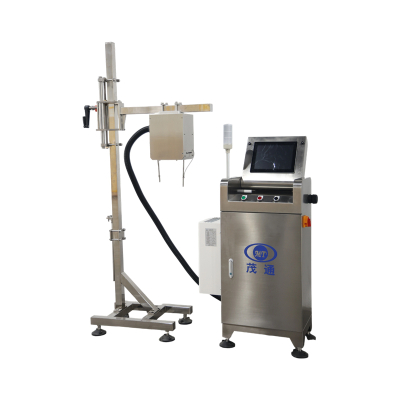
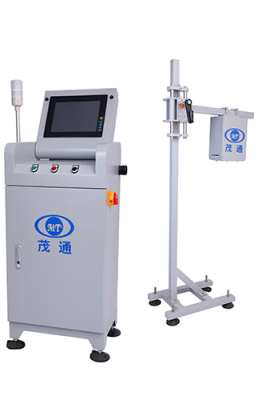
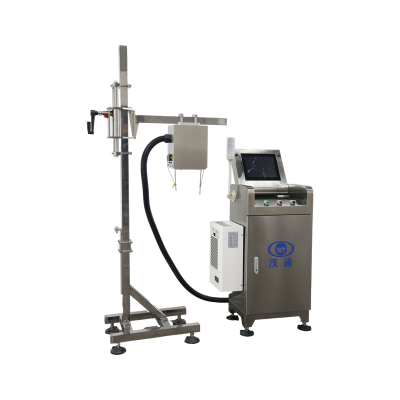
With the advancement of automation in the manufacturing sector and increasingly stringent consumer demands regarding product safety, traditional manual visual inspection methods are no longer sufficient to meet the high-speed and high-precision requirements of modern production lines. Visual inspection technology—distinguished by its non-contact nature, high efficiency, and strong repeatability—has gradually emerged as the mainstream solution for detecting foreign objects in glass bottles. This paper provides a systematic exposition of the technical principles, system architecture, key challenges, and future development trends associated with the visual inspection of foreign objects in glass bottles.
2. Fundamental Principles of Visual Inspection for Foreign Objects in Glass Bottles
2.1 Interaction of Light with Transparent Media
The core physical principle underlying the visual inspection of foreign objects in glass bottles is based on the propagation characteristics of light within transparent media. As light passes through a glass bottle, it undergoes various phenomena, including reflection, refraction, scattering, and absorption. The presence of foreign objects alters these optical effects:
1. Refractive Index Differences: Foreign objects possess a refractive index distinct from that of the glass or the bottle's contents, causing a deviation in the path of light.
2. Light Scattering: Opaque or semi-transparent particles scatter light, thereby creating visible contrast.
4. Absorption Differences: Different materials absorb specific wavelengths of light to varying degrees.
5. Polarization Effects: Certain foreign objects alter the polarization state of light.
2.2 Detection System Workflow
A typical visual inspection system for detecting foreign objects in glass bottles follows this workflow:
1. Image Acquisition: Capturing images of the glass bottles under specific lighting conditions.
2. Preprocessing: Eliminating image noise, enhancing contrast, and correcting distortions.
3. Region Segmentation: Separating the glass bottle region from the background, and identifying sub-regions such as the bottle body, neck, and base.
4. Feature Extraction: Extracting image features that may characterize the presence of foreign objects.
5. Foreign Object Identification: Employing algorithms to determine whether the extracted features correspond to actual foreign objects.
6. Classification and Decision-Making: Determining the type, size, and location of any foreign objects, and rendering a "Pass" or "Fail" judgment.
7. Rejection Execution: Triggering a mechanical mechanism to remove non-conforming products.
3. Components of the Visual Inspection System
3.1 Hardware System
3.1.1 Lighting System
Lighting constitutes the most critical and complex component of the glass bottle foreign object detection process. Common lighting schemes include:
• Backlighting: Suitable for detecting opaque foreign objects, generating high-contrast silhouettes.
• Dark-field lighting: Light is incident at a large angle, allowing only scattered light to enter the camera; suitable for detecting surface defects and minute particles.
• Bright-field lighting: Light is reflected directly into the camera; suitable for observing surface features.
• Coaxial lighting: Light is projected along the camera's optical axis, minimizing glare interference.
• Polarized lighting: Utilizes polarized light to reduce reflections from glass surfaces.
• Multispectral/Hyperspectral lighting: Employs light of specific wavelengths to enhance the visibility of particular foreign objects.
3.1.2 Image Acquisition System
• Industrial Cameras: Typically utilize high-resolution area-scan cameras or line-scan cameras.
• Lenses: Selection based on appropriate focal length, depth of field, and resolution requirements.
• Filters: Used to eliminate interference from specific wavelengths or to enhance contrast.
• Triggering Devices: Ensure that image acquisition is synchronized with the production line.
3.1.3 Motion Control System
• Transport Systems (Conveyor belts, star wheels, etc.)
• Positioning Devices
• Rejection Mechanisms (Air jets, mechanical pushers, etc.)
3.2 Software Algorithms
3.2.1 Traditional Image Processing Algorithms
• Thresholding (Otsu's method, Adaptive thresholding)
• Edge Detection (Canny, Sobel)
• Morphological Operations (Erosion, Dilation, Opening, Closing)
• Template Matching
• Texture Analysis
• Frequency Domain Analysis (Fourier Transform, Wavelet Transform)
3.2.2 Machine Learning Methods
• Feature Engineering + Classifiers (SVM, Random Forests)
• Traditional Object Detection Algorithms
3.2.3 Deep Learning Methods
• Convolutional Neural Networks (CNN) for image classification
• Object Detection Networks (YOLO, Faster R-CNN, SSD)
• Semantic Segmentation Networks (U-Net, DeepLab)
• Generative Adversarial Networks (GAN) for data augmentation
4. Key Technical Challenges and Solutions
4.1 Optical Challenges Posed by Glass Materials
Challenge 1: Surface Reflection and Refraction
The curved surfaces and material properties of glass bottles cause intense reflections, which may obscure actual foreign objects or create visual artifacts.
Solutions:
• Use of polarized lighting and polarization filters
• Integration of multi-angle imaging data
• Use of diffuse light sources to minimize specular reflection
• High Dynamic Range (HDR) imaging
Challenge 2: Bottle Deformation and Optical Distortion
The curved surfaces of glass bottles distort objects located behind them, increasing the difficulty of identification.
Solutions:
• Optical correction algorithms
• Multi-view 3D reconstruction
• Active vision methods
Challenge 3: Interference from Liquid Contents
Colored, turbid, or bubble-containing liquids reduce light transmittance, thereby interfering with detection.
Solutions:
• Optimization of lighting schemes for different types of contents
• Multispectral imaging techniques
• Polarization difference imaging
• Specialized imaging techniques, such as Optical Coherence Tomography (OCT)
4.2 Challenges Related to Foreign Object Diversity
Challenge 4: Wide Variety of Foreign Objects
Foreign objects range from metals and glass to organic matter, exhibiting vast differences in physical properties.
Solutions:
• Multi-modal detection fusion (visible light, X-ray, infrared, etc.)
• Multi-feature recognition fusion
• Hierarchical detection strategies
Challenge 5: Detection of Microscopic Foreign Objects
Microscopic foreign objects (<0.5 mm) approach the resolution limits of the detection system.
Solutions:
• Ultra-high-resolution imaging
• Sub-pixel edge detection
• Digital Image Correlation (DIC)
• Deep learning-based super-resolution reconstruction
4.3 Challenges of the Production Environment
Challenge 6: High-Speed Detection Requirements
Modern production lines can operate at speeds reaching hundreds of bottles per minute.
Solutions:
• High-performance hardware (high-speed cameras, GPU acceleration)
• Algorithm optimization (lightweight networks, model pruning)
• Parallel processing architectures
• Pipelined processing strategies
Challenge 7: Environmental Interference
Factors such as vibration, dust, and temperature fluctuations affect system stability. Solutions:
• Mechanical isolation and vibration damping
• Environmental control systems
• Adaptive algorithms
• Periodic calibration and maintenance mechanisms
5. Advanced Inspection Technologies and Innovative Methods
5.1 Multimodal Fusion Technology
Combining multiple inspection techniques to enhance accuracy:
• Vision + X-ray inspection: X-rays are sensitive to density variations and can detect materials such as metals and stones.
• Vision + Laser scanning: Capturing 3D surface information.
• Vision + Ultrasound: Detecting internal voids and delamination.
5.2 Active Vision and Computational Imaging
• Structured light 3D imaging
• Light field imaging
• Compressed sensing imaging
• Programmable illumination
5.3 Advanced Applications of Artificial Intelligence
5.3.1 Deep Learning for Defect Detection
• End-to-end defect detection networks
• Few-shot learning to address the scarcity of defect samples
• Transfer learning to adapt to different products and production lines
• Self-supervised learning to reduce annotation requirements
5.3.2 Digital Twins and Virtual Commissioning
Establishing digital models of production lines to optimize inspection parameters within a virtual environment, thereby reducing on-site commissioning time.
5.3.3 Anomaly Detection and Active Learning
The system automatically identifies novel defect patterns and proactively prompts operators for verification, continuously refining its inspection capabilities.
6. System Implementation and Evaluation
6.1 Implementation Steps
1. Requirements Analysis: Define inspection standards, production line parameters, and budget constraints.
2. System Design: Select hardware configurations, lighting schemes, and algorithm architectures.
3. Sample Collection: Gather representative samples (including various defects and defect-free items).
4. Algorithm Development and Training: Data annotation, model training, and parameter optimization.
5. System Integration: Hardware installation, software deployment, and communication interface development.
6. Testing and Validation: Offline testing, online testing, and long-term stability testing.
7. On-site Commissioning: Adaptation to the actual production environment.
8. Documentation and Training: Operation manuals, maintenance guides, and personnel training.
9. Continuous Improvement: Data collection, model updates, and performance optimization.
6.2 Performance Evaluation Metrics
• Detection Rate (Sensitivity): The proportion of defects correctly identified.
• False Alarm Rate (Specificity): The proportion of defect-free items incorrectly classified as defects.
• Accuracy: The overall proportion of correct classifications.
• Processing Speed: The number of bottles inspected per minute.
• Reliability: The duration of stable system operation.
• Repeatability: The consistency of results under identical conditions.
7. Industry Applications and Case Studies
7.1 Food and Beverage Industry
• Alcoholic Beverages: Detecting glass shards and cork particles in wine and beer bottles.
• Condiments: Detecting foreign objects in liquid products such as soy sauce and vinegar.
• Canned Foods: Detecting insects, stems, leaves, and similar contaminants in canned fruits and vegetables.
Case Study: A brewery implemented a high-speed vision inspection system combining dark-field illumination with deep learning algorithms. The system achieved an inspection throughput of 800 bottles per minute, with a detection rate of 99.5% and a false alarm rate of less than 0.1%.
7.2 Pharmaceutical Industry
• Injectables: Detecting glass shards, fibers, and particulate matter.
• Oral Liquids: Detecting various types of visible foreign objects.
• Vaccine Vials: Ensuring the integrity of sterile packaging.
Case Study: A pharmaceutical company deployed a machine vision-based ampoule inspection system. The system met GMP requirements, achieved a detection sensitivity of 50μm, and completely replaced manual visual inspection. 7.3 Cosmetics Industry
• Foreign objects in lotions and serums
• Particulates in perfume bottles
• Packaging integrity inspection
8. Future Development Trends
8.1 Trends in Technology Convergence
• Fusion of visual and tactile perception
• Fusion of visual and olfactory sensors
• Integration of embedded AI and edge computing
• 5G + Industrial Internet for remote monitoring and maintenance
8.2 Directions for Algorithm Innovation
• Few-shot / Zero-shot learning
• Explainable AI (XAI) to enhance decision-making transparency
• Self-supervised and unsupervised learning
• Federated learning for data privacy protection
• Novel 3D representations, such as Neural Radiance Fields (NeRF)
8.3 Trends in System Intelligence
• Autonomous optimization of system parameters
• Predictive maintenance
• Adaptive production line adjustments
• Big data analysis and traceability for quality control
8.4 Standardization and Modularization
• Unification of inspection standards
• Standardization of system interfaces
• Modular design for easier upgrades and maintenance
• Cloud-based platform service models
9. Conclusion
Visual inspection technology for detecting foreign objects in glass bottles is a critical technology for ensuring product safety and enhancing production efficiency. Driven by the continuous advancement of optical technology, sensor technology, computing power, and AI algorithms, modern visual inspection systems are now capable of achieving high-speed, high-precision, and highly reliable foreign object detection. However, the unique challenges inherent in inspecting transparent containers persist, necessitating specialized optical designs, innovative imaging methods, and intelligent image analysis algorithms.
In the future, the application of technologies such as multi-modal fusion inspection, embedded AI, cloud computing, and digital twins will further propel visual inspection systems toward becoming more intelligent, flexible, and reliable. Concurrently, the establishment of industry standards, the sharing of inspection data, and the convergence of cross-disciplinary technologies will collectively drive an elevation in the technological maturity of the entire industry.
For manufacturing enterprises, selecting an appropriate visual inspection system requires a comprehensive assessment of product characteristics, production requirements, investment budgets, and technical support capabilities. A successful implementation demands not only an advanced technical solution but also deep integration with existing production processes, as well as continuous technical support and optimization. As technology advances and costs decline, visual inspection technology is poised to become a standard configuration for an increasing number of glass packaging manufacturers, providing a robust safeguard for consumer product safety.