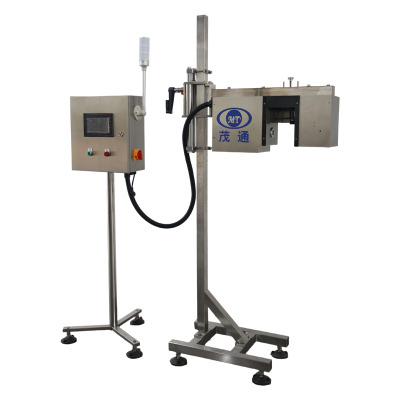
What is Visual Sorting?
Simply put, visual sorting is akin to equipping the machinery in a factory or logistics center with a pair of "keen eyes" and a "super brain." It employs machine vision technology to replace human observation and utilizes AI algorithms to replace human judgment, thereby directing robotic arms or sorting equipment to classify and organize mixed items—at high speed and with pinpoint accuracy—based on preset rules (such as size, color, shape, type, quality, etc.).
This technology represents a landmark application in industrial automation and intelligent manufacturing, fundamentally transforming the inefficient traditional models that relied on manual labor or rudimentary mechanical screening.
To provide you with a more intuitive understanding, we can break down the visual sorting system into three core components—essentially its "eyes," "brain," and "hands":
1. The System's Three Core Components
• 👁️ The "Eyes" — The Image Acquisition System
This component primarily consists of industrial cameras, lenses, and specialized lighting sources. As items travel along a conveyor belt through the inspection zone, the cameras capture images at extremely high frame rates (even generating 3D images). Meanwhile, the specialized lighting eliminates shadows and glare, ensuring that the captured images are crystal clear and feature-rich, thereby providing high-quality "raw data" for subsequent analysis.
• 🧠 The "Brain" — The Image Processing and Algorithm System
This constitutes the very core of the visual sorting system. Upon receiving images transmitted by the cameras, the computer rapidly executes image processing algorithms (such as noise filtering and edge detection) and deep learning models (such as Convolutional Neural Networks, or CNNs). In a split second, it identifies and locates objects, calculates their precise coordinates and spatial orientation, and determines which specific category each object belongs to.
• The "Hands" — The Sorting Execution Mechanism
Once the "brain" has made its decision, it issues commands to the "hands." These "hands" can take various forms: highly versatile industrial robots (robotic arms), powerful pneumatic valves (such as those used to blow away defective sunflower seeds), or agile diversion flaps. Their role is to precisely grasp or divert the identified items into their designated zones. Of course, orchestrating this entire collaborative process requires a "nervous system"—specifically a PLC (Programmable Logic Controller)—to manage the overall timing and communication flow.
2. How Does It Work? (The Four-Step Process)
A complete visual sorting cycle typically takes only a fraction of a second, and the workflow is remarkably fluid:
1. Perception Trigger: A photoelectric sensor detects that an item has reached a designated position and signals the camera to capture an image.
2. Image Analysis: The camera captures the image, and a computer instantly analyzes it to identify the item's type and precise spatial coordinates.
3. Coordinate Conversion: The computer translates the image coordinates into "spatial coordinates"—a language that robotic manipulators can understand.
4. Precise Execution: The robotic manipulator or sorting mechanism springs into action, accurately grasping or rejecting the target object.
3. Where Does Visual Sorting Shine?
Visual sorting has quietly permeated every facet of our lives; wherever there is a need to "pick and choose" items, you can almost certainly find it at work:
• Logistics & Express Delivery: Faced with a daily deluge of packages, the system identifies items by scanning shipping labels or assessing package dimensions, directing robotic arms to route them to the appropriate provincial chutes—achieving an efficiency level dozens of times greater than manual labor.
• Agriculture & Food Processing: For instance, performing a "physical exam" on fruit: the system can determine an apple's color and size in milliseconds—even detecting minute surface blemishes—and precisely categorize the fruit into "premium," "standard," or "defective" grades.
• Industrial Manufacturing: On assembly lines, the system can spot at a glance which parts are installed incorrectly or which gears are missing a tooth, then direct robotic arms to ruthlessly cull the defective items.
• Environmental Recycling:By integrating deep learning technologies, the system can accurately distinguish between various materials—such as plastic water bottles, aluminum cans, and waste paper—within a pile of refuse, thereby significantly boosting the purity and efficiency of waste recycling operations.
In Summary:
Visual sorting is not merely about enabling machines to "see," but rather about empowering them to "think" and "act." It not only liberates humans from tedious and arduous sorting labor but, with its ultra-high speed (hundreds or even thousands of operations per minute) and astonishing accuracy (exceeding 99.9%), has established itself as an indispensable core technology in the realms of modern intelligent manufacturing and smart logistics.