What is Easy-Open Lid Inspection Equipment?
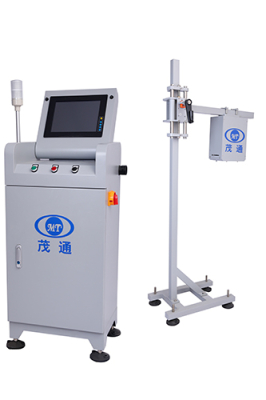
The term "Maotong Easy-Open Lid Inspection Equipment" does not refer to a single specific machine; rather, it denotes a comprehensive series of automated, in-line quality inspection systems developed and manufactured by Maotong Technology (Beijing) Co., Ltd. and its affiliates (such as Jinan Maotong Inspection Equipment Co., Ltd.) for use in the production and packaging lines of easy-open cans (both two-piece and three-piece varieties).
Simply put, these systems act as "intelligent quality control inspectors" within beverage and canned food factories. Operating on high-speed production lines, they are dedicated to meticulously monitoring every detail related to the easy-open lids; should any defect be detected, the faulty product is immediately rejected to prevent non-compliant goods from reaching the market.
Depending on the specific inspection parameters required, this category of equipment primarily encompasses the following core types:
1. Easy-Open Lid Sealing and Leakage Inspection Machines
These devices are specifically designed to rigorously verify the sealing integrity of easy-open lids, primarily inspecting the seal quality of metal caps or screw-on closures.
• Inspection Criteria: Missing caps, misaligned caps, seal leakage (air/gas escape), and excessive internal can pressure.
• Core Value: If an easy-open lid leaks, the beverage or food product inside will quickly spoil. This equipment effectively intercepts these "ticking time bombs," thereby preventing food safety incidents and averting potential crises regarding brand reputation.
2. Easy-Open Can Liquid Level Inspection Machines (In-line Fill-Level Checkers)
These systems serve as non-contact "liquid level gauges," typically employing high-frequency radiation or X-ray technology to verify whether the fill volume of the canned product meets established standards.
• Inspection Criteria: Overfilling (which can lead to can rupture during the sterilization process) or underfilling (which constitutes short-weighting or product shortage).
• Core Value: Boasting extremely high precision (accurate to within 0.75 mm), these machines can accurately identify underfilled—or "skimped-on"—cans, even when the production line is running at full capacity, processing thousands of cans per minute.
3. Easy-Open Lid Pressure and Deformation Inspection Machines
These devices primarily utilize surface scanning technology to perform a "physical examination" of the easy-open lids, assessing whether their physical form and structural integrity meet quality standards.
• Inspection Criteria: By detecting minute deformations in the lid following the sealing process, the system can infer whether the internal can pressure is within the normal range or if the capping process has inadvertently caused any latent structural damage. • Core Value: Prevention is better than cure; it proactively intercepts defective products—such as those prone to leakage or bursting—before they ever reach the retail shelves.
4. Empty Can Mouth Inspection Machine
This is a screening device positioned at the very beginning of the production line, specifically designed for empty cans prior to filling.
• Inspection Scope: Checks for defects such as nicks or deformation at the can mouth, foreign object residue at the base, severe dents in the can body, and other anomalies.
• Core Value: Prevents substandard empty cans from entering the filling stage, thereby safeguarding expensive filling machinery from potential damage while simultaneously minimizing raw material waste.
💡 In Summary:
These devices act as a layer of "digital armor" for the beverage cans. In the past, this task relied entirely on manual labor—inspectors using flashlights to examine each can individually—a process that was not only physically exhausting and visually fatiguing but also highly prone to human error. By leveraging machine vision, radiation sensing, and high-performance computing chips, Maotong’s inspection equipment operates tirelessly and is perfectly capable of meeting the demands of ultra-high-speed production lines processing tens of thousands of cans per hour. This truly empowers food and beverage manufacturers to achieve significant cost reductions, boost operational efficiency, and establish a robust, closed-loop quality control system.