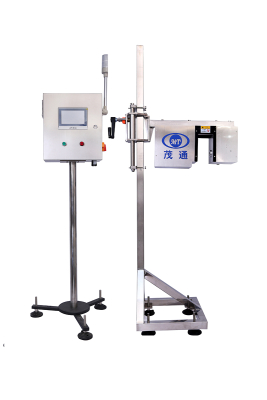
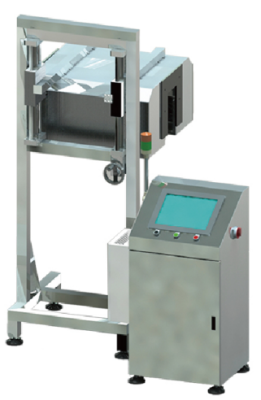
what's PET Label Vision Inspection Machine?
To put it simply, the PET Label Vision Inspection Machine is like equipping a PET bottle production line (for mineral water, beverages, cooking oil, etc.) with a pair of "eagle eyes" combined with "lightning-fast reflexes."
It is an automated inspection system based on machine vision technology. It acts as a super-quality inspector designed to replace the human eye, monitoring every label on PET bottles in real-time on high-speed production lines. The moment it detects a flaw or error, it instantly and accurately ejects the defective product from the line.
To give you a clearer understanding, we can break down this equipment from the following perspectives:
🔍 How Does It "See"? (Working Principle)
If we compare this system to a human, its workflow mimics human visual response mechanisms:
Eyes (Hardware Acquisition): The device is equipped with high-resolution industrial cameras and specialized LED lighting. As PET bottles pass on the conveyor belt, the cameras capture images at extremely high frame rates. Some systems use multiple camera setups around the bottle to ensure 360-degree, dead-angle-free capture.
Brain (Algorithm Analysis): The images are transmitted in real-time to image processing software. The system compares the live images against a preset "perfect template," using algorithms to instantly identify deviations as small as millimeters.
Hands & Feet (Precise Rejection): Once the system determines a label is defective, it immediately sends a command to the rejection unit (such as a pneumatic pusher or air blast valve) to "kick" the faulty bottle off the line at the exact rejection point.
🛠️ What Specific Flaws Can It Detect? (Core Functions)
In actual production, labeling machines occasionally malfunction. This inspection machine serves as the final line of defense, precisely intercepting common defects such as:
Incorrect Position: Labels that are skewed, too high, too low, or missing entirely (no label).
Appearance Damage: Wrinkled labels, bubbles, torn edges, damage, or perforations.
Splicing Errors: Duplicate splice joints or misaligned labels.
Printing Defects: Blurred printing, scratches, dirt specks, or—most critically—incorrect text/patterns.
💡 Why Are Factories Increasingly Dependent on It? (Application Value)
In the past, factories relied on workers for random visual inspections on the line, which is an "anti-human" task. At speeds of hundreds of bottles per minute, human eyes fatigue easily, leading to high escape rates. Introducing a PET Label Vision Inspection Machine brings disruptive changes:
Eliminate Complaints & Protect Brand Reputation: It catches tiny skews or printing flaws invisible to the human eye, drastically reducing the chance of defective products reaching the market.
Cost Reduction & Efficiency: One machine can replace multiple quality inspectors, saving rising labor costs while operating 24/7 without fatigue, removing production bottlenecks.
Flexible Production & Data Traceability: Modern devices feature smart touchscreens; switching between product models is as simple as selecting a recipe. Simultaneously, it silently logs daily rejection data (type and quantity), providing valuable insights for optimizing production processes.
In summary, the PET Label Vision Inspection Machine is far more than just a "defect ejector"; it is an essential tool for modern packaging enterprises advancing toward intelligent and refined management.