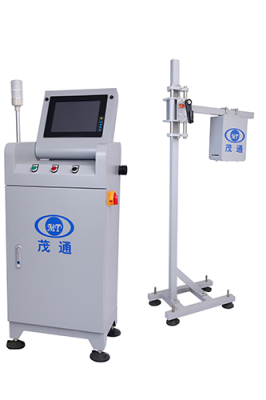
Why Tetra Pak Straw Pipette Detection Matters at 24000 Packages Per Hour
In paper-carton beverage packaging, a missing straw or an unreadable inkjet code can quickly turn into a rework problem, a traceability gap, or a customer complaint. Tetra Pak Straw Pipette Detection is an inline inspection and rejection approach designed to catch these issues as cartons move down the conveyor—without interrupting production flow.

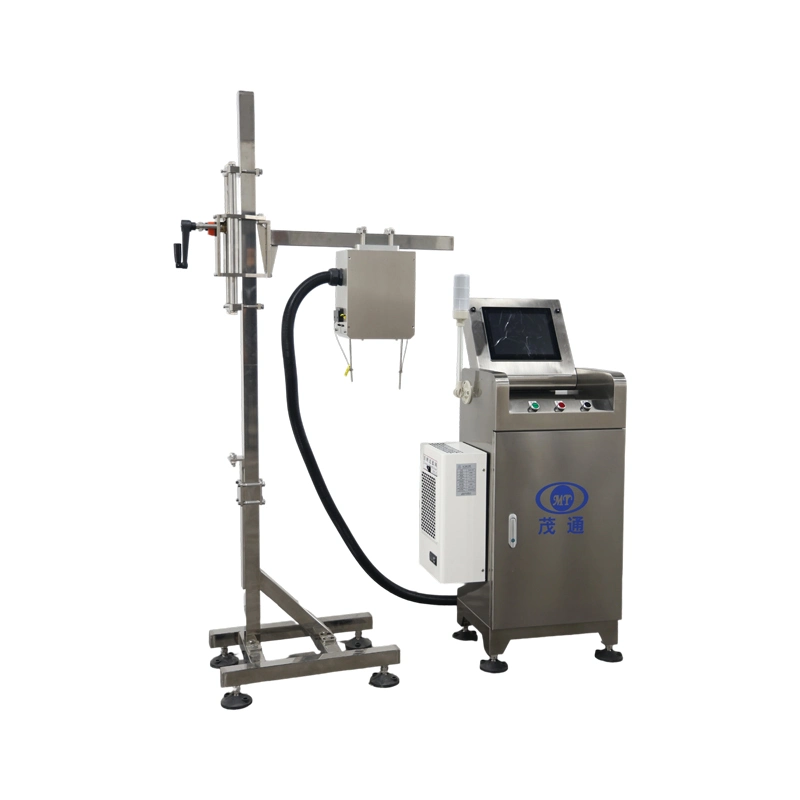
What the system is designed to inspect
Tetra Pak Straw Pipette Detection is positioned for paper packaging production lines where both inkjet printing quality and straw integrity must be checked inline. The system is described as being used on paper-packaged beverage production lines to inspect:
For buyers comparing options, the key point is that Tetra Pak Straw Pipette Detection treats the code and the straw as a single quality gate, so nonconforming cartons can be removed before they travel further downstream.
How camera vision, processing, HMI, and rejection stay synchronized
A defining feature of Tetra Pak Straw Pipette Detection is the end-to-end signal path that ties imaging to action.

1) Triggering and top-view image capture
As each package passes a positioning sensor, the system detects the carton’s arrival, logs the package ID, and records the real-time encoder signal. A Gigabit Ethernet digital camera then captures a top-view image covering the inkjet code and straw area.
2) Network transmission and image analysis
Captured images are transmitted via the network to the image processor for analysis. This is where Tetra Pak Straw Pipette Detection evaluates inkjet printing quality and straw presence in real time.
3) Parallel outputs to HMI and the control unit
After analysis, the results are sent simultaneously to:
This split helps keep operator visibility and rejection decisions aligned to the same inspection result.
4) Automatic rejector action without stopping the line
If the control unit receives a defect signal, it instructs the rejector to automatically remove the identified defective package(s) from the production line without interrupting production flow. In practice, this is the operational outcome many teams expect when evaluating Tetra Pak Straw Pipette Detection for continuous production environments.
Throughput and stability controls buyers typically check
The product information for Tetra Pak Straw Pipette Detection lists two speed-related points that should be interpreted carefully:
To keep rejection timing stable, an encoder-based counting system mounted on the conveyor’s synchronous motor is described as ensuring rejection accuracy is unaffected by production line stoppages or changes in conveyor speed.
Additional described features that support stable inspection conditions include independent lighting (to avoid natural light impact), IP65 protection, industrial-grade cooling and air conditioning for high-temperature environments, defect image storage with adjustable duration, smart rejection with emergency line stop, and 24/7 remote access for monitoring and operation.
Detection performance figures and how to read them
For procurement and quality teams, Tetra Pak Straw Pipette Detection is accompanied by a set of theoretical experimental performance figures.
| Inspection item | Testing condition | Rejection rate | False kick rate |
|---|---|---|---|
| Inkjet printing inspection | (overall) | — | ≤ 0.03% |
| No inkjet printing (missing code, reversed package) | — | ≥ 99.99% | — |
| Missing / blurred inkjet printing | Overall code missing > 50% | ≥ 99.99% | — |
| Missing / blurred inkjet printing | Overall code missing > 30% | ≥ 99.96% | — |
| Incorrect inkjet printing | Code characters unreadable to the human eye | ≥ 99.93% | — |
| Position offset | Incorrect production date, factory code, security code, or deformation | ≥ 99.99% | — |
| Duplicate code | Exceeding the expansion zone | ≥ 99.99% | — |
| Straw inspection | Multiple codes printed within the code area | ≥ 99.99% | — |
| Missing straw | No straw | ≥ 99.99% | ≤ 0.01% |
The same product information notes that rejection rates are theoretical experimental data (for example, a “No Coding” test suggests that for every 10,000 uncoded packages tested, one might theoretically not be rejected). It also states that the listed test items are evaluated in real time for each paper package, not only during shift changes.
Changeovers and carton model adaptation using deep learning
Tetra Pak Straw Pipette Detection is described as employing a deep learning approach intended to minimize manual intervention. When switching product models on site, about 300 product images are collected for data collection, and the data model is constructed by Jinan Maotong Inspection. Once the model covers the required product types, it supports online detection.
Integration location on the conveyor
Installation position is specified: the inspection unit is installed on the conveyor line approximately 0.5–1.0 meters downstream from the tube applicator, allowing the system to check both inkjet printing and straw placement after application.
For readers exploring related inspection stations, see Tetra Pak Straw Position Detection and Tetra Pak Printing Inspection.