A Comprehensive Analysis of Squeeze Leak Testing Technology for Inflatable Bag Products
Abstract
Squeeze leak testing for inflatable bag products is a widely utilized method for quality control and seal integrity verification. By applying controlled pressure to the inflated bag and observing subsequent pressure changes or signs of leakage, this method allows for the assessment of the product's seal integrity, material strength, and manufacturing process quality. This report systematically elucidates the underlying principles, methodologies, equipment, acceptance criteria, practical value, and future technological trends associated with this technique, serving as a comprehensive reference for manufacturing operations and quality assurance practices.
I. Overview of Inflatable Bag Products and the Necessity of Leak Testing
Definitions and Classification
Inflatable bag products are defined as items that achieve a specific shape or function—or provide cushioning protection—through the inflation of gas (typically air). Major categories include:
1. Cushioning Packaging:Air column bags for express shipping, bubble bags, and air pillows.
2. Medical Supplies:Medical ice packs, air bladders, and respiratory bags.
3. Sports and Leisure Goods:Swim armbands, inflatable air mattresses/floats, and inflatable toys.
4. Industrial Supplies:Airtightness testing fixtures and temporary sealing bladders.
The Necessity of Leak Testing
Any leakage defect will directly result in product functional failure, leading to economic losses and potentially posing safety risks. For instance, leaks in cushioning packaging can result in product damage during transit; similarly, leaks in medical or life-saving equipment could jeopardize human health and safety. Consequently, squeeze leak testing constitutes an indispensable and critical quality inspection stage within the manufacturing workflow.
II. Fundamental Principles of Squeeze Leak Testing
The core principle of this method lies in the combined approach of monitoring pressure fluctuations and visually locating defects.
1. Establishment of a Pressurized Sealing System:The product is inflated to a specified working pressure (typically set slightly below its maximum design pressure) to create a closed pneumatic system. Under ideal sealing conditions, the pressure within this system should remain stable.
2. Application of External Mechanical Stress:Mechanical stress is applied to the bag body through actions such as squeezing, kneading, or bending, performed either manually or via automated equipment. This step serves two primary objectives:
Activation of Latent Defects:To induce the expansion or manifestation of potential defects—such as material seams (e.g., heat-sealed edges), micro-pores, or structural weak points—under the influence of mechanical stress.
Visualization of Gas Leakage Paths:If a leak point exists, the pressurized gas contained within the bag will escape outward through that point, thereby becoming more readily detectable during inspection. 3. Leakage Criteria:
Pressure Decay Method (Quantitative): Use a pressure sensor to monitor the drop in pressure over a specified period (e.g., during a 30-second squeeze-and-hold phase). If the pressure drop exceeds the established standard, the product is deemed defective.
Direct Observation Method (Qualitative):
▪ Bubble Method: Immerse the bag in water or apply a soap solution to its surface; while squeezing the bag, observe whether a continuous stream of bubbles is produced.
▪ Shape Retention Method: After squeezing, allow the bag to rest; observe whether the bag visibly deflates or collapses significantly within a short period.
▪ Auditory Aid: In a quiet environment, hold the bag close to your ear and listen for any audible hissing sounds indicative of a gas leak.
III. Detailed Standard Operating Procedures and Methods
Taking quality inspection during industrialized batch production as an example, the standard workflow is as follows:
Step One: Preparation
1. Environmental Requirements: Conduct the inspection in an area with adequate lighting, a quiet background, and no strong air currents. If the water immersion method is used, a water tank must be provided.
2. Equipment Calibration: Ensure that the pressure gauge on the inflation equipment (e.g., air pump) is accurate, and that the pressure sensor (if applicable) has been zeroed and calibrated.
3. Sample Condition: The product must have undergone final sealing and should be allowed to rest at room temperature to reach equilibrium, thereby eliminating any residual heat effects from the sealing process.
Step Two: Inflation and Pre-setting
1. Inflate the product to the standard test pressure. This pressure must be set according to the product specifications; typically, it is 1.2 to 1.5 times the product's normal operating pressure, but it must not exceed the material's burst pressure.
2. Close the inflation valve or seal the inflation port, then allow the bag to rest for 10–15 seconds to allow the internal pressure to initially stabilize and to dissipate any turbulence caused by the inflation process.
Step Three: Systematic Squeezing and Observation
This is the core step of the leak detection process; pressure must be applied systematically, comprehensively, and with uniform force.
1. Pressure Application Areas:
All Seams/Heat-Sealed Edges: These constitute the weakest points; use your thumb and index finger to squeeze and roll along the entire length of the sealed edges, section by section.
Bag Body Surfaces: Apply pressure to the main flat surfaces of the bag using your palm or a specialized pressure block.
Corners and Junctions: The corners and joints of an inflated product are points where stress tends to concentrate; these areas require particular attention and thorough kneading. Valve or Fill Port: Inspect the peripheral seal integrity of the one-way valve or sealing plug.
2. Pressurization Action: Employ a "press-hold-release" cycle; in suspected problem areas, the holding duration may be appropriately extended (to 3–5 seconds).
3. Simultaneous Observation:
Visual: Observe whether the pressure gauge needle exhibits a continuous, slow decline. If using a water immersion test, pay close attention to the location and persistence of bubble formation (isolated, sporadic bubbles may indicate entrapped air; a continuous stream of bubbles indicates a leak point).
Auditory: Immediately after each squeeze, place your ear close to the pressurized area to listen.
Tactile: Sense for any faint airflow escaping from minute gaps during the squeezing process.
Step 4: Result Determination and Recording
1. Pass Criteria: Within the specified test duration (e.g., 60 seconds after completing the full squeezing operation), the pressure drop remains within the permissible range (e.g., ≤ 5%), and no leak points or audible hissing sounds are observed.
2. Fail Criteria:
Discovery of any definitive leak points (bubbling, audible sounds, or a rapid drop in pressure).
The pressure decay value exceeds the permissible limit.
3. Marking and Recording: For failed units, immediately use a marker pen to circle the exact location of the leak. Record detailed information—including the batch number, test time, leak location/pattern, and pressure data—to facilitate quality traceability and analysis.
IV. Analysis of Leakage Results and Root Cause Analysis of Common Defects
Leaks detected during testing can be traced back to specific defects within the production process:
1. Continuous Leakage Along the Seal Edge:
Phenomenon: A long, continuous stream of bubbles appears along the heat-sealed edge.
Causes: Improper parameters (temperature, pressure, or speed) on the heat-sealing machine; contamination or wear of the sealing die/mold; uneven coating on the material substrate.
2. Punctiform/Intermittent Leakage Along the Seal Edge:
Phenomenon: Leaks occur at specific, isolated points or at intervals along the sealed edge.
Causes: Presence of dust, oil residue, or moisture on the material surface; localized unevenness or defects in the heat-sealing die; entrapment of material wrinkles within the seal.
3. Micro-porous Leakage on the Bag Body Surface:
Phenomenon: Isolated leak points appear on the film surface itself, away from the seams or edges.
Causes: The raw film material contains crystal points, "fisheyes," or impurities; the material was punctured by sharp objects during production or transport; or the material lacks sufficient pressure resistance.
4. Leakage at Valves/Interfaces:
Phenomenon: Gas escapes from the inflation valve or the junction where the valve connects to the bag body.
Causes: Failure of the valve's internal sealing ring; insecure welding or heat-sealing of the valve; or errors in the installation procedure.
5. Slow Leakage (Permeation):
Phenomenon: Pressure drops gradually, but the specific leak point is difficult to pinpoint within a short timeframe.
Causes: Poor barrier properties of the material (resulting in gas permeation rather than physical damage); or the presence of extremely minute pinholes. This issue has a significant impact on products intended for long-term storage.
V. The Application Value and Quality Control Significance of Squeeze Leak Testing
1. Feasibility of 100% Online Full Inspection: Compared to destructive burst pressure testing, squeeze leak testing is a non-destructive or minimally destructive inspection method. It allows for the testing of every single product on the production line, ensuring that zero products leave the factory with leaks.
2. Feedback Window for Process Optimization: The statistical distribution of leak locations serves as a "diagnostic report" for the production line. For instance, if the leak rate suddenly spikes at a specific location, it can immediately trigger an alert regarding potential anomalies in the heat-sealing machine or the material feeding stage.
3. Key to Cost Control: Early detection and rejection of defective products prevent them from flowing into subsequent packaging, warehousing, and transport stages—thereby avoiding larger waste, loss of goodwill, and potential issues such as customer complaints and product returns.
4. Assurance of Safety and Liability: For products involving human safety (such as medical devices or life-saving equipment), rigorous leak testing is an essential means of fulfilling manufacturer liability and mitigating legal risks.
VI. Technical Development Trends and Outlook
1. Automation and Intelligentization:
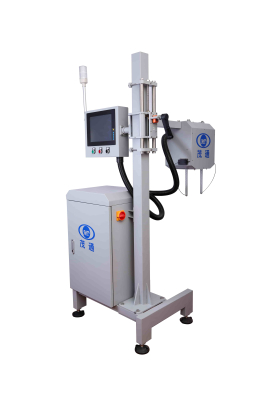
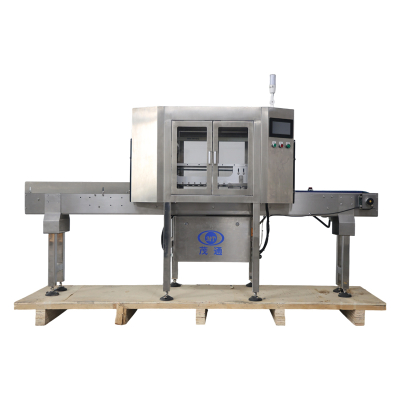
Automated Leak Testers: These systems integrate automatic inflation, robotic arms to simulate squeezing, high-precision pressure sensors, and vision systems (to monitor bag deformation), enabling unmanned, high-speed, and objective inspection.
AI Image Recognition: By utilizing cameras to monitor bubbles during water-immersion leak testing, machine learning algorithms can automatically distinguish between incidental bubbles and actual leakage bubbles, precisely pinpointing the coordinates of the leak points. 2. Enhanced Sensitivity and Quantifiability:
Micro-Leak Detection: By employing differential pressure sensors or helium mass spectrometry leak detection techniques (substituting air with helium as the test gas), it is possible to detect extremely minute leak rates, thereby meeting the rigorous testing requirements for products demanding high levels of airtightness.
3. Online Real-time Monitoring and Big Data Analytics:
Leak detection data for every individual product—including pressure curves and images of leak locations—is uploaded to the Manufacturing Execution System (MES). Through big data analytics, this enables the prediction of equipment wear and tear as well as fluctuations in material batches, thereby facilitating predictive maintenance and proactive quality management.
4. Exploration of Non-Contact Detection Technologies:
Research is underway regarding the application of technologies such as ultrasonic leak detection and infrared thermal imaging for testing bagged products. The goal is to achieve highly efficient detection that is entirely non-contact and free from contamination.
Conclusion
Extrusion-based leak detection for air-filled bagged products represents a quality inspection method characterized by intuitive principles, operational flexibility, and remarkable effectiveness. It seamlessly bridges the gap between the manufacturing process and the final product quality, serving simultaneously as a "sieve for filtering out defective goods" and a "window offering insight into the production process." Ranging from basic manual water-immersion tests to advanced automated and intelligent detection systems, the core objective remains constant: to ensure that every air-filled product reliably maintains its intended shape and functionality, thereby fulfilling its critical mission of protecting the contents, serving the end-user, and—in many cases—safeguarding safety. As technology continues to advance, increasingly rapid, precise, and intelligent leak detection solutions will continue to drive quality standards across the entire industry to ever-higher levels.