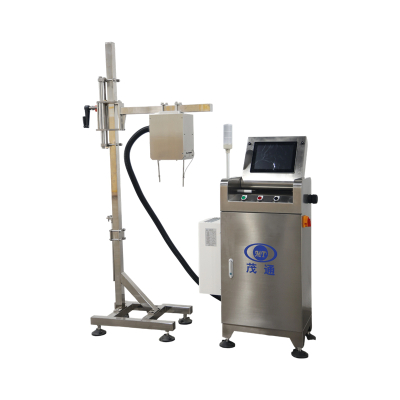
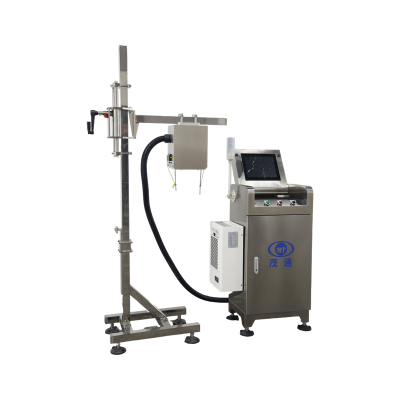
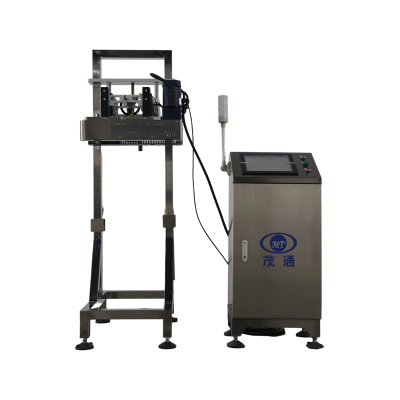
PET Label Ink-Jet Code Vision Inspection: The Guardian of Quality in Modern Industrial Automation
In today's rapidly evolving packaging industry, PET (Polyethylene Terephthalate) has emerged as the preferred packaging material across sectors such as beverages, food, pharmaceuticals, and daily chemical products, thanks to its superior characteristics—including being lightweight, transparent, and recyclable. As the level of production automation continues to rise and consumer demands for product quality become increasingly rigorous, PET label ink-jet code vision inspection technology has emerged as a vital technological tool for ensuring the accuracy of product identification and the integrity of packaging.
I. Technical Principles and System Architecture
The PET label ink-jet code vision inspection system is grounded in machine vision technology. By integrating high-resolution industrial cameras, precision optical systems, and advanced image processing algorithms, it enables the real-time, online inspection of ink-jet printed information on PET bottle labels. The system's operational principles primarily encompass the following stages:
Image Acquisition Phase: As PET bottles pass through the inspection station on the production line, a trigger sensor activates a high-speed industrial camera to capture high-definition images of the ink-jet printed area on the label under specific lighting conditions. To address the transparent or semi-transparent nature of PET materials, the system typically employs a combination of front and backlighting, or multi-angle imaging techniques, to ensure optimal image clarity and contrast.
Image Processing and Analysis: The captured images undergo a series of pre-processing operations—such as noise reduction, contrast enhancement, and binarization—to extract features within the ink-jet printed area. Subsequently, OCR (Optical Character Recognition) technology is utilized to identify the printed content, including critical information such as production dates, batch numbers, expiration dates, and product codes.
Defect Identification and Verification: The system compares the recognition results against pre-established standards to detect issues such as missing codes, blurriness, deformation, positional misalignment, or character errors within the ink-jet print. Advanced deep learning algorithms enable the system to identify character defects as minute as 0.1 mm, achieving inspection speeds of up to 300 meters per minute.
Result Feedback and Execution: Upon detecting a non-conforming product, the system immediately triggers an alarm signal. Utilizing PLC controls, it activates a rejection mechanism to remove the defective item from the production line, thereby ensuring that only qualified products proceed to the subsequent processing stages.
II. Inspection Scope and Quality Standards
The PET label ink-jet code vision inspection system offers comprehensive coverage across multiple dimensions of ink-jet print quality. Its primary inspection scope includes:
Integrity Inspection: Verifying the presence and completeness of the ink-jet code to detect instances of 100% missing codes, partial omissions (e.g., 50% or 30% missing), or the absence of individual characters. The system is capable of detecting missed or erroneous prints resulting from coding machine malfunctions, thereby ensuring that every product bears complete identification information.
Clarity and Quality Inspection:The system evaluates parameters such as print contrast, ink dot uniformity, and edge sharpness. For laser coding, it verifies whether the engraving depth meets established standards; for ink-based coding, it checks for color consistency and adhesion strength. The system can identify quality defects such as blurred prints, print distortions, and shallow engravings.
Positional Accuracy Verification: The system verifies whether the position of the print on the label aligns with preset standards, detecting if any positional deviation exceeds the permissible tolerance. This is crucial for ensuring product aesthetic consistency and facilitating subsequent automated processing.
Content Correctness Validation:Utilizing OCR technology, the system reads the printed content and cross-references it against standard information stored in a database, thereby ensuring the accuracy of details such as production dates, batch numbers, and expiration dates. The system can also detect duplicate codes, preventing the inadvertent reuse of the same batch number.
Special Identifier Detection:For data carriers such as QR codes and barcodes, the system not only verifies their readability but also validates the correctness and completeness of the encoded content, thereby ensuring the reliability of the product traceability system.
III. System Technical Features and Advantages
High-Speed Inspection Capability:Modern vision inspection systems for PET label coding can achieve inspection speeds of 48,000 to 60,000 bottles per hour, fully meeting the demands of high-speed production lines. By employing an encoder-based counting mechanism—synchronized with the conveyor chain motor—the system automatically adapts to varying production line speeds; consequently, the precise localization of defective products remains unaffected by production line stoppages or speed fluctuations.
High-Precision Recognition: The system utilizes a telecentric optical configuration and multi-angle imaging technology to guarantee exceptional inspection accuracy and precision. To address the challenge of indeterminate container rotation angles on the conveyor line, the equipment employs a soft-lighting structure and diffuse reflection principles to capture comprehensive 360-degree images of the label from multiple distinct angles, thereby achieving "blind-spot-free" inspection coverage.
Intelligent Functionality:The system offers a convenient and rapid character training feature for coding data, allowing users to continuously add new print inspection formats based on evolving customer requirements. It automatically archives images of defective prints on a daily basis—with a customizable data retention period—providing essential data support for quality analysis and process optimization.
Stability and Reliability: The inspection machine is equipped with an industrial-grade air conditioning unit to prevent system crashes or malfunctions during the summer months, which can otherwise occur due to prolonged operational periods. Utilizing dedicated hardware circuitry and an embedded operating system, the system ensures long-term stable operation and supports continuous 24/7 duty cycles.
Data Traceability and Management: The system automatically generates inspection reports and records the coding information for every individual bottle, thereby facilitating production quality traceability. Through data dashboards, the system analyzes defect trends—aiding in equipment maintenance and process optimization—and fulfills the data integrity requirements mandated by quality management systems such as GMP and HACCP.
IV. Industry Applications and Case Studies
Beverage Industry Applications: In production lines for PET-bottled beverages—such as mineral water, carbonated drinks, and fruit juices—the coding vision inspection system is integrated with functions like cap inspection and liquid level detection to form a comprehensive, unified inspection solution. Taking a specific mineral water manufacturer as an example: following the introduction of the vision inspection system, not only was product quality stability enhanced, but the packaging workshop also reduced its quality inspection staff by seven personnel, resulting in annual labor cost savings of 490,000 RMB.
Food Industry Applications: PET-packaged food products—such as cooking oils and condiments—are subject to stringent requirements regarding coding quality; in particular, the accuracy of production dates and expiration dates is directly linked to food safety. After adopting a deep learning-based vision inspection system, a specific grain and oil enterprise achieved a detection rate of ≥99.98% at every inspection station, with a false detection rate of only 0.3%. This enabled rapid and stable product changeovers, with the switching time for a single device during a production line shift reduced to just two minutes.
Pharmaceutical Industry Applications: Pharmaceutical packaging demands exceptionally high levels of accuracy and clarity in coding, as any error could lead to severe consequences. The combination of laser coding technology and vision inspection technology is widely utilized within the pharmaceutical industry to ensure the permanent engraving and accurate identification of critical information—such as batch numbers, production dates, and expiration dates—thereby satisfying rigorous traceability requirements.
Daily Chemicals Industry Applications: PET packaging for daily chemical products—such as shampoos and body washes—requires the inspection of various types of coding information, including ingredient lists, usage instructions, and barcodes. The vision inspection system is capable of adapting to the printing requirements of surfaces with diverse material properties, thereby ensuring consistent coding quality across a wide range of packaging materials.
V. Technical Development Trends and Challenges
Integration of Artificial Intelligence and Deep Learning: Driven by advancements in artificial intelligence technology, vision inspection for PET label coding is evolving toward greater intelligence. Deep learning algorithms enable the system to automatically learn and recognize the distinct features of coding patterns, thereby enhancing both the accuracy and speed of the inspection process. Our proprietary deep learning-based vision algorithms are capable of identifying character defects as small as 0.1 mm, boosting detection speeds by 50% compared to traditional equipment.
Integrated Multi-Technology Solutions:Modern inspection systems are trending toward the integration of multiple functions—such as cap inspection, liquid level detection, and code verification—into a single unit, thereby forming a comprehensive quality control solution. This integrated design not only enhances inspection efficiency but also reduces equipment footprint and capital investment costs.
Enhanced Adaptability and Flexibility:To address the imaging challenges associated with various packaging materials (including paperboard, metal containers, plastic containers, and flexible packaging), vision inspection systems require greater adaptability. Modular designs and rapid parameter adjustment capabilities enable these systems to quickly accommodate product changeovers, thereby meeting the demands of flexible manufacturing environments.
Data-Driven and Intelligent Management:Beyond merely executing inspection tasks, these systems leverage data acquisition and analysis to provide enterprises with comprehensive, end-to-end monitoring of production quality. Features such as real-time data dashboards, defect trend analysis, and process optimization recommendations assist companies in transitioning from a "experience-driven" approach to a "data-driven" operational model.
Challenges Ahead: Technical hurdles—such as the reflective properties of PET surfaces, code distortion caused by the curved contours of bottles, and motion blur on high-speed production lines—remain significant challenges that vision inspection systems must overcome. Furthermore, the distinct characteristics of various coding technologies (e.g., laser coding, ink-jet printing, UV coding) impose increasingly rigorous demands on the underlying inspection algorithms.
VI. Conclusion
As a vital component of modern industrial automation, PET label and code vision inspection technology is profoundly transforming quality control paradigms within the traditional packaging industry. Through high-precision, high-efficiency automated inspection, this technology not only significantly boosts production efficiency and product quality—while simultaneously reducing labor costs and material waste—but also establishes robust quality traceability systems and brand protection mechanisms for enterprises.
Driven by the continuous convergence of technologies such as artificial intelligence (AI), the Internet of Things (IoT), and big data, PET label and code vision inspection systems are evolving toward greater intelligence, integration, and flexibility. In the future, this technology is expected to not only deepen its application within traditional sectors—such as food and beverage, pharmaceuticals, and daily chemical products—but also expand into a wider array of emerging industries, providing powerful support for the intelligent transformation of the global manufacturing sector.
For enterprises, investing in advanced PET label and code vision inspection systems represents not merely a necessary step toward enhancing product quality, but also a critical strategic choice for bolstering market competitiveness and achieving sustainable development. In today's environment—characterized by consumers' ever-rising demands for product quality and increasingly fierce market competition—possessing reliable visual inspection capabilities means taking the initiative in product quality control, thereby laying a solid foundation for an enterprise's long-term development.