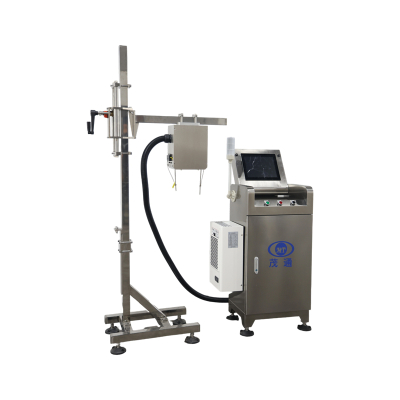
X-Ray Level Detection Technology: Principles, Advantages, and Industrial Applications
Introduction
In modern industrial production processes, accurate and reliable liquid level measurement is a critical element for ensuring production safety, enhancing product quality, and optimizing process workflows. With the continuous advancement of industrial technology—particularly in sectors such as chemicals, petroleum, power generation, and pharmaceuticals—the demand for liquid level measurement under complex operating conditions (involving closed vessels, high temperatures and pressures, and corrosive media) has steadily increased. Consequently, traditional liquid level detection technologies face numerous challenges. X-ray level detection technology, as an advanced, non-contact, high-precision, and highly adaptable measurement method, is increasingly emerging as a key solution for resolving complex liquid level measurement challenges. This article aims to systematically elucidate the working principles, system components, core advantages, and typical application scenarios of X-ray level detection technology, as well as to provide an outlook on its future development.
I. Technical Principles and Measurement System Components
1.1 Basic Measurement Principles
X-ray level detection technology is based on the principle of X-ray absorption and attenuation by matter. When a beam of X-rays with an initial intensity of I₀ passes through a vessel under measurement and its internal medium, the intensity of the transmitted beam (I) is attenuated. The degree of attenuation follows the Lambert-Beer Law:
I = I₀ * e^(-μρd)
Where:
• μ represents the mass absorption coefficient (which depends on the type of medium and the X-ray energy).
• ρ represents the density of the medium.
• d represents the path length of the X-rays through the medium.
In the context of liquid level measurement, the vessel typically consists of a uniform material with a fixed wall thickness. As the liquid level changes, the total path length of the matter through which the X-rays pass also varies: in the liquid phase region, the X-rays must traverse both the vessel wall and the liquid; conversely, in the gas phase (or vapor phase) region, the X-rays traverse only the vessel wall and the gas, which possesses a significantly lower density. Because of the substantial density difference (ρ) between the liquid and the gas, the degree to which they attenuate X-rays differs significantly. By utilizing high-sensitivity detectors to measure the variations in transmitted X-ray intensity in real-time, the gas-liquid interface can be precisely located, thereby enabling the accurate determination of the liquid level height.
1.2 Main System Components
A complete X-ray level detection system typically comprises the following core components:
1. X-ray Source: Generates a stable and reliable beam of X-rays. Industrially, low-energy, miniaturized X-ray tubes are typically employed; the energy of the emitted X-rays can be optimized based on the vessel wall thickness and the characteristics of the medium to ensure sufficient penetration while simultaneously meeting safety standards.
2. Detector Array: Composed of a linear arrangement of highly sensitive, high-resolution X-ray detection units (such as scintillator detectors or semiconductor detectors) that vertically span the liquid level range under measurement. The detectors are responsible for converting the transmitted X-ray signals into electrical signals.
3. Signal Processing and Computation Unit:Receives signals from the detectors, performs amplification, filtering, and digitization, and utilizes built-in algorithms (such as threshold judgment, curve fitting, edge detection, etc.) to analyze the signal intensity profile in real-time, thereby precisely calculating the position of the liquid surface.
4. Mechanical Mounting and Protective Structure: Ensures the precise alignment of the radiation source and the detector on opposite sides of the vessel, and provides necessary radiation shielding (e.g., lead casing) to guarantee the safety of operators and the environment, in full compliance with national radiation protection regulations.
5. Human-Machine Interface (HMI) and Output Module:Provides local display capabilities (e.g., touchscreens) and standardized industrial signal outputs (e.g., 4-20mA current signals, Modbus, Profibus, and other communication protocols), facilitating seamless integration into control systems such as DCS and PLC.
II. Core Technical Advantages and Features
Compared to traditional liquid level gauges (such as float-type, differential pressure, radar, ultrasonic, and capacitive sensors), X-ray liquid level detection technology demonstrates unique and significant advantages under complex operating conditions:
1. Completely Non-Contact Measurement: Both the radiation source and the detector are mounted externally to the vessel and make absolutely no physical contact with the medium being measured. This fundamentally resolves the challenges regarding sensor corrosion, fouling, sealing integrity, and safety issues associated with media that are corrosive, adhesive, high-pressure, high-temperature, highly toxic, or sterile.
2. Unaffected by Process Conditions: Measurement accuracy remains virtually unaffected by complex process conditions such as variations in medium temperature, pressure, or density, as well as boiling, foaming, turbulence, steam, or dust. Even in operating environments involving agitation, boiling, or the generation of significant quantities of bubbles, the system remains capable of stably detecting a distinct primary liquid surface. 3. **High Precision and High Resolution:** By employing array-based detectors and advanced signal processing technologies, the system achieves millimeter-level measurement accuracy and high resolution, thereby meeting the stringent process requirements of applications such as precision separation and interface control.
4. Adaptability to Complex Vessel Structures: Regardless of how complex the vessel's geometry may be (e.g., featuring jackets, coils, baffles, or agitator blades) or how specialized its construction materials are (e.g., multi-layer composite walls, glass linings, or thick insulation layers)—provided that X-rays can effectively penetrate the structure—accurate measurement can be achieved, offering exceptional installation flexibility.
5. Safety, Reliability, and Low Maintenance:The system is typically designed with a fully enclosed, maintenance-free structure. Since it does not come into direct contact with the process media, there is no risk of wear or leakage; this ensures a long service life and results in low overall operating costs.
6. Interface and Density Distribution Measurement: Advanced systems are capable of doing more than simply measuring a single liquid level; by analyzing attenuation differences at various heights, they can be used to detect the interface between two immiscible liquids (e.g., an oil-water interface) or to assess the density or concentration distribution within slurries and suspensions.
III. Typical Industrial Application Scenarios
The unique advantages of X-ray liquid level detection technology have led to its widespread adoption in the following challenging industrial sectors:
1. Chemical and Petrochemical Industries:
High-Pressure Reactors: Monitoring the liquid levels of high-temperature, high-pressure, flammable, explosive, or corrosive media contained within vessels such as polymerization reactors and hydrogenation reactors.
Distillation/Rectification Towers: Precisely controlling the liquid levels in the tower sump and reflux accumulator to optimize separation efficiency—a capability particularly well-suited for operating conditions involving complex internal tower components and dense steam environments.
Corrosive Media Storage Tanks: Monitoring the liquid levels of highly corrosive substances, such as strong acids, strong bases, and alkylation media.
2. Pharmaceutical and Biotechnology Industries:
Bioreactors/Fermenters:Non-contact monitoring of liquid levels in cell cultures and fermentation broths under strictly sterile conditions, thereby eliminating the risk of microbial contamination.
High-Purity Intermediate Storage Tanks: Ensuring that high-value pharmaceutical intermediates remain free from contamination by measurement components during the production process.
3. Electric Power Industry:
Power Plant Condenser Hotwells:Monitoring the water level of condensed steam to optimize vacuum levels—a critical factor in enhancing overall power generation unit efficiency. High-Pressure Feedwater Heaters: Measure liquid levels on the shell side or tube side to prevent water ingress into the steam turbine.
4. Nuclear Industry:
Used for liquid level monitoring in radioactive liquid waste storage tanks within nuclear facilities, ensuring complete sealed isolation.
5. Other Fields:
Food Industry: Liquid level control in high-temperature sterilization tanks and sauces containing particulate matter.
Metallurgical Industry: Liquid level detection for molten metals (e.g., molten steel).
Environmental Protection: Monitoring the sludge-water interface in anaerobic digestion tanks during wastewater treatment.
IV. Application Considerations and Development Trends
4.1 Selection and Installation Considerations
While the advantages are evident, the selection of X-ray level gauges still requires comprehensive consideration of the following factors:
• Safety and Regulations: Strict adherence to national safety regulations regarding the use of radioactive equipment is mandatory; this includes filing for permits, designating protective zones, posting warning signs, and ensuring that operating personnel receive specialized training.
• Vessel and Medium Conditions: It is necessary to evaluate the vessel wall thickness, material composition, insulation layers, and medium density to determine the required X-ray energy level, thereby ensuring effective penetration and a sufficient signal-to-noise ratio.
• Installation Space: Sufficient clearance must be ensured on both sides of the vessel to accommodate the installation of the radiation source and the detector, while also taking into account the requirements for alignment precision.
• Cost: The initial capital investment is typically higher than that for conventional level gauges; however, under extreme operating conditions, the long-term reliability, low maintenance costs, and high safety standards of X-ray level gauges often result in superior economic benefits over the entire product lifecycle.
4.2 Technological Development Trends
In the future, X-ray level detection technology is expected to evolve in the following directions:
1. Intelligentization and Integration: Integrating more advanced AI algorithms to enable self-diagnosis, self-calibration, and enhanced anti-interference capabilities, as well as deep integration with Industrial Internet of Things (IIoT) platforms to provide predictive maintenance support.
2. Energy Spectrum Analysis and Multi-Parameter Measurement: Utilizing energy spectrum analysis techniques to not only measure liquid levels but also simultaneously analyze changes in the medium's composition or concentration, thereby achieving "multi-functional" capabilities within a single device.
3. Enhanced Safety and Compactness: Developing lower-dose, higher-efficiency radiation sources and detectors to create devices that are more compact, safer, and consume less power.
4. Cost Optimization: Driven by technological advancements and economies of scale, equipment costs are expected to decrease further, thereby expanding the technology's applicability across a wider range of mid-range markets.
Conclusion
With its unique "external-to-internal, non-contact measurement" approach, X-ray liquid level detection technology has successfully overcome the application bottlenecks that traditional liquid level instruments face in complex and harsh operating environments. It serves not only as a powerful tool for resolving challenging process measurement problems but also as a key manifestation of industrial automation’s evolution toward greater safety, reliability, and intelligence. As the Industrial 4.0 era advances and demands for lean manufacturing processes continue to rise, X-ray liquid level detection technology is poised to play an indispensable and pivotal role across a vast spectrum of industrial sectors, consistently contributing value by enhancing both the intrinsic safety and operational efficiency of modern industrial production. When making a selection, engineers should conduct a comprehensive evaluation—taking into account specific process conditions, safety regulations, and economic feasibility—to equip their process plants with a "smart and penetrating X-ray vision."