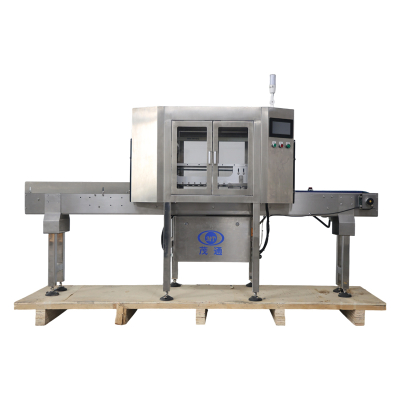
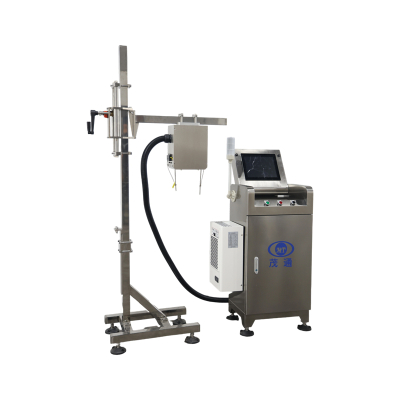
1L Tinplate Can Inkjet Printing Inspection Technology: The Key to Improving Product Quality and Traceability Efficiency
Behind the small inkjet code lies a vast quality control system.
In industries such as food, pharmaceuticals, and cosmetics, 1L tinplate cans are a common packaging form, favored for their excellent sealing and corrosion resistance. Inkjet printing, as a carrier of product identification and traceability information, directly impacts a company's brand image and market compliance.
With technological advancements, inkjet printing inspection has evolved from manual visual inspection to automated inspection systems based on machine vision, significantly improving the efficiency and reliability of production lines.
1. Characteristics of Tinplate Cans and Inkjet Printing Challenges
Tinplate (tin-plated steel sheet), with its excellent mechanical properties and sealing capabilities, is the preferred material for high-end product packaging. It is not only strong and rigid, preventing breakage, but also effectively blocks gas, moisture, light, and preserves flavor, protecting the quality of the contents.
The manufacturing process of tinplate cans is quite mature, and they can be made into various shapes to meet the packaging needs of different products.
Inkjet printing on this material faces multiple challenges. The smooth surface of tinplate and the adhesion between the tin layer and the ink directly affect the durability of the inkjet print. Traditional inkjet printing methods often suffer from problems such as ink breaks, line breaks, and insufficient adhesion, seriously affecting the recognition rate of QR codes.
In addition, factors such as vibration, light changes in the production environment, and deviations in can position all pose challenges to the accuracy of inkjet printing inspection.
2. Key Technical Principles of Inkjet Printing Inspection
Modern inkjet printing inspection systems employ a layered processing method, breaking down the inspection process into multiple stages for gradual and detailed analysis.
Image Acquisition and Preprocessing
Acquiring high-quality images is fundamental to inspection. Professional inspection equipment is usually equipped with industrial-grade cameras and dedicated lighting systems to ensure the capture of clear inkjet print images. For example, some systems use industrial cameras with a working distance of 200mm, combined with symmetrically arranged light sources, illuminating the product under test at a working distance of 50mm.
The image preprocessing stage includes steps such as grayscale conversion, binarization, noise reduction, and tilt correction, aiming to improve image quality and allow characters to be presented relatively clearly. The processing effect at this stage directly affects the accuracy of subsequent character segmentation and recognition. Character Localization and Segmentation
Character localization is a crucial step in the detection process. Advanced systems use the MSER (Maximally Stable Extremal Regions) method for initial character region localization, followed by fine localization using the connected components method. Specialized segmentation algorithms are used to ensure accurate segmentation, specifically tailored to the characteristics of dot-matrix inkjet printed characters.
For inkjet prints containing both fixed and variable characters, the system first determines the position of keywords through template matching, and then calculates the exact position of the variable characters. This method gradually narrows the detection area, improving localization accuracy.
Feature Extraction and Comparison
In the feature extraction stage, the system divides the inkjet pattern into multiple sub-images, each containing a single character, and then extracts the feature vector of each character. These feature vectors contain detailed characteristic information of the characters, such as dot matrix arrangement and contour shape.
The comparison process is not simply image comparison, but rather an examination of the feature vectors of corresponding sub-images, analyzing feature point changes, including wear points, matching points, and newly added ink dots. This feature vector-based comparison method improves comparison accuracy even when parts of the inkjet print are damaged.
Character Recognition and Defect Analysis
In the character recognition stage, modern systems often employ deep learning algorithms such as Convolutional Neural Networks (CNNs). These algorithms improve detection accuracy while ensuring real-time performance, meeting the requirements of high real-time performance and high accuracy.
In the defect analysis stage, the system comprehensively evaluates various quality issues of the inkjet print, including: unacceptable character width, unacceptable character height, unacceptable character spacing, unacceptable character angle, blurry or unclear characters, and missing characters.
3. Hardware Components of the Inkjet Printing Detection System
A complete inkjet printing detection system includes several key hardware components, each performing its own function while working collaboratively.
The industrial smart camera is the "eyes" of the system, typically using a high-pixel, high-speed monochrome camera, coupled with a high-resolution, low-distortion lens. These cameras can quickly capture the inkjet print on moving containers, ensuring that no defects are missed due to production line speed.
The lighting system is crucial for image quality. Appropriate lighting can reduce reflections and shadows, highlighting the contrast between the inkjet print and the background. Common solutions include symmetrically arranged RGB light sources, or a surface light source illuminating from the back of the container.
The processing and control unit is the brain of the system, usually an industrial computer, responsible for image processing, result judgment, and command issuance. The efficient algorithm ensures that the system can complete detection and judgment within milliseconds.
The rejection mechanism is the execution end of the system, typically consisting of a power cylinder and a push rod, connected to the industrial control computer. When a defective product is detected, it is automatically pushed off the production line. This mechanism ensures that defective products do not enter the market.
4. Quality Standards and Standardized Procedures for Inkjet Printing Inspection
Inkjet printing inspection is not simply a "good" or "bad" judgment, but an objective evaluation based on clear quality standards.
Inkjet Print Integrity Standards
A qualified inkjet print should have no missing prints and the printed information should be complete and accurate. The system detects missing prints, incomplete prints (more than 15% missing is considered defective), double images, character errors, and skewing. These standards ensure the basic readability of the inkjet print.
Adhesion and Durability Standards
For tinplate cans, the adhesion of the inkjet print is particularly important. High-quality inkjet prints should pass several durability tests:
• Alcohol abrasion test: No discoloration or blurring after wiping with 75% concentration alcohol.
• Thumb rub test: Remains clear and readable after 15 repeated rubs with a finger.
• Tape test: No peeling or ink loss after applying and removing 3M 600 tape.
Recognition Rate Standards
The recognition rate of machine-readable codes such as QR codes and DM codes is a key indicator. High-quality inkjet prints should have high contrast and uniform dot matrix to ensure efficient reading by scanning equipment. Clear dot matrix edges and no ink overflow are characteristics of high-quality inkjet prints.
5. Process and Steps for Implementing Inkjet Printing Inspection
Successfully implementing an inkjet printing inspection system requires following a scientific process to ensure seamless integration with the production line.
System integration and installation is the first step. Install the inkjet printing vision inspection system on the production line, ensuring the precise positioning of the camera, light source, and rejection mechanism. The system should be installed after the inkjet printer to immediately detect the quality of the inkjet print.
In the parameter configuration and template learning phase, operators set detection parameters through a user-friendly interface. Modern systems typically use intelligent learning tools; simply setting a sample of qualified products allows the machine to automatically learn and master the judgment criteria.
In the detection execution phase, when the inspected can passes under the camera, the sensor triggers the camera to take a picture, and the system performs real-time analysis of the inkjet print. This process is fully automated and does not affect the normal operation of the production line.
Result processing and feedback are the final steps. Based on the inspection results, the system removes defective products from the product stream and records the inspection data, providing a basis for production process monitoring and quality traceability.
With technological advancements, inkjet coding inspection technology is moving towards a more intelligent and efficient direction. Future systems will integrate more powerful artificial intelligence algorithms, not only identifying coding defects but also predicting inkjet printer maintenance needs, preventing quality problems before they occur.
For manufacturing companies, investing in advanced inkjet coding inspection systems is not only a necessary means of quality control but also a strategic choice to enhance brand image and protect consumer rights.
Through scientific inspection methods, every 1L tinplate can leaving the factory can have a complete identity record, providing reliable assurance for product quality traceability.