Rice Noodle Foreign Object Visual Inspection Technology: An Innovative Solution for Food Safety Assurance
In today's world, where food safety is a major concern, a single tiny foreign object can lead to a crisis of trust for an entire brand. Visual inspection technology is becoming an indispensable guardian of quality in the food industry.
Rice noodles, a traditional staple food in China, have a safety record that directly impacts consumer health. Traditional manual inspection methods are not only inefficient but also prone to missed or incorrect detections due to fatigue. With the advancement of machine vision technology, image-based automatic foreign object detection is gradually replacing manual visual inspection, becoming a key technology for quality control in rice noodle production.
Modern visual inspection systems can identify potential foreign objects in rice noodles, such as metal fragments, stones, glass shards, and plastic particles, effectively preventing these foreign objects from entering the market with the product and ensuring food safety.
1. Technical Principles of Rice Noodle Foreign Object Detection
Rice noodle foreign object visual inspection is based on computer vision and image processing technologies, identifying abnormal objects by analyzing digital images of the rice noodles. The core technical principle is to utilize the differences in optical characteristics between foreign objects and normal rice noodles.
When light illuminates the surface of the rice noodles, the camera captures high-resolution images, and foreign objects and the rice noodle matrix will exhibit different grayscale values or color characteristics. For example, metal foreign objects are usually brighter than rice noodles, while stones and dirt may be darker.
The visual inspection system identifies these abnormal areas through blob analysis technology. Blob analysis is the most classic target positioning and detection tool in machine vision; it classifies pixels as target or background, and determines the position, size, and orientation of foreign objects by calculating different moments of the connected targets.
The minimum detection accuracy of the system depends on the camera pixels and optical configuration. According to Keyence's formula: Minimum detection size = Field of view (Y-direction) ÷ Number of pixels in the Y-direction of the camera × Minimum detection pixels. Using a high-resolution camera (such as 21 million pixels), the system can even identify tiny foreign objects as small as 0.037mm.
2. Key Components of the Visual Inspection System
A complete rice noodle foreign object visual inspection system includes multiple precisely coordinated components, each playing an irreplaceable role.
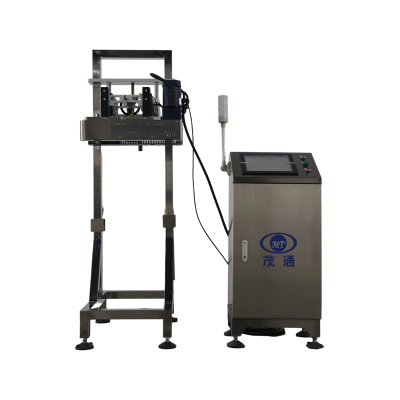
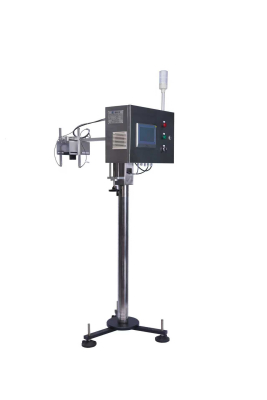
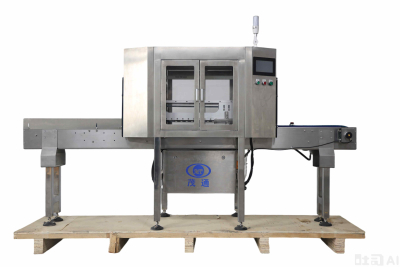
The image acquisition system is the "eyes" of the visual inspection, usually consisting of a high-resolution industrial camera, a dedicated lens, and a lighting system. For continuously produced products like rice noodles, line scan cameras are the ideal choice, as they can continuously scan the moving noodles line by line, achieving uniform inspection of the entire surface. The choice of light source is also crucial; appropriate lighting can highlight foreign object features and simplify subsequent image processing.
The processing system is the "brain" of the visual inspection system, responsible for analyzing and processing the acquired images. This system typically includes three steps: image preprocessing, feature extraction, and classification and recognition. The preprocessing stage optimizes image quality through operations such as noise reduction and enhancement; the feature extraction stage extracts features related to foreign objects from the image; finally, the classification and recognition stage determines the presence of foreign objects based on these features.
The execution mechanism is responsible for translating the detection results into actual actions. Once the system detects a foreign object, it immediately removes the contaminated rice noodles from the production line using a pneumatic device or robotic arm. This removal action needs to be precisely synchronized with the production line speed to ensure that only contaminated products are removed.
3. Detection Algorithms and Processes for Rice Noodle Characteristics
Rice noodle foreign object detection faces numerous challenges, including variations in the color of the rice noodles themselves, surface reflectivity characteristics, and morphological diversity. To address these challenges, specialized image processing algorithms are required.
The preprocessing stage uses real-time intensity correction technology to eliminate glare and shadows on the surface of the rice noodles, extracting only the foreign object area. For interference from different directions, gradient filters can be used to eliminate background patterns and correctly extract foreign object features.
In the defect recognition stage, the system uses deep learning-based algorithms, such as the YOLO object detection framework and the ResNet residual network. These algorithms can automatically distinguish between rice noodles and defective areas, achieving high-precision recognition even for tiny foreign objects (such as 0.1mm metal fragments).
Considering the characteristics of the rice noodle production environment, modern visual inspection systems also incorporate knowledge distillation technology, allowing lightweight models to learn the knowledge of large teacher models, achieving real-time detection while maintaining high accuracy. Non-local pixel-level attention mechanisms are used to extract image features, introducing global contextual information, analyzing background differences, and effectively filtering background noise.
4. Implementation Process and Key Technical Parameters
Successful deployment of a rice noodle foreign object visual inspection system requires following a scientific implementation process and paying attention to a series of key technical parameters.
The system deployment process includes stages such as requirements analysis, hardware selection, system integration, algorithm debugging, and field testing. The requirements analysis phase needs to clearly define the detection targets (foreign object types, size range), production line speed, and available space. Hardware selection involves choosing the appropriate camera, lens, and light source combination based on these requirements.
The core performance indicators of the rice noodle foreign object detection system include detection accuracy, processing speed, and false alarm rate. A high-performance system should be able to complete a detection within 0.1-0.5 seconds, identify foreign objects larger than 0.1mm, and maintain a false alarm rate below 1%.
To cope with disturbances such as production line vibration, modern detection systems employ a cascaded detection head design, performing multiple cascaded detections under target vibration conditions to mitigate the impact of camera shake on detection accuracy. In addition, the system needs to consider temperature drift compensation functionality to effectively suppress the impact of heat generated by long-term operation and environmental temperature changes on detection accuracy.
5. Technical Challenges and Countermeasures
Rice noodle foreign object visual inspection faces several technical challenges in practical applications, requiring targeted solutions.
The diversity of rice noodle morphology is one of the main challenges. The appearance of rice noodles varies depending on the variety, processing technology, and humidity conditions. To address this problem, deep learning algorithms can be used to train models with a large number of samples, enabling them to adapt to various rice noodle morphologies. Generative adversarial network (GAN) technology can simulate various defect samples, solving the problem of small sample training.
Environmental factors such as lighting changes and production line vibrations also affect detection stability. Multispectral imaging technology (combining infrared, ultraviolet, and polarized light) can penetrate the surface of the rice noodles to capture internal foreign objects, reducing the impact of ambient light. In addition, installing vibration damping devices and dedicated enclosures can further improve system stability.
For production lines requiring high-speed detection, the system needs to balance processing speed and accuracy. Edge computing technology allows the equipment to complete image processing and decision-making locally, reducing data transmission delays and meeting the real-time detection requirements of high-speed production lines. Optimizing the algorithm structure and using high-performance hardware are also effective means of improving processing speed.
With the continuous advancement of artificial intelligence technology, rice noodle foreign object visual inspection is moving towards a more intelligent direction. In the future, we will see more detection systems integrating deep learning and multimodal imaging technologies. These systems will not only be able to identify foreign objects but also provide comprehensive quality assessment of rice noodles.
The increasing demands for food safety production will drive visual inspection technology towards higher accuracy, efficiency, and stability. Detection solutions based on emerging technologies such as quantum sensing may break through traditional optical limitations, enabling nanoscale defect detection. Simultaneously, as technology costs decrease, visual inspection systems will become more widespread among small businesses, providing more comprehensive quality assurance for the Chinese food industry.
Visual inspection technology is becoming a crucial driving force for quality upgrades in China's rice noodle industry. It not only ensures food safety but also enhances brand value, injecting new technological vitality into the traditional food industry.