A New Chapter in Intelligent Quality Control: An Analysis of Wanglaoji's Laser Marking and Visual Inspection Technology for Canned Beverages
How is zero-defect quality achieved for every can of Wanglaoji on a high-speed production line running at 800 cans per minute?
In today's increasingly competitive beverage industry, product traceability and quality safety have become core competencies for companies. As a well-known Chinese herbal tea brand, Wanglaoji has introduced an intelligent closed-loop system combining laser marking and visual inspection on its high-speed canned beverage production line, achieving fully automated quality monitoring from marking to inspection and rejection.
This combination of technologies not only solves the problems of traditional marking methods (prone to blurring and erasure), but also builds a solid "quality moat," enabling the production line to maintain speeds of 48,000 cans per hour or even higher while achieving 100% online inspection.
01 Technical Background and Challenges
Wanglaoji, Coca-Cola, PepsiCo, and other well-known beverage brands widely use canned packaging, and the requirements for packaging quality are extremely strict. The manufacturing of cans integrates advanced technologies from numerous industries, including metallurgy, chemical engineering, machinery, and electronics, and the clarity and accuracy of markings such as production dates are a crucial link in the food safety traceability system.
Traditional inkjet marking methods have significant shortcomings: markings are prone to blurring and defects due to ink adhesion problems. In a high-speed production environment, manual sampling is like "finding a needle in a haystack," with a very high risk of missed inspections.
This can not only lead to market complaints but also break the product traceability chain, making it difficult to accurately recall products if quality problems occur.
Facing production speeds of hundreds of cans per minute, Wanglaoji needed a solution that could achieve 100% accurate detection in a high-speed environment. Laser marking combined with visual inspection technology was developed precisely in this context.
02 Laser Marking Technology and Advantages
Laser marking technology represents a revolutionary improvement compared to traditional marking methods. It uses a "cold processing" method with a minimal heat-affected zone, enabling the creation of clear, permanent markings on the bottom of the can without damaging the can material.
• Zero Consumable Operation: Laser marking requires no ink, solvents, or other consumables, significantly reducing long-term operating costs. • Excellent Marking Quality: UV laser marking machines have a short wavelength (355nm), resulting in a smaller focused spot and enabling very fine processing.
• Strong Adaptability: For well-known brands like Wanglaoji, laser marking can adapt to different packaging surfaces, ensuring marking consistency.
Laser marking technology lays a solid foundation for subsequent visual inspection because it consistently produces high-contrast markings, greatly improving the accuracy of detection.
03 Working Principle of the Visual Inspection System
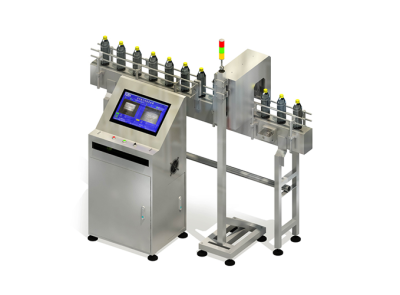
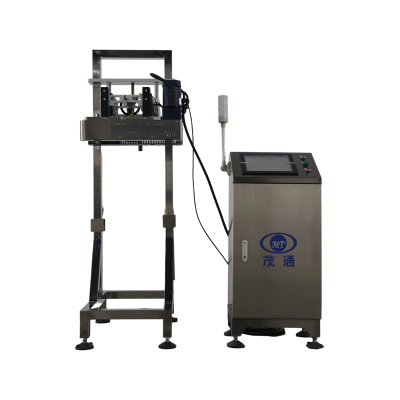
The visual inspection system is the "intelligent eye" of this quality monitoring system. It consists of a high-resolution industrial camera, precision light source, lens, and dedicated image processing software, installed at the workstation behind the marking machine.
The system's workflow is based on adaptive denoising algorithms and edge enhancement technology. It first preprocesses the acquired images, then performs precise extraction of the marking area and defect detection.
Specific detection capabilities include:
• Integrity detection: Identifying cases of no marking, missing markings (even 30% missing), and blurred or deformed markings.
• Content verification: Reading production dates and batch numbers using OCR technology and comparing them with the system database to ensure correct content.
• Position evaluation: Detecting whether the marking position is offset, ensuring marking consistency.
Modern visual inspection systems even utilize deep learning artificial intelligence technology and are equipped with high-performance GPU processors to achieve high-speed recognition and processing, meeting the needs of high-speed production lines.
04 System Integration and Closed-Loop Quality Control
The true power of laser marking and visual inspection lies in the intelligent closed-loop control system they form, achieving real-time quality monitoring through "marking-detection-feedback-execution."
When the visual system detects a product with substandard marking, it immediately sends a signal to the PLC, triggering a rejection device (such as a push rod or air nozzle) to precisely remove the defective product from the production line.
The system also has comprehensive data recording capabilities: images of defective products, detection time, and type of defect are recorded in the database, generating statistical process control reports to support quality analysis.
At the same time, the system triggers on-site sound and light alarms to alert staff to intervene, enabling human-machine collaboration. This design not only improves production efficiency but also builds a complete data traceability chain, meeting strict regulatory requirements such as those of the FDA and EU. 05 Application Effectiveness and Future Outlook
In Wanglaoji's actual production, the laser marking and visual inspection system has brought significant benefits:
• Achieved 100% online full inspection, completely eliminating customer complaints caused by labeling issues.
• Fully automated process replaces manual sampling, allowing the production line to operate at full speed and maximizing production capacity.
• Significantly reduced operating costs, including reduced quality control personnel and avoidance of packaging material waste.
• The system-generated SPC reports clearly reflect potential equipment problems, enabling predictive maintenance and shifting from "reactive repair" to "proactive maintenance."
With the in-depth development of Industry 4.0 technologies, this system is evolving towards greater intelligence. Future visual inspection systems will reduce reliance on lighting conditions, further improving detection stability.
At the same time, deep learning-based technology will give the system stronger adaptability, allowing it to adapt to different scales of production environments while maintaining performance, providing stronger technical support for quality management of brands like Wanglaoji.
As technology continues to advance, the laser marking and visual inspection system will further develop towards intelligence and adaptability. Future systems will be less dependent on lighting conditions, maintaining high detection accuracy even in highly reflective environments such as aluminum cans.
The introduction of deep learning technology will lower the technical threshold, allowing production lines of different scales to benefit from high-quality inspection solutions. This marks our progress towards a new era of fully intelligent industrial manufacturing.