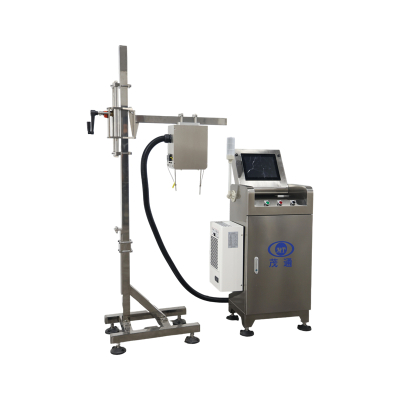
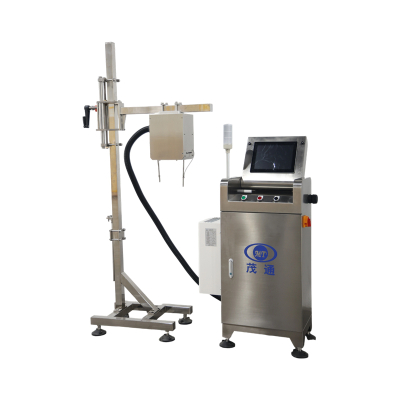
How Best Bottle Inspection Machine Keeps Bottle Finishes Traceable
The Best Bottle Inspection Machine is designed for non-contact, online inspection of bottle finishes before bottles move into the next production stage. It uses a synchronized sequence of positioning sensor, encoder, camera, image processor, HMI, control unit, and rejector to identify each bottle, inspect the mouth area, and remove defective bottles from the line. For PET, PE, and glass bottle applications, this operating principle supports stable quality control at high production speeds.

System Operating Principle and Process
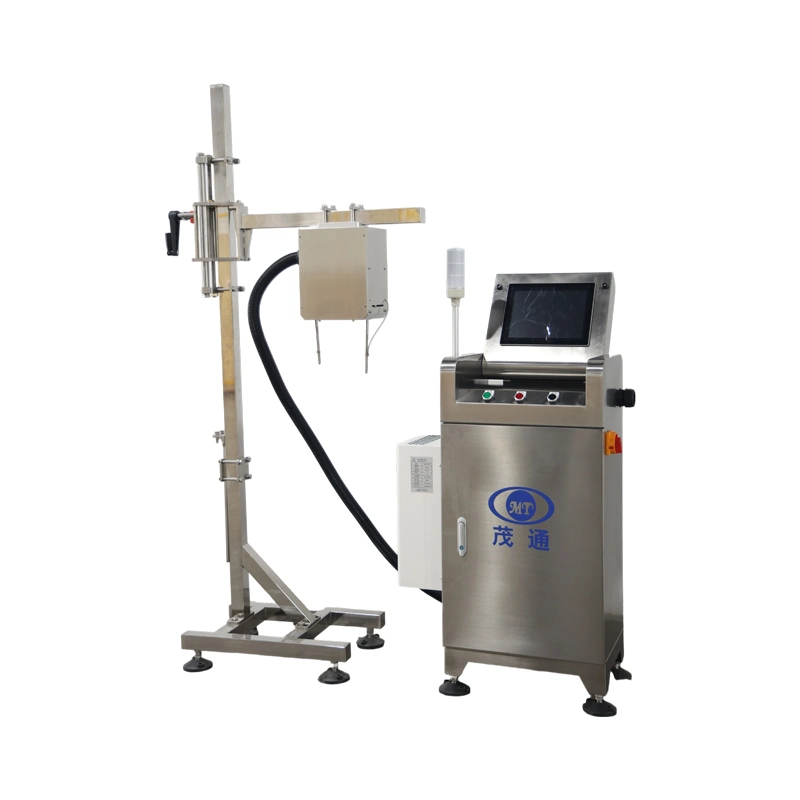
The working logic of the Best Bottle Inspection Machine is built around traceability. As each bottle passes the positioning sensor, the sensor detects its presence. Through the control unit, the system records the bottle ID together with the current encoder value. This creates a position-based reference, so the system can keep tracking the same bottle after image capture and before rejection.
Next, the sensor triggers the camera to capture an image of the bottle mouth. Once the image is acquired, the image processor analyzes it and sends the result to the HMI for real-time display. At the same time, the result is transmitted to the control unit, which prepares the rejection action if the bottle finish does not meet the inspection criteria. This same principle is commonly used in an empty bottle visual inspection machine where online feedback and automatic removal are essential.
If a defect is confirmed, the control unit matches the rejection command with the recorded bottle ID and encoder position. The rejector then removes the corresponding defective bottle at the correct point, helping avoid unnecessary rejection of qualified neighboring bottles.
Image Acquisition Components
The Best Bottle Inspection Machine depends on stable image acquisition. Its LED area light source has a service life of up to 30,000 hours and uses foreground illumination. In the captured image, the bottle mouth appears as a continuous bright ring, making the finish area clearer for inspection.

A fixed-focus lens with manual aperture adjustment supports image sharpness and brightness control. The focus ring is adjusted to optimize clarity on the CCD target surface, while the aperture ring is used to fine-tune brightness. The camera is an area-array CCD analog camera with 640 × 480 pixels resolution and an image capture rate of up to 60 frames per second. This configuration is central to a bottle mouth inspection machine, where consistent imaging directly affects inspection stability.
Defect Types and Detection Accuracy
The inspection focus of the Best Bottle Inspection Machine is the bottle finish area, especially defects that may affect sealing quality or downstream handling. Typical inspection items include through-hole defects, internal chips, external chips, point chips, and oval neck deformation.
| Inspection item | Defect description | Reference dimension | Detection accuracy | False rejection rate |
|---|---|---|---|---|
| Penetration | Through-hole | Vertical section width 0.8 mm, depth 0.25 mm | ≥99.99% | ≤0.03% |
| Internal defects | Inner edge chip | Vertical section width 0.8 mm, depth 0.25 mm | ≥99.95% | — |
| External defects | Outer edge chip | Vertical section width 0.8 mm, depth 0.25 mm | ≥99.95% | — |
| Point defects | Localized chip | Diameter 0.8 mm, depth 0.25 mm | ≥99.99% | — |
| Neck deformation | Oval neck | Diameter difference 2 mm | ≥99.95% | — |
These figures make the system suitable for lines that require accurate online bottle finish control. In practice, the Best Bottle Inspection Machine should be matched with stable bottle spacing, suitable conveyor synchronization, and proper lighting adjustment.
Platform Adaptability and Line Integration
The same inspection principle applies across PET, PE, and glass container scenarios, while lighting configuration, camera position, and conveyor synchronization may be adjusted according to the production layout. The MT-PK021 bottle finish inspection system is listed with a production capacity of 48,000 bottles per hour for PET/PE bottle lines, and related glass bottle finish systems describe speeds up to 60,000 BPH through independently developed image processing.
For installation, the equipment can be positioned within the blow molding machine at the bottle discharge point or along the conveyor chain. A straight conveyor section is preferred, because curved sections can make bottle position less stable. For a bottle finish inspection system, encoder synchronization and consistent bottle spacing are especially important for accurate rejection timing.
Operating Conditions Buyers Should Confirm
Before selecting a Best Bottle Inspection Machine, buyers should confirm site and utility conditions. Recommended operating conditions include an altitude range of 5–3000 m, ambient temperature of 5°C–40°C, and relative humidity of 50%–65% RH. The main power requirement is 3 × 380 VAC ±10%, 50 Hz, 3PH+N+PE, with 24 VDC control voltage and compressed air at 4–6 bar. The total installed power is approximately 1.0 kW for the bottle finish inspection system described.
A well-integrated Best Bottle Inspection Machine helps manufacturers inspect each bottle finish in real time, display results through the HMI, and reject defective bottles automatically. Its value comes from a simple but disciplined workflow: identify the bottle, capture the image, analyze the finish, track the ID, and reject only the bottle that fails inspection.
FAQs
How does the Best Bottle Inspection Machine identify each bottle?
It records the bottle ID and the current encoder value when the bottle passes the positioning sensor, creating a tracking reference for later rejection.
What does the camera inspect?
The camera captures the bottle mouth or finish area, and the image processor checks for defects such as penetration, internal chips, external chips, point defects, and oval neck deformation.
Why is encoder synchronization important?
Encoder data helps the control unit match the inspected bottle with its exact conveyor position, so the rejector can remove the correct bottle.
What bottle materials are applicable?
The documented applications include PET, PE, and glass bottles, with configuration adjustments for different production scenarios.
What operating environment is recommended?
Recommended conditions include 5°C–40°C temperature, 50%–65% RH humidity, and 5–3000 m altitude.