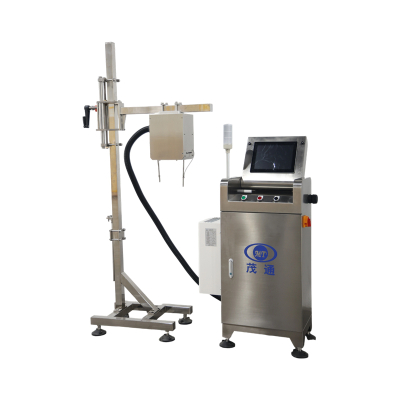
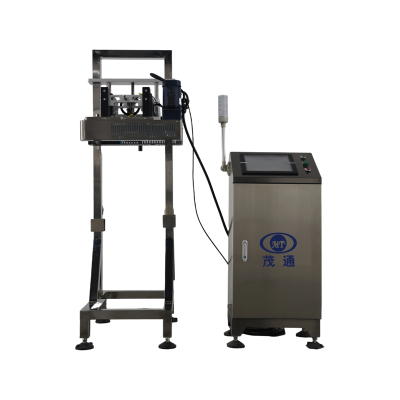
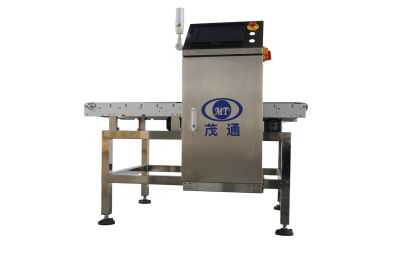
How to Online-Detect Leaks in Glass-Bottled Beer?
The online leak detection of glass bottled beer has evolved far beyond the traditional craftsmanship of "tapping to hear the sound" or "manual sampling in water tanks." On modern high-speed beer filling lines (often processing tens of thousands of bottles per hour), high-precision sensors, laser spectroscopy, and machine vision have become the "all-seeing eyes" that safeguard the seal integrity of the product.
Currently, mainstream industrial technologies for detecting leaks in glass bottle beer can be categorized into four major approaches. Each has its own strengths, and breweries often employ a combination tailored to their specific production line requirements:
1. Laser Spectroscopy Analysis (TDLAS): The Non-Contact "Remote Diagnosis"
This represents one of the most advanced and precise non-destructive testing technologies available, ideal for high-speed production lines.
Working Principle: It utilizes a sophisticated technology known as Tunable Diode Laser Absorption Spectroscopy (TDLAS). The system emits a highly precise laser beam into the headspace gas (the gap between the beer and the cap). Since different gas molecules (such as carbon dioxide, CO₂) absorb light at specific wavelengths, the system can instantly and accurately calculate the gas concentration and internal pressure by analyzing the attenuation of the laser after it passes through the gas.
Advantages: Non-contact and non-invasive, eliminating the risk of secondary damage; extremely fast detection speed; unaffected by closure material (metal or plastic); high hygiene standards with no mechanical wear parts.
Application Scenario: Large-scale modern breweries pursuing high yield rates and capacity. It is particularly effective for inspecting bottles post-pasteurization (where micro-leaks are often exacerbated by thermal expansion and contraction).
2. Acoustic Vibration Detection: "Tapping the Wooden Fish" to Identify Flaws by Sound
A classic and mature technology that relies on "excitation" and "listening."
Working Principle: An electromagnetic pulse device or mechanical tapper strikes the bottle cap sharply as it passes by. A high-sensitivity microphone captures the resulting vibration sound. Under normal conditions, the internal pressure supports the cap, resulting in a fixed vibration frequency and amplitude. If the bottle is leaking (even micro-leaks), the internal-external pressure equalizes, causing a subtle but distinct change in the cap's vibration characteristics. The system identifies defective bottles by comparing these acoustic fingerprints.
Advantages: Relatively low cost, mature technology, effectively detects missing, skewed, or poorly sealed caps.
Application Scenario: Best suited for closures with rigidity and magnetic conductivity (e.g., traditional tinplate crown caps). May be less effective for very soft or specialized cap materials.
3. Machine Vision 3D Profile Scanning: Performing a "Micron-Level CT Scan" on Caps
With the advancement of machine vision, "visual inspection" has replaced manual "touch-based" methods.
Working Principle: High-precision laser displacement sensors or 3D cameras perform real-time surface scans of the moving bottle caps, instantly constructing a 3D contour image. A properly sealed cap exhibits standard curvature, height, and radius under pressure. Upon leakage, the loss of internal pressure alters the microscopic deformation of the cap. Algorithms detect deviations from the standard 3D profile to pinpoint leaks.
Advantages: Purely optical inspection with broad applicability across tinplate, aluminum, and plastic closures; strong anti-interference capability; zero physical contact or damage to the product.
Application Scenario: High-end flexible production lines with diverse product ranges and varying closure types.
4. Physical Squeeze Sensing: The Simple, Brute-Force "Squeeze Test"
One of the earliest forms of automated online detection. While somewhat "rough," it remains effective in specific contexts.
Working Principle: Soft material (e.g., polyurethane) squeeze belts or rollers are installed at specific points on the line. As bottles pass through, the device applies brief, slight pressure to the bottle body. In a sealed bottle, this pressure causes an instantaneous internal pressure spike detectable by sensors near the cap. In a leaking bottle, there is no pressure response. Furthermore, micro-leaks may be forced open by the squeeze, allowing liquid to escape and be detected by subsequent moisture or photoelectric sensors.
Advantages: Simple equipment structure with lower initial investment costs.
Limitations: Contact-based detection carries a risk of mechanical wear or even bottle breakage on already qualified glass during high-speed operation. Accuracy is relatively limited, leading to higher false reject rates. Primarily used as an auxiliary method or on lower-end lines today.
Summary & Recommendations:
For upgrading modern high-speed lines, Laser Spectroscopy (TDLAS) and Machine Vision 3D Scanning are undoubtedly the preferred choices, representing the future trend of zero-contact, high-precision inspection. If operating on a tighter budget with traditional tinplate crown caps, Acoustic Vibration remains a highly reliable and cost-effective solution. Often, mature production lines deploy both acoustic and visual systems simultaneously for cross-validation, ensuring every bottle reaching the consumer maintains optimal freshness and "mouthfeel."