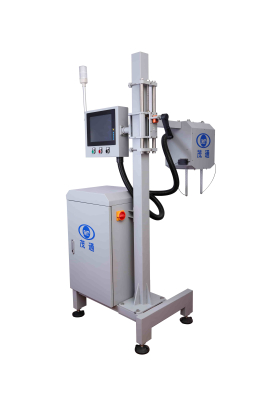
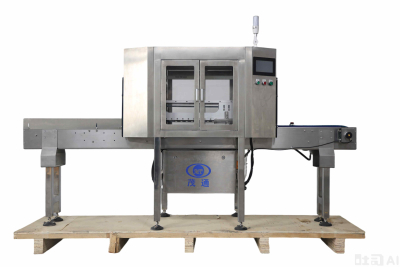
What is a Visual Inspection Machine for Inkjet Coding on Cans?
Imagine a production line churning out hundreds or even thousands of beverage cans per minute, each requiring a production date, batch number, or QR code printed on its base. Relying solely on human workers to inspect each one would be grueling—eyes would tire, and missed defects or errors would be inevitable. This is where the Visual Inspection Machine for Inkjet Coding on Cans proves indispensable. In simple terms, it acts as a "Super Inspector" on the assembly line, dedicated to scrutinizing the inkjet codes on cans. It can inspect dozens or even hundreds of cans per second, ensuring no defective product slips through the cracks.
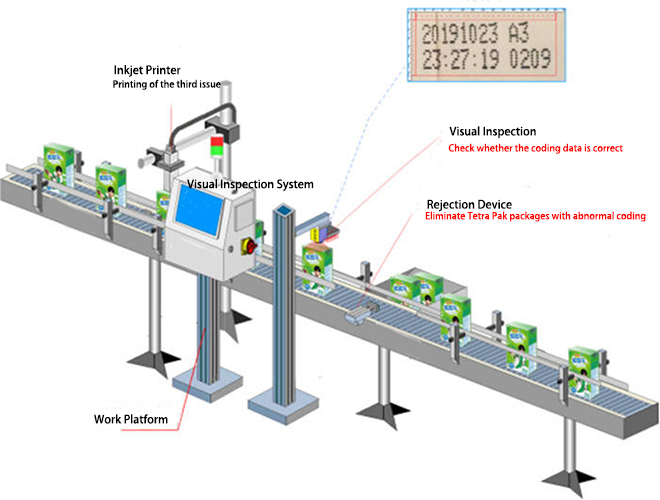
How Does It "See" the Codes?
Despite its name incorporating "vision," its "eyes" are far more powerful than those of humans. The system primarily comprises three components: high-precision industrial cameras, specialized lighting, and intelligent image processing software.
As a can speeds along the conveyor belt, internal sensors detect its arrival and instantly trigger the system. Specialized lighting (such as dome lights that eliminate glare from the metal surface) illuminates the can, and an industrial camera captures a high-speed image of the base. This image isn't for human eyes but is immediately sent to the "brain"—the image processing system. The system compares the captured image against preset standard templates, instantly determining whether the code is acceptable. The entire process is seamless, occurring in the blink of an eye.
What Types of Defects Can It Detect?
This "Super Inspector" is incredibly sharp-eyed and meticulous, catching even the most minute flaws. It guards against several categories of issues:
Missing Codes: Complete absence of printing or codes that have entirely faded away.
Deformed Characters: Missing segments in numbers or letters, rendering dates or batch numbers unreadable.
Blurry Printing: Unclear, smeared, shadowed, or distorted characters due to ink issues or unstable laser power.
Misalignment: Codes printed off-center, at the edge, or skewed instead of being properly positioned.
Incorrect Information: Errors like printing yesterday's date on today's products—a critical mistake easily intercepted.
Once the system flags a can as "defective," it immediately signals a rejection mechanism. Typically, with a precise puff of air or a mechanical arm movement, the faulty can is swiftly ejected from the production line before it can proceed to packaging.
Why Is It Essential in Modern Factories?
In modern beverage or food factories, these inspection machines are no longer optional upgrades but essential safeguards for product quality and compliance.
First, it dramatically boosts inspection efficiency. Human inspectors, no matter how skilled, fatigue quickly when monitoring fast-moving lines. Machines, however, operate 24/7 with unwavering precision, achieving speeds of up to 120,000 cans per hour, perfectly matching high-speed production demands. Second, it significantly reduces labor costs while preventing costly customer complaints and brand reputation damage caused by manual oversight. Crucially, beyond mere defect detection, it records all inspection data via backend software, enabling managers to trace production issues and implement refined quality management.
In summary, the Visual Inspection Machine for Inkjet Coding on Cans exemplifies the integration of modern industrial automation and machine vision technology. With its tireless "keen eyes" and rapid-response "brain," it silently ensures the compliance and safety of every beverage can and beer bottle, serving as an indispensable, invisible guardian in our daily lives.