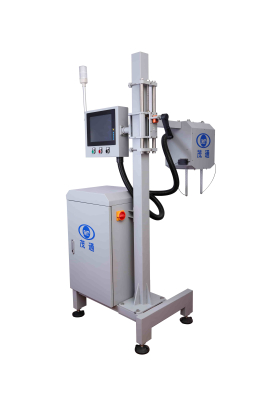
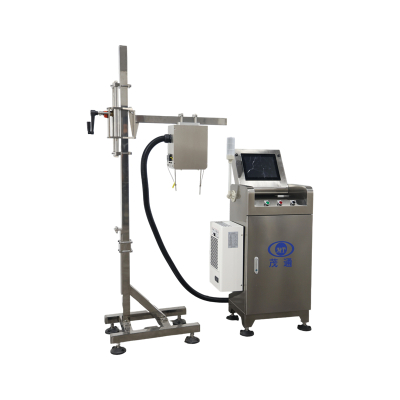
Keep Can Sealing Defects From Moving Downstream
For filling and packaging lines handling 1L–2L cans, sealing quality isn't just a final step—it's paramount. A poorly sealed product could quickly move from filling to packing if your line lacks a reliable inspection point. Our Visual Sealing Inspection Machine is specifically engineered for non-contact online inspection of the sealing area, adept at identifying and automatically rejecting defective products during high-speed production.

Why 360° Seal Inspection is Crucial
In today's fast-paced canning environments, dependable inspection relies on more than just placing a camera near the conveyor. Our Visual Sealing Inspection Machine leverages a high-resolution camera combined with a 360-degree sidewall lens to meticulously capture the entire sealing area around each can. This advanced capability ensures comprehensive online bottle cap and seal inspection without any physical contact or potential damage to your product.
With an impressive inspection speed reaching up to 72,000 cans per hour, achieving consistent results demands careful attention to conveyor stability, precise can spacing, optimal lighting, and a reliable air supply during installation. When the inspection area is kept stable and dry, our Visual Sealing Inspection Machine provides continuous, accurate sealing-quality checks, empowering operators to detect sealing-machine issues promptly, preventing the accumulation of large quantities of defective products.
How Our Inspection Principle Works
Our inspection process begins with the system capturing detailed images of the sealing area. Once the cap's position is accurately located, specialized software establishes a precise circular detection zone along the sidewall edge within the image. Any imperfections or poor sealing will manifest as noticeable grayscale changes inside this defined region.

The Visual Sealing Inspection Machine then rigorously evaluates these grayscale variations against a pre-configured threshold. If the grayscale value surpasses this set limit, the product is immediately flagged as defective. Subsequently, the rejection device receives a signal and precisely controls the removal of the unqualified product from your production line. This integrated workflow ensures seamless inspection, accurate judgment, and efficient rejection, all in real-time.
Key System Advantages
Our Visual Sealing Inspection Machine is not only precise but also designed for optimal operational efficiency and user experience. Its robust architecture offers several advantages:
Main Equipment Sections
The system is engineered around three crucial mechanical sections, each playing a distinct role in the inspection and rejection sequence:
The electrical composition of our equipment features an Intel 5 image-processing industrial computer, a customizable full-view camera, a camera I/O module, a customizable all-around lens, a camera cable, a MT-9000 DSP, a touchscreen, an OPT light-source controller, and a LISHI light source. These components work in concert, allowing the Visual Sealing Inspection Machine to perform real-time inspection, data processing, and responsive action.
Utility Requirements Before Installation
To ensure stable commissioning and optimal performance, it is vital that customers confirm the following conditions are met before integrating the Visual Sealing Inspection Machine into operation:
| Requirement | Specified Condition |
|---|---|
| Power Supply | 220V, 50Hz, single-phase (customer-provided) |
| Total Power Consumption | Approximately 0.5 kW |
| Control Voltage | 24 VDC |
| Compressed Air | 4–12 bar |
| Air Connection | Customer to arrange connection from source to equipment |
| Operating Altitude | 5–3000 meters above sea level |
| Ambient Temperature | 5°C–40°C |
| Relative Humidity | 50%–65% RH |
For any non-standard voltage requirements, it is essential to confirm these details in advance, as specifications, delivery times, and pricing may vary. Additionally, a compressed air supply of 4–12 bar must be ready before the rejection system can function as intended, ensuring seamless operation.
Conveyor and Site Conditions
The conveyor section where the machine will be installed should feature a single-row chain structure with a minimum length of approximately 1.8 meters. The conveyor's slope must not exceed 20°, and cans should maintain a consistent 3–5 mm spacing during inspection. These specific details are crucial because accurate image capture is highly dependent on repeatable product positioning.
Furthermore, the inspection area around the can neck should be kept free from vibration and water droplets, as these conditions can significantly impact camera inspection accuracy. If any vibration is observed at the can neck within the inspection point, we recommend adding a 60–80 mm clamping device to enhance stability. In practice, our Visual Sealing Inspection Machine delivers its best performance when the can's path is consistently controlled, clean, and stable.
When This Machine Fits Your Production Line
Our Visual Sealing Inspection Machine is an ideal solution when your production line demands precise online seal inspection for 1L–2L cans, requires 360° imaging of the sealing area, benefits from non-contact operation, and needs automatic rejection of defective products. Before procurement or commissioning, it is critical for your technical teams to confirm all power, air pressure, conveyor length, conveyor slope, product spacing, and local environmental conditions.
For production managers, the value of this system is clear: defective sealing must be identified and addressed before products move further downstream. With the appropriate installation conditions, our Visual Sealing Inspection Machine makes seal inspection more visible, repeatable, and significantly easier to manage on high-speed canning lines, ultimately safeguarding your product quality and brand reputation.
FAQs
How does the Visual Sealing Inspection Machine detect a poor seal?
The machine captures images of the sealing area, defines a circular detection zone along the sidewall edge, and evaluates any grayscale changes within that zone. If the observed grayscale value exceeds a pre-configured threshold, the product is identified as defective.
Does the machine physically contact the can during inspection?
No, our inspection method is entirely non-contact and operates online. This means the product remains undamaged throughout the inspection process.
What can sizes are compatible with this system?
The Visual Sealing Inspection Machine is specifically designed for applicable can sizes ranging from 1L–2L.
What utilities need to be prepared before installation?
Your facility should provide 220V, 50Hz, single-phase power, with a total power consumption capacity of approximately 0.5 kW. Additionally, 24 VDC control voltage and a compressed air supply of 4–12 bar are required.
What site conditions might affect inspection stability?
Factors such as water droplets and excessive vibration around the can neck in the inspection area can impact camera inspection accuracy. Should vibration occur, installing a 60–80 mm clamping device is recommended to stabilize the cans.