Make Outer Box Coding Inspection Catch Errors Before Shipping
Unreadable or incorrect inkjet codes on cartons and outer boxes create avoidable downstream risk—especially when date codes, factory (plant) codes, or security codes must remain clear and in the correct location. Our Outer Box Coding Inspection system serves as an inline checkpoint right after printing, ensuring coding defects are identified early and defective cartons are removed before they travel further along the line.

What Our Outer Box Coding Inspection System Catches
On carton and outer-box lines, defects extend beyond just a missing code. A code might be present yet still unusable, inconsistent, or out of specification. Our Outer Box Coding Inspection system is expertly designed to catch the defect categories below, each of which can severely impact readability, traceability, and overall process consistency.
Inkjet Presence Detection for Missing Codes
Our Outer Box Coding Inspection system rigorously checks for the presence of an inkjet code. If a carton passes with no inkjet printing whatsoever, the system immediately flags it and sends a reject signal, ensuring it is removed from the normal production flow.
Blurred Printing Detection for Illegible Characters
When characters become unclear, rendering them indecipherable to the human eye, our Outer Box Coding Inspection solution accurately classifies the print as unqualified. This capability is particularly vital for variable content that must maintain absolute readability.
Character Omission Beyond a Defined Threshold
A frequent failure mode involves partial character loss rather than a complete absence of the code. Our Outer Box Coding Inspection system incorporates a precise character omission rule, tied to a defined threshold: a single character missing more than 30% of its content.
Position Deviation Outside the Preset Area
Even a perfectly readable code can be deemed incorrect if it appears outside its designated region. Our Outer Box Coding Inspection system meticulously checks for position deviation when printing extends beyond the defined expansion zone.
Printing Deformation and Shape Integrity Checks
Codes can become distorted—stretched, shortened, or curved—during the printing process or subsequent handling. Our system includes comprehensive printing deformation checks, accounting for elongation or shortening, as a crucial part of its incorrect-printing evaluation.
Incorrect Content Verification for Variable Data
For critical variable fields, our Outer Box Coding Inspection system is designed to verify that the printed content precisely matches expectations for items such as production date, factory/plant code, and security code. This robust capability allows our inspection point to support both superior print-quality control and essential content validation.
How Our Outer Box Coding Inspection System Ensures Inline Inspection and Rejection
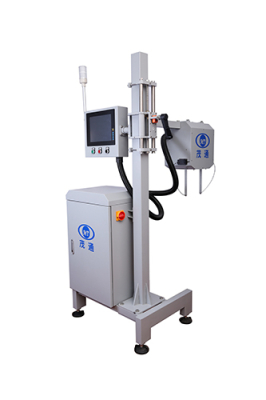
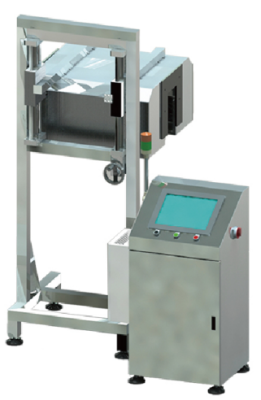
The Outer Box Coding Inspection workflow, powered by our advanced model Outer Box Coding Inspection, is built around sophisticated non-contact imaging and real-time decision-making. As a carton moves past a positioning sensor, the control unit accurately records the carton’s identification number and the current encoder signal. The sensor then triggers a high-speed Gigabit digital camera to capture a clear image of the code from either the top or side. This image is swiftly transmitted via the network to our intelligent image processor for in-depth analysis. The results are instantly displayed on the intuitive HMI and sent to the control unit.

When a code is determined to be unqualified, the control unit immediately signals the rejector to automatically remove the corresponding carton. This means our Outer Box Coding Inspection system directly translates camera input into line actions, significantly reducing reliance on manual visual checks and ensuring consistent, objective inspection decisions for every carton.
Performance and Installation on Carton Lines
Our Outer Box Coding Inspection system boasts impressive performance: it supports an applicable production speed of up to 60 cartons per minute and features a robust IP65 protection rating, ensuring durability in industrial environments. For optimal performance, the specified installation location is a 1.5–2 meter straight section immediately behind the inkjet printer on the production line, positioning our Outer Box Coding Inspection system precisely downstream of the coding step.
Below, we outline the detailed detection items and performance figures for our Outer Box Coding Inspection system.
| Inspection item | Detection condition | Rejection rate |
|---|---|---|
| No inkjet printing | -- | >99.99% |
| Missing inkjet printing | Single character > 30% | >99.8% |
| Fuzzy inkjet printing | Indecipherable characters to the human eye | >99.93% |
| Incorrect inkjet printing | Incorrect production date, incorrect factory code, incorrect security code, deformation (elongation or shortening) | >99.99% |
| Position deviation | Exceeding the expansion zone | >99.99% |
| Duplicate inkjet printing | Multiple codes printed within the code area | >99.99% |
Our system's overall inkjet-inspection false kick rate is exceptionally low, specified as ≤0.03%. (These rejection-rate figures are based on theoretical experimental data; for instance, for “no coding,” it indicates that out of 10,000 uncoded products, a theoretical maximum of 1 might not be rejected.)
Operational Features Supporting Routine QA
Beyond its core inspection-and-reject capabilities, our Outer Box Coding Inspection system includes a suite of operational functions designed for seamless day-to-day production. These include advanced AI self-learning, a configurable multi-level HMI access structure, customizable functions to adapt to specific line needs, automatic daily storage of defect images with flexible retention periods, continuous rejection even during system downtime, and dedicated 24/7 remote monitoring and support. These features are crucial for any buyer evaluating a carton inkjet print quality inspection system, as they define how our Outer Box Coding Inspection system performs under various conditions—during extended runs, product changeovers, and routine quality reviews.
To review the official product details and learn more about how our system can benefit your production line, please visit our Outer Box Coding Inspection page.