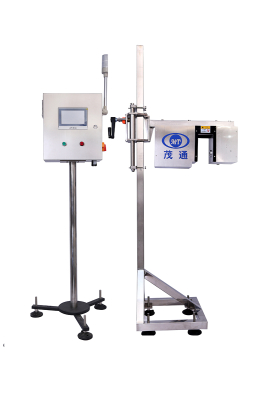
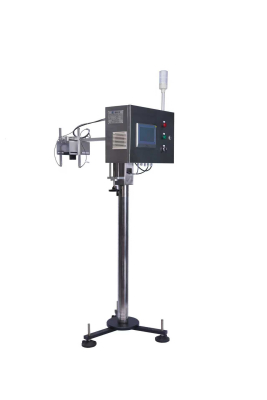
Preform Vision Inspection: Technical Principles, System Construction, and Industry Applications
1. Overview
1.1 Importance of Preform Inspection
A preform is the intermediate product of a PET bottle, which is ultimately formed into various specifications of packaging bottles through a blow molding process. As a "semi-finished product" of PET bottles, the quality of the preform directly determines the performance of the final product. A defective preform can lead to:
Failure in blow molding, reducing production efficiency
Structural defects in the finished bottle, affecting usage safety
Insufficient sealing performance, causing product leakage and deterioration
Appearance defects, damaging brand image and market acceptance
In the quality control chain, preform inspection belongs to the "front-end prevention" link. Compared with finished bottle inspection, preform inspection offers higher economic benefits and efficiency advantages, allowing for the timely removal of unqualified products before defects are amplified, thereby avoiding resource waste in subsequent processing.
1.2 Technical Advantages of Vision Inspection
Traditional preform inspection mainly relies on manual visual inspection, which has inherent flaws such as low efficiency, poor consistency, strong subjectivity, and high labor intensity. With the development of machine vision technology, automated vision inspection systems have gradually become mainstream, with their core advantages including:
Inspection Precision: Capable of identifying subtle defects as small as 0.1mm
Inspection Speed: Up to 20-30 preforms per second
Consistency: Unaffected by human subjective factors
Comprehensive Information: Can detect multiple types of defects simultaneously
Data Traceability: Digital storage of inspection results, facilitating quality traceability and analysis
2. Components of a Preform Vision Inspection System
2.1 Hardware System Design
2.1.1 Imaging Unit
Camera Selection: Industrial-grade CCD or CMOS cameras are typically used, with resolutions ranging from 2 to 12 megapixels. Based on inspection needs, choices include:
Area Scan Cameras: For overall appearance inspection
Line Scan Cameras: For high-speed rotational inspection
3D Cameras: For dimensional and morphological inspection
Lens Configuration: Industrial lenses with appropriate focal lengths are selected based on field of view and working distance. Common configurations include:
Telecentric Lenses: Eliminate perspective errors, improving dimensional measurement accuracy
Macro Lenses: For high-resolution imaging of detailed areas
Zoom Lenses: Adapt to preforms of different specifications
Lighting System: Lighting is a critical part of vision inspection. For the transparent characteristics of preforms, commonly used lighting solutions include:
Coaxial Lighting: For detecting surface scratches and stains
Backlighting: For contour and wall thickness uniformity inspection
Dome Lighting: Eliminates reflections, used for thread and bottle mouth inspection
Special Structured Light: For 3D morphological inspection
2.1.2 Mechanical Conveyance System
Feeding Mechanism: Vibratory bowls, conveyor belts, robotic arms, etc.
Positioning Mechanism: Servo motor-driven rotary tables, precision positioning fixtures
Sorting Mechanism: Pneumatic or mechanical rejection devices
Control System: PLC or industrial PC, coordinating the actions of various components
2.2 Software System Architecture
2.2.1 Image Processing Algorithms
Image Preprocessing:
Filtering and Noise Reduction: Eliminate imaging noise
Contrast Enhancement: Highlight target features
Image Segmentation: Extract regions of interest
Morphological Processing: Fill holes, remove burrs
Feature Extraction Algorithms:
Edge Detection: Canny, Sobel operators
Texture Analysis: Gray-level co-occurrence matrix
Color Analysis: RGB/HSV space conversion
Shape Analysis: Hough transform, contour matching
Defect Recognition Algorithms:
Threshold Segmentation: Based on grayscale differences
Template Matching: Compare with standard samples
Machine Learning: Support Vector Machines, Random Forests
Deep Learning: Convolutional Neural Networks
2.2.2 System Control Software
Inspection Process Management: Coordinates the entire process of image acquisition, processing, judgment, and sorting
Parameter Setting Interface: Provides a user-friendly interface for parameter configuration
Data Management System: Storage, query, statistics, and export of inspection results
Alarm and Prompt: Timely alerts for abnormal status, guiding maintenance
3. Main Inspection Items and Technical Requirements
3.1 Appearance Defect Inspection
3.1.1 Surface Defects
Scratch Detection: Linear defects with length > 0.5mm, depth > 0.05mm
Black Spot Impurities: Foreign matter contamination with diameter > 0.3mm
Bubbles: Bubbles with diameter > 0.5mm, density > 3/cm²
Silver Streaks: Micro-cracks caused by stress or humidity
Haze: Transparency not meeting requirements
Detection Challenges: Transparent materials are sensitive to light, with significant surface reflection interference. Solutions include using polarized light, multi-angle imaging, and diffuse reflection lighting.
3.1.2 Color Abnormalities
Color Difference Detection: ΔE value > 1.5 compared to standard color chart
Color Streaks: Uneven color distribution
Discoloration: Caused by raw material decomposition or contamination
Detection Method: High-precision color cameras capture images under standard light sources (D65, D50, etc.), with color space conversion and color difference formulas for calculation.
3.2 Dimensional Accuracy Inspection
3.2.1 Critical Dimensions
Total Height: Tolerance ±0.3mm
Bottle Mouth Outer Diameter: Tolerance ±0.1mm
Thread Dimensions: Pitch, tooth profile, completeness
Neck Dimensions: Support ring diameter, position
Weight: Weight deviation < 0.5g
3.2.2 Geometric Tolerances
Concentricity: Coaxiality of bottle mouth and body < 0.2mm
Verticality: Straightness of bottle body
Wall Thickness Uniformity: Wall thickness variation at different positions < 0.1mm
Detection Technology: 3D vision systems can accurately measure various parts of the preform, obtaining three-dimensional dimensional information through point cloud data processing.
3.3 Structural Integrity Inspection
3.3.1 Bottle Mouth Defects
Missing Threads: Missing or broken threads
Bottle Mouth Deformation: Ovality out of tolerance
Support Ring Defects: Incomplete, burrs
Sealing Surface Defects: Scratches, dents
3.3.2 Bottle Body Defects
Wall Thickness Abnormalities: Locally too thin or too thick
Stress Whitening: Uneven molecular orientation
Gate Defects: Residual sprue, shrinkage marks
Parting Line: Too obvious or misaligned
3.4 Special Defect Inspection
3.4.1 Raw Material-Related Defects
Foreign Material Inclusion: Impurities of different materials
Excessive Moisture Content: Bubbles generated during injection molding
Degradation Products: Raw material overheating decomposition
3.4.2 Process-Related Defects
Short Shot: Insufficient injection pressure causing material shortage
Flash: Excessive mold gap causing overflow
Sink Marks: Uneven cooling shrinkage
Weld Lines: Weakness at melt convergence points
4. Inspection Algorithms and Technological Innovation
4.1 Traditional Image Processing Techniques
4.1.1 Threshold-Based Segmentation
Separate defect areas from the background by setting appropriate grayscale thresholds. Suitable for defects with obvious contrast, such as black spots and bubbles.
Limitations: Sensitive to lighting changes, difficult to adapt to complex backgrounds.
4.1.2 Template Matching
Use a standard preform image as a template, perform correlation matching with the image to be inspected, and calculate the difference.
Improvement Methods: Multi-template matching, deformable templates, local feature matching.
4.1.3 Texture Analysis
Detect surface defects by analyzing image texture features, suitable for scratches, haze, etc.
Common Features: Contrast, correlation, energy, uniformity.
4.2 Machine Learning Approaches
4.2.1 Feature Engineering
Extract shape, texture, color, and other features from images to construct feature vectors for training classifiers.
Common Classifiers: Support Vector Machines, Random Forests, AdaBoost.
4.2.2 Transfer Learning
Use models pre-trained on large-scale datasets, fine-tune them for preform inspection tasks, reducing the need for training data.
4.3 Deep Learning Methods
4.3.1 Convolutional Neural Networks (CNN)
Detection Frameworks:
Faster R-CNN: Two-stage detection, high accuracy
YOLO Series: Single-stage detection, fast speed
SSD: Balances speed and accuracy
Application Scenarios: Suitable for general detection of multiple defects, especially those difficult to define with traditional methods.
4.3.2 Generative Adversarial Networks (GAN)
Defect Synthesis: Generate various defect samples to expand the training dataset
Anomaly Detection: Determine abnormalities through reconstruction errors
4.3.3 Attention Mechanism
Enable the network to focus on key areas, improving detection efficiency and accuracy, especially for small target defect detection.
4.4 Multi-Sensor Fusion
4.4.1 Vision + 3D
2D vision detects appearance defects, 3D vision detects dimensional and morphological defects, complementing each other.
4.4.2 Vision + Spectroscopy
Combine visible light with near-infrared spectroscopy to detect internal characteristics such as raw material purity and moisture content.
5. System Implementation and Optimization
5.1 Implementation Steps
5.1.1 Requirements Analysis
Define inspection objectives: Defect types, inspection standards
Determine performance indicators: Detection rate, false positive rate, inspection speed
Assess on-site conditions: Space, lighting, power supply, air source
5.1.2 System Design
Hardware Selection: Cameras, lenses, lighting, mechanical structure
Software Architecture: Image processing algorithms, control logic, human-machine interface
Integration Plan: Method of interfacing with the production line
5.1.3 Installation and Commissioning
Mechanical Installation: Ensure positioning accuracy
Optical Commissioning: Optimize lighting and imaging quality
Parameter Calibration: Establish correspondence between pixels and actual dimensions
Algorithm Optimization: Adjust detection parameters for optimal performance
5.1.4 Verification and Acceptance
Performance Testing: Test detection rate using standard samples
Stability Testing: Continuously run the system to test reliability
User Training: Operation and maintenance training
5.2 Key Parameter Optimization
5.2.1 Lighting Optimization
Angle: Incident angle, reflection angle
Intensity: Avoid overexposure or underexposure
Uniformity: Eliminate uneven lighting
Spectrum: Match camera and material characteristics
5.2.2 Camera Parameters
Resolution: Balance between field of view and accuracy
Exposure Time: Avoid motion blur
Gain: Balance signal-to-noise ratio
Frame Rate: Meet inspection cycle requirements
5.2.3 Algorithm Parameters
Thresholds: Segmentation thresholds
Filtering Parameters: Noise reduction intensity
Feature Parameters: Weights of shape, texture features
Classification Thresholds: Discrimination thresholds
5.3 System Maintenance
5.3.1 Daily Maintenance
Cleaning: Lenses, lighting, protective windows
Calibration: Regular dimensional calibration
Backup: Parameter and program backup
Logging: Operation logs, defect statistics
5.3.2 Periodic Calibration
Performance Verification: Verify detection rate using standard samples
Parameter Optimization: Adjust parameters based on production conditions
Software Upgrades: Update algorithms and functions
Hardware Inspection: Check the status of components
6. Industry Applications and Challenges
6.1 Beverage Packaging Industry
Application Characteristics: High speed, high precision, multiple varieties
Special Requirements: Food-grade materials, compliance with FDA, EFSA certifications
Development Trends: Lightweight preform inspection, compatibility with recyclable materials
6.2 Cosmetic Packaging
Quality Requirements: Perfect appearance, accurate color
Inspection Challenges: Multiple colors, shapes, transparencies
Development Trends: Personalized preform inspection, adaptation to small batch, multiple varieties
6.3 Pharmaceutical Packaging
Regulatory Requirements: Compliance with GMP, pharmacopoeia standards
Special Inspections: Seal integrity, cleanliness, material consistency
Development Trends: Sterile packaging inspection, integration with traceability systems
6.4 Technical Challenges
6.4.1 Imaging of Transparent Materials
Reflection and refraction interference
Difficulty imaging internal structures
Solutions: Polarized light, multi-angle imaging, special coatings
6.4.2 High-Speed Inspection
High frame rate imaging
Real-time processing
Solutions: Hardware acceleration, parallel computing, algorithm optimization
6.4.3 Complex Defects
Micro-defects
Defects with blurred boundaries
Solutions: High-resolution imaging, deep learning, multi-scale analysis
6.4.4 Adaptability
Quick switching between multiple varieties
Adaptive parameter adjustment
Solutions: Recipe management, automatic calibration, online learning
7. Future Development Trends
7.1 Intelligent Upgrades
Adaptive Inspection: System can automatically adjust parameters based on production conditions
Predictive Maintenance: Analyze equipment status based on inspection data, predict failures
Online Learning: System can learn from new samples, continuously optimizing models
7.2 Integrated Development
Deep Integration with Production Lines: Inspection data directly feedbacks to control injection molding parameters
Quality Big Data: Massive inspection data used for process optimization and quality analysis
Digital Twin: Establish virtual inspection systems for prediction and optimization
7.3 Integration of New Technologies
Hyperspectral Imaging: Simultaneously acquire spatial and spectral information
Terahertz Technology: Detect internal defects and delamination
Quantum Imaging: Breakthrough traditional optical limits
Edge Computing: Processing completed at the device end, reducing latency
7.4 Standardization and Modularization
Interface Standardization: Facilitates system integration and upgrades
Modular Design: Flexible configuration based on needs
Cloud Services: Algorithm updates, remote diagnostics, data analysis
8. Economic Benefit Analysis
8.1 Direct Benefits
Quality Improvement: Defect rate reduced by 30%-70%
Cost Savings: Labor reduced by over 80%, lower rework and scrap losses
Efficiency Increase: Inspection speed increased by 3-5 times, capable of 7×24 operation
8.2 Indirect Benefits
Data Value: Quality data used for process optimization
Brand Protection: Avoid brand damage caused by quality issues
Compliance Assurance: Meet increasingly stringent quality regulations
Technology Reserves: Accumulate core inspection technology
8.3 Return on Investment
Investment Cost: System prices range from hundreds of thousands to millions
Payback Period: Typically 6-18 months, depending on production scale
Long-term Value: Technology upgrades, data accumulation, brand premium
9. Implementation Recommendations
9.1 Phased Implementation Strategy
Pilot Phase: Pilot at key stations to verify effectiveness
Promotion Phase: Summarize experience, gradually extend to other production lines
Integration Phase: Integrate with MES, ERP systems for data sharing
Optimization Phase: Continuously optimize algorithms and parameters to improve performance
9.2 Key Success Factors
Management Support: Strategic emphasis, resource guarantee
Cross-Department Collaboration: Coordination among production, quality, equipment, and IT departments
Supplier Selection: Technical strength, industry experience, service capability
Personnel Training: Cultivate operation, maintenance, and data analysis capabilities
Continuous Improvement: Establish optimization mechanisms to adapt to changing needs
9.3 Risk Control
Technical Risks: Immature technology, poor adaptability
Implementation Risks: Delayed timelines, ineffective results
Operational Risks: Difficult maintenance, frequent failures
Countermeasures: Thorough verification, phased implementation, backup plans, professional support
10. Conclusion
Preform vision inspection technology is evolving from traditional single-function inspection to intelligent, integrated, and networked systems. With the integration and application of new technologies such as artificial intelligence, the Internet of Things, and big data, vision inspection systems can not only achieve more precise defect recognition but also provide data support for production process optimization, becoming an important component of intelligent manufacturing.
For PET packaging manufacturers, investing in advanced preform vision inspection systems can not only improve product quality and reduce production costs but also serve as a crucial step in digital transformation and enhancing core competitiveness. In the future, as inspection accuracy continues to improve, inspection speed increases, and system adaptability strengthens, vision inspection technology will undoubtedly play an increasingly important role in preform quality control, driving the entire industry to a higher level of development.
When selecting and implementing preform vision inspection systems, companies should consider their actual needs, comprehensively evaluate from aspects such as technological advancement, system stability, return on investment, and service support, adopt scientific and reasonable implementation strategies, and ensure that the system can truly add value and create sustainable competitiveness for the enterprise.