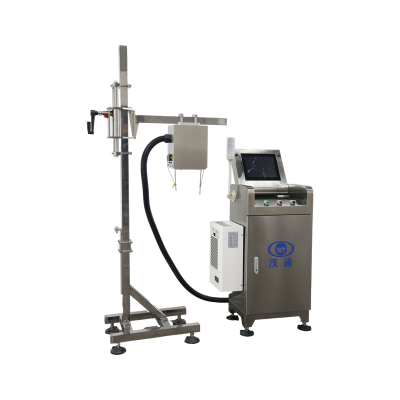
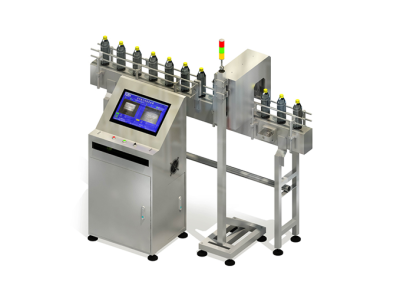
Pull Ring Cover Inspection Machine Catches Defects on Fast Lines
In high-speed beverage canning, uncertain cap quality is a major concern. A missing cap, a shifted pull-ring angle, or a raised lid can quickly move from the seaming area toward packing unless inspection happens inline and in real-time. Our Pull Ring Cover Inspection Machine Pull Ring Cover Inspection Machine provides non-contact online cap inspection, enabling canned beverage lines to identify defective caps without product damage.

Why Inline Pull Ring Cover Inspection Matters
For canned beverage lines, cap inspection needs to match production speed without causing bottlenecks. The Pull Ring Cover Inspection Machine Pull Ring Cover Inspection Machine supports an impressive production speed of up to 60,000 cans per hour and is specifically for cap quality inspection on can production lines. Its non-contact inspection method means cans are checked online without any physical interference from the inspection process.
Our Pull Ring Cover Inspection Machine performs 360° online inspection and uses specialized, customized light sources to reduce interference from cover and pull-ring colors. This is crucial because cap appearance changes with product design, making consistent image acquisition vital for accurate defect detection.
What the Pull Ring Cover Inspection Machine Detects
The Pull Ring Cover Inspection Machine focuses on three critical cap-quality risks: missing caps, cap angle offset, and lid pop-up. Cap angle detection is performed by a Gigabit Ethernet digital camera that captures top-down images of can caps. These images are digitally analyzed and matched through 360° template matching. For lid pop-up inspection, curved-surface scanning continuously checks the top surface of the can cap, identifying any abnormal deviations.
| Inspection item | Detection content | Rejection rate | False detection rate |
|---|---|---|---|
| No cap | Cap absent | ≥99.99% | ≤0.03% |
| Cap angle offset | Cap deviation angle ≥5° | ≥99.9% | ≤0.03% |
| Lid pop-up | Deviation value ≥1 mm | ≥99.9% | ≤0.03% |
These figures represent standard detection accuracy. We fine-tune final inspection settings based on actual cap conditions and production-line stability, making on-site commissioning crucial.
How the Inspection and Rejection Workflow Runs
The Pull Ring Cover Inspection Machine operates as a synchronized inline system. When a can passes the positioning sensor, it detects its arrival, and the control unit records the can's identification number and current encoder signal. The sensor then triggers the digital camera to capture a cap image, which is transmitted to the image processor via the network.

After image processing and analysis, the result is sent to the HMI for dynamic display and to the control unit. If the system identifies an unqualified cap, the control unit notifies the rejector to remove the corresponding can online. This ID-and-encoder system ensures precise rejection, matching the defect to the exact can, not a neighboring one on a high-speed line.
HMI Control and Production Management
A user-friendly HMI with multi-level access control supports practical line operation. This allows production teams to manage routine operations separately from sensitive parameter adjustments. Another useful function is defect traceability. The system can automatically store daily images of defective caps, with adjustable retention periods. Instead of just relying on live pass/fail results, operators can later review defect images for detailed quality analysis, shift performance assessment, or process fine-tuning. Our equipment also offers 24/7 remote monitoring and service, alongside continuous rejection and automatic line shutdown features if defect counts surpass set limits.
Installation and Engineering Fit
For optimal installation, we recommend a 1.5–2 meter straight conveyor section directly behind the sealing machine. This placement allows the Pull Ring Cover Inspection Machine to inspect caps soon after sealing, before defective products move deeper into downstream handling.
Our Pull Ring Cover Inspection Machine is specified with an IP65 protection rating. It also includes an industrial-grade cooling system designed to reduce malfunctions and downtime during extended operation in warmer conditions. Before installation, line engineers should verify adequate straight conveyor space, cap style compatibility, conveyor stability, inspection thresholds, rejector placement, and defect-count stop parameters.
When to Consider a Pull Ring Cover Inspection Machine
Our Pull Ring Cover Inspection Machine is ideal for beverage canning lines requiring non-contact, real-time cap inspection at high throughput. It is especially useful where missing caps, cap-angle deviation, or lid pop-up must be detected automatically and rejected online.
When comparing can cap inspection equipment, key considerations include production speed, supported defect types, detection thresholds, rejection methods, HMI access, image archiving, installation footprint, and environmental protection. Our Pull Ring Cover Inspection Machine Pull Ring Cover Inspection Machine integrates these functions, delivering robust canned beverage cap inspection at up to 60,000 cans per hour.