Comprehensive Analysis of Tinplate Can Leak Detection Technology
A key technical means to ensure packaging integrity.
Tinplate cans, as important packaging containers in the food, chemical, and pharmaceutical industries, have a sealing performance that directly affects product quality, safety, and shelf life. Especially for 1L tinplate cans, due to their moderate capacity and wide range of applications, leak detection has become an indispensable quality control link in the production process. This article will systematically introduce various methods, technical principles, and operational points of tinplate can leak detection.
I. The Importance of Tinplate Can Leak Detection
Tinplate cans have advantages such as strong light shielding, robust structure, and good metallic decorative properties, and are widely used in the packaging of products such as milk powder, canned goods, tea, and health products. However, if the can body is poorly sealed, it can lead to spoilage, contamination, or leakage of the contents, resulting in not only economic losses but also potential food safety issues.
For 1L tinplate cans, leaks can occur at the can body seams, crimping structure, or lid seal. Therefore, reliable detection methods must be used during the production process to promptly identify and remove defective products, ensuring the quality and safety of products leaving the factory.
II. Main Leak Detection Methods and Technical Principles
1. Water Bath Leak Detection Method
The water bath leak detection method is a traditional and widely used detection method, mainly relying on manual operation. Its principle is to use magnetic guidance or special fixtures to move the can body in a water bath, and the operator determines the sealing performance by observing whether bubbles are generated.
The specific operation process is as follows: Immerse the can body in a water bath and move it slowly through a conveyor system. If the can body has a leak point, the internal air will escape from the leak point, forming a continuous stream of bubbles, which the operator can use to identify defective products.
This method is particularly effective for tinplate cans because the magnetic guidance system can stably control the movement path of the steel can in the water. However, this method relies on manual judgment, the detection efficiency is relatively low, and it requires a high level of experience from the operator.
2. Pressure Decay Test Method
The pressure decay test method is a more precise detection method, including two forms: pressurized leak testing and vacuum leak testing. The pressure leak test procedure is as follows: Seal the opening of the empty can with a rubber stopper, connect an air compressor, and gradually increase the internal pressure to 0.7 kg/cm² and maintain it for 2 minutes. Then, immerse the empty can in a glass tank filled with water and observe whether continuous bubbles are produced from any part of the can body.
The vacuum leak test involves filling the can with water to 80-90% capacity, sealing the can opening with a plexiglass plate with a rubber ring, and reducing the internal pressure to 6.8 × 10⁴ Pa (510 mmHg) using a vacuum pump, maintaining this pressure for more than 1 minute while observing for bubbles inside the can.
Both methods can effectively identify micron-level leak points, and the results are intuitive and reliable.
3. Electronic Leak Detection Method
Electronic leak detection is a more advanced testing technology, first introduced by Pamasol in 1993. This technology uses highly sensitive electronic sensors to detect propellant leaks as small as 0.003 mL.
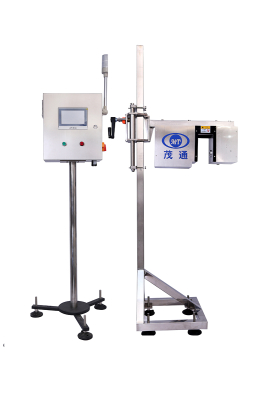
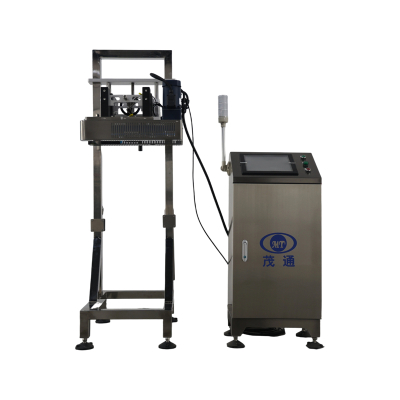
The electronic leak detector determines the presence of leaks by monitoring changes in the composition of the gas surrounding the can body. It features high accuracy and speed, making it suitable for quality control on high-speed production lines.
4. Pressure Measurement Leak Detection Method
In 1996, Pamasol introduced a new generation of pressure measurement leak detection machines. This method completes three key actions in one detection cycle: first, checking the can opening for deformation and sealing condition; second, evacuating the air between the can shoulder and the detection seal to reduce the pressure to zero; and finally, measuring for 2-3 seconds. If the pressure in the sealed space is ≥150 Pa, the can is determined to have a leak.
This method combines mechanical and electronic technologies, offering convenience, speed, and reliability, and has become one of the mainstream detection technologies on modern production lines.
III. Professional Testing Equipment and Applications
1. Sealing Performance Tester
Professional testing equipment, such as the "MFY-02 Sealing Performance Tester" developed by Jinan Saicheng, provides a standardized testing method for tinplate cans. This equipment complies with GB/T 15171-94 "Test Method for Sealing Performance of Flexible Packaging" and ASTM D3078 standards, and uses a built-in air source unit, eliminating the need for an external air source; it is ready to use simply by plugging it in. The operating procedure is as follows: Place the sample under the sealed cover and immerse it in water. After setting the parameters, start the equipment. The air source unit will extract air from the vacuum chamber, and automatically enter the testing state after reaching the preset vacuum level. The operator observes whether continuous bubbles are generated during the vacuum holding period to determine the sealing performance of the sample.
2. Third-Party Testing Services
For manufacturing companies requiring authoritative certification, third-party testing agencies can be utilized. These agencies, in accordance with national standards such as GB/T 14251, use professional equipment to conduct sealing strength tests, leakage tests, pressure resistance tests, and appearance inspections on metal cans, providing objective and impartial evaluation reports.
The advantages of third-party testing lie in its independence and professionalism, which can help companies identify potential risks, optimize production processes, and improve product quality.
IV. Selection and Implementation Suggestions for Testing Methods
1. Choosing the Appropriate Method Based on Production Needs
Companies of different sizes and production environments should choose appropriate testing methods based on their own circumstances: small and medium-sized enterprises may be more suitable for lower-cost methods such as water bath leak detection or pressure decay testing; while large manufacturing enterprises may need to invest in more automated equipment such as electronic leak detection or pressure testing.
2. Precautions During Implementation
The following points should be noted when implementing leak detection: ensure that the testing environment meets the requirements, including the cleanliness of the water and the accuracy of pressure control; regularly calibrate and maintain the testing equipment to ensure the reliability of the test results; and provide professional training to operators to improve the consistency and accuracy of the detection.
V. Conclusion
Leak detection of tinplate cans is a crucial link in ensuring packaging quality. With technological advancements, testing methods have evolved from traditional water bath methods to today's electronic and intelligent detection systems, significantly improving both accuracy and efficiency.
Manufacturing companies should choose appropriate testing methods based on their product characteristics and quality requirements, and establish a comprehensive quality control system to ensure that every 1L tinplate can leaving the factory provides reliable sealing performance, protecting the safety and quality of the contents.