Leak Detection Technology for Bagged Products: Methods, Applications, and Future Trends
1. Introduction: The Importance of Leak Detection for Bagged Products
Leak detection for bagged products is a crucial quality control step in the modern packaging industry, directly impacting product freshness, safety, and corporate profitability. For many industries, including food, pharmaceuticals, and medical devices, packaging integrity is a core element in ensuring products maintain specific quality within their shelf life. Leaks can lead to product dampness, oxidation, spoilage, and even microbial contamination, affecting not only consumer experience but also potentially causing irreparable damage to brand reputation. Statistics show that in the food industry, product returns and complaints due to packaging leaks account for over 30% of all quality issues, highlighting the critical role of leak detection in production and quality management processes.
Leaks in bagged products can originate from various factors, including defects in the packaging material itself, improper heat-sealing parameters, and wear or punctures during transportation. The size of these leaks ranges from micro-leaks at the micrometer level to noticeable holes at the millimeter level. Micro-leak detection is particularly challenging because micro-leakage is often difficult to detect with the naked eye or simple methods, yet it is enough to allow oxygen or microorganisms to enter the packaging, accelerating product spoilage. Therefore, modern manufacturing requires high-precision, high-efficiency detection methods capable of quickly and accurately identifying defective products on the production line and removing them from the line.
With technological advancements and increasing consumer demands for product quality, leak detection technology has evolved from early simple manual squeezing methods to today's automated detection systems based on various physical principles. These technologies not only improve the accuracy and efficiency of detection but also reduce losses and waste caused by packaging leaks for businesses. From a quality control perspective, effective leak detection is not only a technical challenge but also a crucial strategic investment for companies to reduce quality costs and enhance brand value.
2. Core Techniques and Methods for Leak Detection After decades of development, leak detection technology for bagged products has evolved into various detection methods based on different principles, each with its own applicable scenarios and advantages. Understanding the principles and characteristics of these core technologies is crucial for selecting the most suitable detection solution for specific products and production needs.
2.1 Traditional Methods and Standards: Bubble Test Method
The bubble test method (ASTM F2096), as an internationally recognized standard testing method, provides a practical solution for checking overall leakage in packaging. This method involves internally pressurizing the packaging with gas at a certain pressure, and then determining whether the packaging is leaking or its maximum burst strength based on changes in gas pressure. The specific procedure includes: first, creating a known defect on a control sample (e.g., using a 125μm needle tip) and marking the area around the defect; then, drilling a hole in the center of the packaging using a puncture device, inserting an air source and pressure monitoring device, and sealing the insertion point with glue or a rubber ring; next, submerging the control sample approximately 1 inch (about 2.54 cm) underwater for 5 seconds while simultaneously inflating the packaging; adjusting the airflow and exhaust valves to allow the control sample to gradually expand until bubbles begin to appear at the defect point; recording the pressure at the time of bubbling, which will become the minimum test pressure.
In the formal testing phase, the operator similarly submerges the test sample underwater and inflates it, maintaining the internal pressure at the same or slightly higher than the established test pressure. If a continuous stream of bubbles is observed, it indicates a leak in the packaging. A single, isolated bubble is generally not considered a leak; only a continuous flow of bubbles is considered a leak indicator. This method is simple and intuitive, suitable for quantitatively determining the sealing strength, heat-sealing quality, and overall bag sealing performance of flexible packaging and aseptic packaging materials formed through various heat-sealing and bonding processes.
2.2 Emerging Techniques and Methods
With technological advancements, more high-precision and high-efficiency detection methods have been developed and are widely used in modern production lines. These methods include:
Vacuum Decay Technology: The packaging is placed in a dedicated test chamber, and a vacuum is created to form a negative pressure environment. High-precision sensors monitor changes in vacuum levels over a predetermined time period. Leaks and defects in the packaging will cause changes in vacuum levels, which can be accurately measured. This technology requires no tracer gas and can detect even the smallest leaks (down to the micrometer level). It is a non-destructive testing method, and the product can continue to be sold or used after testing.
Ultrasonic Technology: Ultrasonic signals penetrate packaging materials. When there is a leak or defect in the packaging, the ultrasonic signal will change specifically. This technology combines image analysis with a non-contact method to test the airtightness of flexible packaging bags, making it particularly suitable for high-speed online inspection scenarios. Its biggest advantage is that it completely avoids product contact, eliminating the risk of cross-contamination.
CO2 Tracer Gas Method: Designed specifically for modified atmosphere packaging (such as coffee, cheese, chilled meat, etc.). These packages typically contain a certain concentration of CO2 gas. During testing, the packaging is placed in a test chamber, and air is evacuated to create a vacuum. If there is a leak in the packaging, the internal CO2 will escape and be captured by a high-sensitivity CO2 sensor inside the chamber. This method offers high accuracy and does not cause any damage to the packaging.
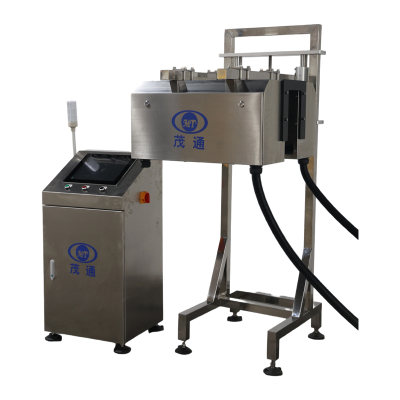
Pressure Sensor Extrusion Method: An innovative online inspection technology that applies continuous pressure to the bagged product during transport using a flexible extrusion belt. Pressure sensors mounted on the extrusion belt detect changes in pressure inside the bag and then convert the signal into a digital signal for analysis. The advantage of this method is that it enables continuous dynamic inspection at speeds up to 110 bags/minute without disrupting the normal operation of the production line.
Table: Comparison of Leak Detection Technologies for Major Bagged Products
| Detection Method | Detection Principle | Applicable Scenarios | Accuracy | Detection Speed |
| Bubble Detection Method (ASTM F2096) | Internal pressurization + water immersion for bubble observation | Laboratory environment, pallet and bag packaging | Can detect leaks larger than approximately 0.8mm in diameter | Relatively slow, suitable for sampling inspection |
| Vacuum Decay Technology | Monitors changes in vacuum level | Various soft and hard packaging, food and pharmaceutical industries | Micron-level micro-leakage | Fast, can be detected online |
| CO2 Tracer Gas Method | Detects CO2 gas escape | Modified atmosphere packaging, packaging containing CO2 products | High speed, can detect micro-leakage | Medium speed, suitable for online inspection |
| Pressure Sensor Compression Method | Compression + pressure sensor detection | Online inspection of bagged products | Can detect leaks larger than approximately 0.8mm in diameter | Extremely fast, up to 110 bags/minute |
2.3 Automated Online Inspection Technology
To meet the demands of mass production, automated online inspection technology has emerged. These systems are typically integrated into the production line to achieve 100% inspection of each product. A typical automated inspection device includes a conveyor belt, a striking assembly, a flexible extrusion belt, pulleys, a drive assembly, a support frame, and a fixing frame. Its workflow is as follows: bagged products are conveyed backward on the conveyor belt. When they reach the flexible extrusion belt, the flexible extrusion belt and the conveyor belt work together to continuously extrude pressure on the products while continuing to convey them. Sensors (such as pressure sensors) detect pressure changes within the bagged products in real time. Products that meet the requirements continue to be conveyed along the conveyor belt; products that do not meet the requirements are knocked down by the striking assembly, achieving automatic sorting.
The core advantage of this inspection system lies in its continuous operation and high-precision detection. The flexible extrusion belt has a long contact area, enabling continuous and uniform extrusion of the bagged products. This allows leaking products sufficient time to fully exhibit pressure changes, thereby improving detection accuracy. Experimental data shows that the pressure value of good packaging under extrusion pressure is generally above 2000, while the test value of leaking packaging with a small hole of about 0.8 mm is only 609, a very significant difference. This significant difference allows the system to accurately identify leaking products, greatly reducing the false rejection rate.
3. Standardized Testing Procedures and Key Implementation Points
Implementing a scientifically standardized testing procedure is crucial to ensuring accurate and reliable leak detection results for bagged products. Based on international standards such as ASTM F2096, and considering the specific characteristics of the product, developing appropriate testing parameters and operating procedures can significantly improve the consistency and comparability of test results.
3.1 Testing Procedure Based on ASTM F2096 Standard
ASTM F2096 provides detailed operating guidelines for the bubble detection method. The standard testing procedure begins with the preparation of a control sample—using standardized defect-making tools (such as a 125μm needle tip) to create a known defect on the control sample. This step ensures the consistency of the baseline for subsequent tests. Subsequently, a pressurized channel is established by puncturing the center of the packaging and inserting an air source and pressure monitoring device. A critical step is determining the minimum test pressure: immersing the control sample underwater for approximately 1 inch, inflating it until bubbles appear at the defect point, and recording the pressure value at this point. This pressure value will serve as the reference baseline for subsequent tests.
During the formal testing phase, operators must strictly control several key parameters: immersion depth (approximately 1 inch below the water surface), immersion time (5 seconds), and inflation pressure (slightly higher than the minimum test pressure). During testing, careful observation of bubble formation is crucial—a single isolated bubble is usually insufficient to determine a leak, while a continuous flow of bubbles clearly indicates a leak. Upon discovery of a leak, the location should be marked, and parameters such as the test pressure should be recorded in detail to provide data support for subsequent quality analysis and process improvement.
For automated testing equipment, such as the LT-03A Leakage and Sealing Strength Tester, the operating procedure includes: powering on the equipment and preheating for at least 30 minutes; preparing at least 5 samples without obvious defects; adjusting the probe height to the appropriate position; sequentially performing tests in different modes, such as "burst test," "creep test," and "creep to burst test"; and properly maintaining the equipment after testing. This multi-mode testing method comprehensively evaluates the sealing strength performance of packaging, not only determining whether a leak has occurred but also quantifying the maximum pressure tolerance of the packaging, providing specific data guidance for improving packaging processes.
3.2 Key Control Parameters and Precautions
To ensure the accuracy and reliability of leak detection results, the following parameters need to be strictly controlled:
Pressure parameters: including inflation pressure, pressurization rate, and holding time. These parameters should be customized according to the characteristics of the packaging material and the contents. For packaging with a high air ratio (such as inflatable packaging), the initial vacuum pressure setting should be low because the gas expansion rate inside such packaging is high, and excessively drastic pressure changes may damage the packaging or lead to misjudgments.
Time parameters: including immersion time, pressurization time, and observation time. Sufficient test time ensures adequate performance even for micro-leaks, but excessive time will affect detection efficiency. Especially for automated online detection, it is necessary to accurately calculate the time it takes for the product to pass through the detection area to ensure that the sensor has sufficient time to acquire reliable data.
Environmental conditions: Environmental factors such as water temperature and cleanliness in the water immersion method can also affect the test results. Excessively high water temperatures may soften the packaging material, affecting the original leakage characteristics; impurities in the water may clog micro-leaks or interfere with bubble observation. Therefore, maintaining a stable test environment is an important condition for ensuring consistent results.
When conducting testing, the following points should be noted: Testing equipment needs to be calibrated regularly to ensure the accuracy of pressure sensors and flow meters; operators should receive professional training to correctly distinguish between genuine leaking bubbles and bubbles formed by air adsorbed on the packaging surface; specific test parameters may need to be adjusted for packaging of different materials and shapes; test results should be recorded in detail and statistically analyzed to track long-term trends and sudden anomalies in packaging quality.
4. Industry Applications and Selection Strategies for Leak Detection Technology Leak detection technology for bagged products has been widely applied in various industries, but different industries have different requirements for testing. Understanding the specific needs and technological development trends of each industry helps in selecting the most suitable testing solution and achieving the best balance between quality and cost.
4.1 Analysis of Application Characteristics in Various Industries In the food industry, leak detection is particularly critical, especially for oxygen-sensitive products such as puffed foods, bread, milk powder, cheese, coffee, and snack foods. These products typically use modified atmosphere packaging (MAP) to extend shelf life or maintain a specific texture. Leaks cause the protective gas inside the packaging to escape, allowing oxygen to enter and accelerating food spoilage. The food industry typically requires high-speed online inspection systems to accommodate mass production. For example, an advanced online inspection device can reach speeds of 110 bags per minute, meeting the needs of most food production lines. Simultaneously, food industry inspections must consider hygiene design requirements to avoid equipment structure causing product contamination or cleaning difficulties.
The pharmaceutical industry has even stricter requirements for packaging integrity because leaks in drug packaging can lead to loss of efficacy, microbial contamination, and even safety hazards. The pharmaceutical industry often needs to detect leaks at the micrometer level, especially for sterile products, injections, and infusion bags, where even a small leak can have serious consequences. Therefore, the pharmaceutical industry tends to use high-precision detection methods, such as vacuum attenuation methods, which enable non-destructive testing even for the smallest leaks. Furthermore, pharmaceutical industry inspection systems typically need to meet more stringent validation and certification requirements, such as FDA certification and GMP standards.
The daily chemical industry (such as wet wipes and cosmetic packaging) and the medical device industry also have high requirements for packaging sealing, but their focuses differ. The daily chemical industry focuses more on the appearance of the packaging and the preservation of the contents, while the medical device industry prioritizes aseptic assurance. These industries may choose testing solutions with varying levels of precision and cost based on product value and risk level.
4.2 Key Considerations for Selecting Testing Equipment
When selecting a leak detection solution for bagged products, multiple factors need to be considered to ensure maximum return on investment:
Product Characteristics: This includes packaging size, material, shape, and contents morphology. Large or irregularly shaped packaging may require customized testing fixtures; the testing principles applicable to rigid and flexible packaging may be completely different; powdered contents and liquid contents also have different sensitivities to detection.
Production Requirements: The speed of the production line determines whether online or offline sampling testing is required; production batch size affects the equipment's return on investment cycle; the required level of automation determines how the testing system can be integrated with the existing production line.
Testing Accuracy Requirements: The required testing accuracy is determined based on the product's risk level. For high-risk products (such as sterile medical devices), high-precision equipment capable of detecting leaks at the micron level may be necessary; while for general commodities, the accuracy requirements can be appropriately reduced to control costs.
Resource Constraints: This includes budget constraints, site limitations, and personnel skill limitations. With a sufficient budget, a fully automated high-end system can be chosen; with a limited budget, semi-automatic or manual inspection methods can be considered; small spaces require a compact design; the skill level of the operators affects the operability and maintainability of the equipment.
Table: Selection Decision Matrix for Leak Detection Equipment for Bagged Products
| Considerations | Online Inspection System | Offline Automated Inspection | Manual Inspection |
| Production Efficiency | Suitable for high-speed production lines, continuous inspection | Medium speed, requires sampling and testing | Slow speed, low efficiency |
| Detection Accuracy | High, can integrate multiple detection technologies | High, but limited by sampling rate | Dependent on operator experience, poor consistency |
| Investment | Cost High, including equipment and integration costs | Medium, relatively low equipment cost | Low, only requires simple tools |
| Space Requirements | Requires integration into the production line, high space requirements | Requires a separate inspection area | Flexible space requirements |
| Personnel Requirements | Requires equipment maintenance and data analysis skills | Requires operator training | Dependent on skilled operators |
Return on Investment | Returns through reduced waste and increased brand value | Moderate ROI, suitable for small-batch production | Limited returns, suitable for very small-scale production |
4.3 Implementation Strategies and Best Practices
Successfully implementing a leak detection system for bagged products requires a scientific strategy and effective best practices. First, a gradual implementation strategy is recommended: start with small-scale pilot projects to verify the effectiveness of the detection scheme, and then gradually expand its application. For example, the detection equipment can be introduced into some workstations on the production line first, allowing operators to familiarize themselves with the process before full-scale rollout. This strategy reduces implementation risk and avoids production interruptions due to system incompatibility.
Second, establishing a comprehensive data management system is crucial. Modern detection equipment typically generates a large amount of detection data. This data is not only used to determine product compliance in real time, but should also be collected and analyzed by the system to monitor long-term trends in packaging quality and promptly identify potential problems. For example, if the leakage rate increases significantly over a period of time, it may indicate changes in packaging materials or heat-sealing processes, requiring timely adjustments.
Furthermore, regular calibration and maintenance are key to ensuring the continuous and accurate operation of the detection system. Even the most precise equipment may experience performance drift over time. Establishing rigorous calibration and preventative maintenance plans can minimize false alarms and missed detections, maintaining consistent quality. Calibration frequency should be determined based on equipment usage intensity and product accuracy requirements, ranging from daily to monthly.
Finally, cross-departmental collaboration is crucial for optimizing the detection system. Leak detection should not be solely the responsibility of the quality department but requires close cooperation with purchasing (packaging material selection), production (process parameter optimization), and equipment maintenance (system upkeep). Only through comprehensive collaboration can leakage problems be controlled at the source, rather than simply detecting non-conforming products at the end.
5. Summary of Future Development Trends
Leak detection technology for bagged products continues to evolve, with future development focusing primarily on three dimensions: intelligence, high precision, and standardization. Intelligent detection systems will integrate machine learning and artificial intelligence algorithms, automatically learning the normal pressure characteristics of different products and adaptively adjusting judgment thresholds according to changes in production conditions, significantly reducing false alarm rates. These systems can also predict potential faults by analyzing historical data, enabling preventative quality maintenance, rather than just post-event detection.
Continuously improving detection accuracy is another significant trend. With advancements in sensor technology and signal processing algorithms, modern testing equipment can now identify even smaller leaks (down to the micrometer level). High-precision testing is not only applicable to high-value products (such as pharmaceuticals and high-end medical devices) but is also gradually expanding into the realm of ordinary commodities. In the future, the balance between testing accuracy and cost will be further optimized, enabling more companies to benefit from the quality improvements brought by high-tech testing.
Standardization is the cornerstone of the industry's healthy development. As technology matures, international standardization organizations (such as ASTM and ISO) are continuously improving their testing standards systems, making equipment and results from different manufacturers more comparable. Standards such as ASTM F2096 (bubble method) and F2338 (vacuum decay method) have been recognized by the US FDA as consensus standards for packaging integrity testing, and their coverage will further expand in the future, with testing methods becoming more standardized.
Overall, leak detection technology for bagged products is developing towards faster, more accurate, and more intelligent solutions, providing companies with comprehensive packaging quality control solutions. With technological advancements and cost reductions, testing technologies previously used only for high-end products are gradually penetrating the mid-to-low-end product market, ultimately comprehensively improving the quality level of bagged products and industry standards.