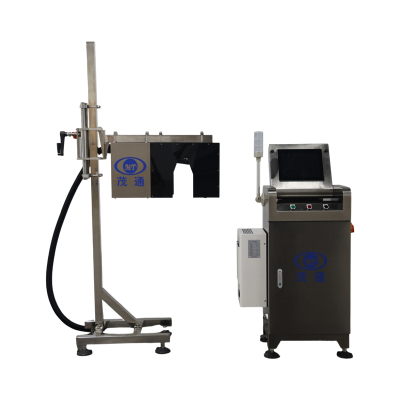
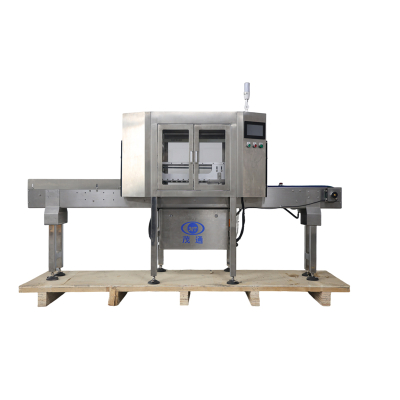
Comprehensive Introduction to Extrusion-Type Aluminum Foil Seal Inspection Equipment
The extrusion-type aluminum foil seal inspection device is a specialized piece of automated equipment designed to assess the sealing integrity of aluminum foil closures on packaging containers. By employing a mechanical extrusion method, it monitors internal pressure fluctuations within the container in real-time to determine whether the seal quality meets acceptable standards. This equipment holds significant practical value across industries such as food, beverages, and pharmaceuticals, as it effectively prevents issues—such as product leakage or spoilage—that stem from defective seals.
I. Equipment Overview and Working Principles
The extrusion-type aluminum foil
device utilizes a contact-based pressure detection principle. It applies uniform pressure to the packaging container via a pair of opposing conveyor belts, while high-precision pressure sensors simultaneously monitor real-time changes in pressure values. As a container passes through the inspection machine, the belts exert pressure on its body; the sensors positioned downstream of the belts then transmit this real-time pressure data to the control system. The control system analyzes and compares this pressure data against established criteria; should the pressure value fall below or rise above the pre-configured acceptable range, the system immediately triggers a rejection mechanism to remove the non-conforming product.
This inspection method is particularly well-suited for packaging containers that demand a high level of sealing integrity—such as those holding carbonated beverages or products undergoing secondary sterilization. Since the internal pressure within these containers typically fluctuates following sterilization, a defective seal will result in an abnormal drop in pressure, potentially causing irreversible deformation of the container lid. Conventional non-contact pressure inspection machines often struggle to detect such defects; however, the extrusion-type inspection machine accurately identifies non-conforming products by directly measuring the internal pressure of the container.
II. Core Components and Technical Architecture
The extrusion-type aluminum foil seal inspection device primarily consists of three core components:
Pressure Detection Unit: This constitutes the central element of the equipment, comprising high-precision pressure sensors, a signal processing module, and a data acquisition system. The pressure sensors typically feature a contact-based design, enabling them to capture real-time pressure fluctuations within the container as it undergoes compression.
Human-Machine Interface (HMI) System: This includes a touchscreen control panel, a signal tower light system, and a user interface. The touchscreen facilitates functions such as parameter configuration, data monitoring, and fault diagnostics/alarms; the tower light utilizes distinct colors to visually indicate the equipment's operational status; and the user interface is designed to be clean and intuitive, thereby facilitating ease of operation for frontline personnel.
Rejection Actuator: Acting upon instructions issued by the control system, this mechanism physically removes the detected non-conforming products from the production line. Rejection methods include various forms such as pneumatic ejection and robotic arm gripping, which can be configured according to the production line speed and specific requirements.
III. Key Technical Parameters and Performance Indicators
Based on the specifications of mainstream products in the market, the key technical parameters for the extrusion-type aluminum foil seal inspection equipment are as follows:
| Parameter Category | Technical Indicator | Description |
| Inspection Speed | 150–300 bottles/minute | Up to 300 bottles/minute; supports inspection while in motion |
| Inspection Accuracy | ±0.1% FS | High pressure measurement precision ensures inspection accuracy |
| Applicable Container Diameter | Φ15–Φ300 mm | Adaptable to various bottle and jar specifications |
| Applicable Container Height | 40–500 mm | Covers the height range of most common packaging containers |
| Power Requirements | AC 220V, 50/60 Hz | Standard industrial power supply |
| Air Source Pressure | 0.5–0.7 MPa | Operating pressure for the pneumatic system |
| Equipment Power | Approx. 1 kW | Low energy consumption |
| Pass Rate | ≥99.99% | High inspection accuracy rate |
| False Rejection Rate | ≤0.5% | Low false judgment rate minimizes material waste |
IV. Inspection Capabilities and Defect Identification Scope
The extrusion-type aluminum foil seal inspection equipment is capable of identifying a wide range of sealing defects, primarily including:
Improper Sealing: Presence of minute gaps or incomplete fusion at the seal interface
False/Incomplete Sealing: Surface appears sealed, but the actual sealing integrity requirements have not been met
Missing Foil: Absence of aluminum foil material at the sealing point
Curled/Folded Edges: Aluminum foil edges fail to adhere flatly to the container rim
Double Sealing: Repeated sealing at the same location, resulting in uneven quality
Overheating or Underheating: Uneven thermal distribution caused by improper sealing temperatures
Damage or Misorientation: Damaged aluminum foil or incorrect orientation of the foil/seal
Additionally, the equipment can detect various packaging defects—such as missing caps, high caps, crooked caps, broken tamper-evident bands, ring defects, and mismatched caps—thereby achieving comprehensive quality monitoring.
V. Application Fields and Industry Suitability
The extrusion-type aluminum foil seal inspection equipment is widely utilized across the following industries:
Food and Beverage Industry: Packaging inspection for carbonated and non-carbonated beverages, including beer, soft drinks, fruit juices, dairy products, and more. Particularly suitable for various packaging formats, such as PET bottles, aluminum cans, and glass bottles.
Pharmaceutical Industry: Integrity testing for pharmaceutical packaging, ensuring that medications remain free from contamination during storage and transport. Compliant with GMP regulations and meets the system validation standards stipulated in FDA 21 CFR Part 11.
Daily Chemicals Industry: Packaging seal integrity testing for cosmetics, detergents, and personal care products.
Chemical Industry: Packaging safety testing for hazardous chemicals, such as pesticides and chemical reagents.
Health Supplements Industry: Quality monitoring for the packaging of various health supplements and nutritional products.
This equipment is particularly well-suited for scenarios with stringent requirements regarding product safety, seal integrity, and regulatory compliance; it is capable of meeting the inspection needs for products that have undergone high-temperature and high-pressure sterilization.
VI. Technical Advantages and Features
Compared to traditional inspection methods, this extrusion-based aluminum foil seal integrity tester offers the following significant advantages:
Direct Pressure Measurement: Measures internal container pressure directly through physical extrusion, enabling the detection of minute defects that non-contact methods often fail to identify.
High-Precision Detection: Utilizes high-precision pressure sensors and advanced algorithms to achieve a detection accuracy of up to ±0.1% FS, ensuring the reliability of inspection results.
High Degree of Automation: Can be seamlessly integrated into production lines to enable fully automated inspection, data logging, and rejection operations, thereby minimizing manual intervention.
Multi-functional Integration: A single unit can simultaneously detect multiple types of defects, including low-pressure containers, high-pressure containers, seal leaks, bulging containers, and inverted containers.
Data Traceability: Inspection results and corresponding images are automatically archived and recorded in a database, facilitating quality traceability and production process analysis.
Strong Adaptability: Compatible with packaging containers of various specifications and materials; rapid changeover between different product types can be achieved through simple adjustments.
Intelligent Management: Equipped with intelligent algorithms capable of automatically learning and optimizing inspection parameters, thereby reducing the rate of false positives/negatives.
VII. Maintenance and Operation Procedures
To ensure the long-term, stable operation of the equipment, a systematic maintenance and upkeep regimen must be established:
Routine Maintenance
Cleaning: After each use, wipe down the equipment's exterior surfaces with a soft cloth to remove any residual materials. For the control panel, gently wipe with a soft cloth dampened with a small amount of mild detergent solution, then dry thoroughly.
Seal Quality Inspection: Periodically conduct spot checks on the sealing performance. Verify seal integrity through extrusion tests or visual inspection, and promptly adjust parameters—such as temperature and pressure—as needed. Electrical System Inspection: Inspect wires, plugs, switches, and circuit boards to ensure that all electrical connections are secure and reliable.
Regular Maintenance
Lubrication Maintenance: Periodically apply lubricant to wear-prone components—such as drive chains and bearings—to ensure smooth operation. Perform lubrication every 100 hours of operation or on a weekly basis.
Component Inspection: Check fasteners—including screws, nuts, and springs—for looseness to ensure the mechanical structure remains stable.
Sensor Calibration: Calibrate temperature and pressure sensors annually (or semi-annually) to guarantee measurement accuracy.
Long-Term Maintenance
Replacement of Consumables: Depending on usage frequency, replace wear-prone parts—such as print heads and heating elements—every six months to one year. It is recommended to use original manufacturer parts to ensure compatibility.
Deep Cleaning: Weekly, power off the device, open the housing, and use a brush or vacuum cleaner to remove internal dust, paper scraps, and other debris.
System Overhaul: Typically, a major overhaul should be performed every two years; this involves replacing all bearings and heavily worn gears, as well as inspecting guide rails for signs of wear.
Environmental Requirements
The equipment should be situated in a well-ventilated, dry location. Room temperature should be maintained between approximately 20°C and 25°C, with humidity kept between 40% and 60%. Avoid stacking miscellaneous items around the equipment to ensure adequate space for heat dissipation.
VIII. Development Trends and Technological Innovations
Driven by the advancements in smart manufacturing and Industry 4.0, extrusion-based aluminum film sealing inspection equipment is evolving in the following directions:
Intelligent Upgrades: Integration of artificial intelligence (AI) and machine learning algorithms to enable adaptive learning and automated defect classification, thereby improving inspection accuracy and efficiency.
Multi-Technology Fusion:Combining extrusion-based inspection with technologies such as thermal imaging and machine vision to create multi-dimensional inspection systems, enhancing the comprehensiveness of defect detection.
Data Interconnectivity:Integration with production management systems (e.g., MES and ERP) to enable real-time monitoring and analysis of production data, providing data-driven support for quality improvement initiatives.
Modular Design:Adoption of a modular structure to facilitate rapid component replacement and system upgrades, thereby reducing maintenance costs and increasing equipment utilization rates.
Energy Efficiency and Environmental Protection: Optimization of energy consumption through the use of low-power components and intelligent energy-saving modes to reduce operating costs.
Remote Monitoring:Support for remote diagnostics and maintenance, utilizing IoT technologies to enable real-time monitoring of equipment status and proactive fault alerts. IX. Selection Recommendations and Considerations
When selecting extrusion-type aluminum foil seal inspection equipment, the following factors should be taken into account:
Production Requirements: Select the appropriate inspection speed specifications based on the production line's speed and capacity requirements.
Product Characteristics: Consider factors such as the material, dimensions, and shape of the packaging containers to ensure equipment compatibility.
Inspection Precision: Select inspection equipment with the appropriate level of precision based on product quality standards.
Integration Capability: Evaluate the difficulty and cost of integrating the equipment into the existing production line.
Maintenance Support: Consider the supplier's technical support capabilities and spare parts availability.
Cost-Effectiveness: Comprehensively evaluate the equipment's purchase price, operating costs, maintenance expenses, and return on investment (ROI).
Compliance Requirements: Ensure that the equipment complies with relevant industry standards and regulatory requirements—such as GMP guidelines in the pharmaceutical industry.
As a critical quality control component within modern packaging production lines, extrusion-type aluminum foil seal inspection equipment not only improves product pass rates and reduces production costs but also enhances brand reputation and market competitiveness. With continuous technological advancements and ever-growing application demands, this type of equipment is poised to play an increasingly vital role across a wider range of industries and sectors, providing a reliable guarantee for product quality and safety.