Aluminum Can Appearance Visual Inspection Technology: A Comprehensive Analysis from Optical Imaging to Deep Learning
Aluminum Can Appearance Visual Inspection Technology: A Comprehensive Analysis from Optical Imaging to Deep Learning
1. Introduction: Technical Challenges and Significance of Aluminum Can Appearance Inspection
With the rapid development of the food and beverage industry, the demand for aluminum cans as a mainstream packaging container continues to grow. Typical aluminum cans, produced at high speeds (up to 15 cans per second), face various appearance defect risks, including scratches, dents, deformation, and bulging of the can body; defects in the printed characters on the can bottom; and uneven application of sealant on the can lid and deformation of the pull tab. These defects not only affect product aesthetics but may also lead to spovers or contamination of the contents, causing serious safety issues.
Aluminum can appearance inspection faces multiple technical challenges: the strong reflective properties of the metal surface can mask real defects; the cylindrical curved surface structure makes imaging prone to distortion; high-speed production lines require the detection system to make decisions within milliseconds; and the diversity of defect types requires algorithms with strong adaptability. Traditional manual inspection methods suffer from low efficiency, subjectivity, and fatigue, failing to meet modern industrial demands. Therefore, automated inspection technology based on machine vision has become an inevitable choice for the industry. It achieves rapid and accurate detection of aluminum can appearance through high-precision image acquisition, processing, and analysis.
This article will systematically analyze the technical system of aluminum can appearance visual inspection, including imaging system design, defect detection algorithms, software platform development, and practical industrial applications, providing a comprehensive reference for technical personnel in related fields.
2. Visual Inspection System Hardware Design
2.1 Imaging System and Light Source Configuration
The imaging system is the foundation of visual inspection, and its design directly determines image quality. For the special structure of aluminum cans, a distributed architecture is usually adopted, where multiple independent inspection stations are set up to be responsible for the inspection of the can bottom, body, and lid, respectively. The can bottom inspection station uses a high-resolution area scan camera with a ring light source, precisely controlling the light incident angle to enhance the contrast of the laser-printed characters; the can body inspection station is configured with three sets of synchronously triggered 2D-3D fusion acquisition modules, each module containing a line scan camera and a line laser profiler, installed at 120-degree intervals to achieve full coverage scanning of the can body.
Light source design is key to solving the problem of metal reflection. Due to the strong reflective properties of aluminum beverage cans, various special light sources are widely used: An integrating sphere light source uses a hemispherical inner wall with an integrating effect to uniformly reflect light emitted from the bottom 360 degrees, resulting in a very uniform image of the concave can bottom; a composite LED light source system consists of a three-ring shadowless light, a dome-shaped shadowless light, a low-angle ring light, and coaxial light. By controlling the combination of these composite light sources, clear contours and high-contrast images of the can lid can be obtained; a double-conical area light source consists of two concentrically placed conical area light sources, with the upper light source illuminating the central panel and the lower light source illuminating the peripheral area. The overlapping light fields significantly improve illumination uniformity.
2.2 Image Acquisition and Processing Hardware
High-speed production lines have strict requirements for image acquisition hardware. Industrial smart cameras such as the Cognex In-Sight Micro 1400 are widely used due to their compact size (30mm x 30mm x 60mm) and powerful processing capabilities, allowing them to be used in the highest-speed production lines with minimal footprint. These cameras typically have built-in mature machine vision algorithms, supporting functions such as judgment, surface defect inspection, size measurement, and OCR recognition, greatly improving system development speed.
The processing module is usually centered around an industrial computer, equipped with a high-performance processor and sufficient memory. When the beverage can is transported to the imaging station, a photoelectric transceiver is triggered, sending a signal to the industrial computer's input/output board. The computer then controls the light source to turn on and commands the camera to acquire an image. The acquired image is transmitted to the industrial computer via a 1394 interface for analysis and processing.
3 Defect Detection Algorithms and Technical Implementation
3.1 Can Bottom Character Defect Detection
Detecting characters printed on the can bottom faces the challenge of low contrast, as the laser-printed characters are similar in material to the metal can bottom, resulting in weak features. To address this problem, a method based on salient semantic segmentation performs excellently. The Res18-UNet network uses ResNet18 as the encoder's basic structure, embedding an improved feature block attention module in each downsampling stage. By performing spatial grouping and channel recalibration of the feature maps, the model's ability to focus on the character area is enhanced. The decoder part adopts a progressive upsampling strategy, introducing a residual learning mechanism in each skip connection, effectively mitigating the gradient vanishing problem. To address the issue of inconsistent character orientation caused by random rotation of the cans, a polar coordinate transformation-based rotation correction algorithm is widely used. This algorithm first locates the centroid of the character region through connected component analysis, calculates the relative angle between the centroid and the image center, and then performs affine transformation to correct the character orientation. A lightweight convolutional network structure is used for single character classification. Depthwise separable convolutions reduce the number of parameters, and channel shuffle operations enhance feature reuse, achieving a processing speed of 300 characters per second while maintaining a classification accuracy of 99.5%.
3.2 Can Body Defect Detection
Can body defects mainly include scratches, dents, and deformations. The challenges in detecting these defects lie in image distortion caused by the cylindrical curved surface and interference from complex background patterns. A depth information-assisted can body defect image enhancement method improves the detection rate of convex and concave defects through multimodal data fusion. This method first constructs a trinocular vision acquisition system, performs joint calibration using a high-precision calibration board, and establishes a mapping relationship between 2D image pixel coordinates and 3D point cloud spatial coordinates.
To address the data acquisition characteristics of cylindrical cans, an improved cylindrical back-projection model is proposed. This model maps point cloud data to a parameterized cylindrical coordinate system, eliminating projection distortion caused by installation errors by solving for the optimal fit of the point cloud to the cylindrical model. In the image enhancement stage, a multi-scale feature fusion strategy performs weighted fusion of 2D texture images and depth maps at different resolutions. It highlights depth discontinuity features for dent defects and strengthens edge gradient features for scratch defects.
The HPFST-YOLOv5 algorithm improves detection accuracy in complex backgrounds through innovative neural network structure. A hybrid attention mechanism is designed in the network backbone, embedding Swin Transformer's multi-head self-attention module into feature extraction layers at different scales. Local window attention is used in shallow networks to capture subtle defect features, while global attention is used in deep networks to model long-range dependencies. To address the problem of edge information attenuation caused by motion blur, a high-pass filter guide is added to the input. A trainable first-order differential operator extracts the defect edge response map, which is then input in parallel with the original image to the backbone network.
3.3 Can Lid/End Defect Detection
The can end structure is complex, including multiple functional parts such as the central panel, peripheral edges, seam panel, and curl, each of which may exhibit specific defects. To address this characteristic, a regional detection strategy has proven effective. Research from Hunan University proposes dividing the can lid detection area into a circular region and an annular region. For the circular region, a Blob analysis-based defect detection method is used, while for defect detection in the annular region, an algorithm based on least-squares fitting of the vertical grayscale projection curve is employed.
The entropy rate clustering algorithm combined with prior shape constraints effectively locates the can end target and divides it into multiple measurement regions. This algorithm is based on image graph representation and achieves accurate separation of the can end from the background by optimizing the objective function. When the number of clusters k=2, the can end and background are accurately separated; as k increases, the central panel, outer edge, seam panel, and curl are gradually extracted. To ensure the reliability of the segmentation results, prior shape constraints are used for post-processing. Based on the characteristic that the can end and all its measurement regions are concentric circles or annuli, the can end center c(x,y) and radius r are calculated using a circle fitting algorithm.
For defect detection in the central panel region, the superpixel grouping and selection algorithm performs excellently. First, the entropy rate clustering algorithm is used to generate a large number of superpixels (Ni>6000). Then, a weighted region adjacency graph is constructed with each superpixel Si as a node, grouping similar superpixels. A specific index is defined to evaluate the local grayscale variation of each region, and defect regions are identified through thresholding.
3.4 Reflection Processing and Image Enhancement Techniques
The strong reflection on the surface of metal cans is a major interfering factor affecting detection accuracy. To address this problem, a patented technology proposes a reflection suppression method based on multi-frame grayscale image analysis. This method first obtains multi-frame grayscale images of the packaging can, performs edge detection on the grayscale images, and uses the regions formed by the detected closed edges as target regions; then, it calculates the probability that the target region is a reflective region. This probability is calculated based on the average grayscale value, maximum grayscale value, and comprehensive reflection characteristics of all pixels within the target region.
Adaptive gamma transformation determines the gamma coefficient based on the probability of the reflective region. For each pixel in the target region, the corresponding original grayscale value is transformed using gamma transformation to obtain the latest grayscale value, resulting in an enhanced grayscale image of the packaging can. This transformation can adapt to different lighting and reflection conditions. In areas with strong reflection, the gamma coefficient will be adjusted accordingly to reduce the impact of reflection on defect detection. The comprehensive reflective feature calculation of the target area considers multiple factors, including the first indicator (average grayscale change), the second indicator (gradient direction consistency), and multi-frame similarity (consistency of the target area between different frames). By comprehensively analyzing these indicators, the system can accurately distinguish between real defects and pseudo-defects caused by reflections, significantly improving detection accuracy.
4. Detection System Software Platform and Implementation
4.1 Software Architecture and Workflow
The beverage can visual inspection system adopts multi-threaded parallel processing technology, designing a main control thread, an image acquisition thread, an algorithm processing thread, and a result output thread. The main control thread is responsible for coordinating the workflow of each module, the image acquisition thread synchronously acquires dual-station data through external trigger signals, the algorithm processing thread simultaneously runs character recognition and defect detection algorithms, and the result output thread integrates the detection results and controls the sorting device.
To ensure system real-time performance, a timer interrupt mechanism is used to strictly constrain the single-can detection cycle, memory mapping technology is used to achieve rapid exchange of large-capacity image data, and GPU acceleration technology is used to optimize and deploy deep learning algorithms. The system also integrates a parameter teaching function, allowing operators to adjust detection parameters according to product specifications, and establishes a database module to store detection results and product information, providing data support for quality traceability.
The Maotong In-Sight vision software provides convenience for system development. Its spreadsheet algorithm design allows users to build script algorithms using spreadsheets without requiring advanced language programming, enabling functions such as judgment and OCR recognition, greatly improving the system's development speed. Based on In-Sight Explorer's intelligent image processing tools and OCR character reading and verification functions, it is easy to train characters from images and create a character library.
4.2 System Integration and Performance Evaluation
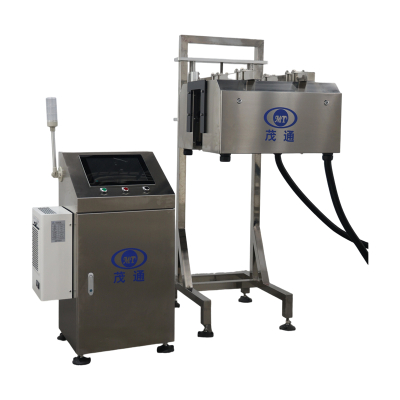
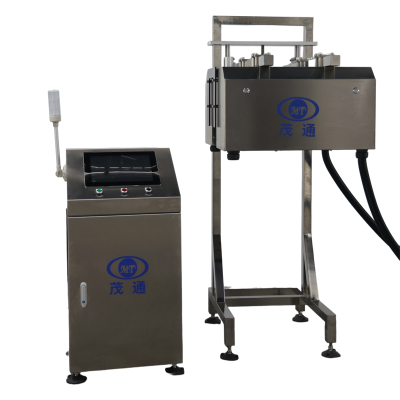
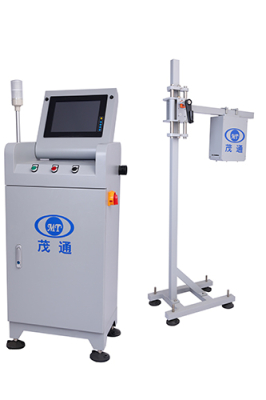
The complete beverage can appearance inspection system integrates three main components: electromechanical devices, imaging system, and processing module. The electromechanical device realizes automatic motion control and sorting of beverage cans, including input port, conveying system, and sorting system; the imaging system is responsible for acquiring high-quality images; and the processing module analyzes and processes the acquired images.
In terms of performance evaluation, the can lid defect detection system developed by Hunan University can achieve a detection accuracy of over 96%, with an average detection time of 18.6ms per can lid, meeting the needs of beverage industry production lines. Based on deep learning, the can defect detection technology achieves good recognition results after 10 iterations of training with a learning rate of 0.0005, resulting in a final binary classification defect recognition rate of 99.7% and an algorithm execution time of 119 ms. The can end detection system achieves a detection accuracy of up to 99.48% for various circular can ends.
5 Industrial Applications and Future Prospects
5.1 Practical Application Cases
The can appearance visual inspection system has been successfully applied in several industrial scenarios. Cognex machine vision systems have achieved a speed of 72,000 cans per hour and an accuracy of 99.99% in detecting bottom codes on beverage cans, overcoming the technical bottleneck faced in increasing production speed in the food and beverage industry.
The machine vision device for can end detection utilizes a pneumatic conveying and vacuum adsorption system to achieve stable transmission and precise positioning of the can ends. When the can end is transported to the imaging station, a low-pressure area is created on the conveyor surface by a vacuum pump, and the can end is stably adsorbed onto the conveyor due to the pressure difference and transported along the conveyor driven by an AC motor. The sorting system classifies the can ends based on the inspection results, and defective can ends are separated from the conveyor using a separator driven by compressed air pulses.
5.2 Technical Challenges and Development Trends
Despite significant progress in existing technologies, can appearance inspection still faces some challenges: detecting tiny defects is difficult, especially identifying micro-scratches against complex backgrounds; reflective interference has not been completely solved, particularly for high-gloss surfaces; the balance between algorithm real-time performance and accuracy needs further optimization; and system adaptability is limited, requiring parameter adjustments when the can design changes.
Future development trends include: multimodal data fusion technology will combine 2D texture, 3D morphology, and spectral information to provide a more comprehensive description of defect features; adaptive learning algorithms will continuously optimize the model based on production line data, reducing the workload of manual parameter tuning; a combined edge computing and cloud computing architecture will ensure real-time performance while utilizing cloud-based big data to train more accurate models; and the development of embedded AI chips will drive the detection system towards smaller size and lower power consumption. 6. Conclusion
The visual inspection technology for beverage cans integrates advanced achievements from multiple fields, including optics, mechanics, electronics, and computer vision, and is an important indicator of the level of industrial automation. From imaging system design to algorithm optimization, from hardware selection to software platform development, every link directly affects the final detection performance. Currently, deep learning-based detection methods have surpassed traditional algorithms in many aspects, but in practical industrial applications, it is usually necessary to combine the advantages of traditional image processing methods and deep learning techniques to build a hybrid detection system.
With the in-depth implementation of the national "Made in China 2025" strategy, beverage can appearance inspection technology will develop towards a more intelligent, efficient, and reliable direction. This not only helps can manufacturers utilize AI technology to promote intelligent production and reduce labor costs, but also aligns with the national manufacturing industry upgrading strategy, possessing significant practical implications. In the future, with the continuous progress of sensor technology, algorithm theory, and computing capabilities, beverage can visual inspection systems will undoubtedly play an even more important role in the food and beverage industry, safeguarding product quality.