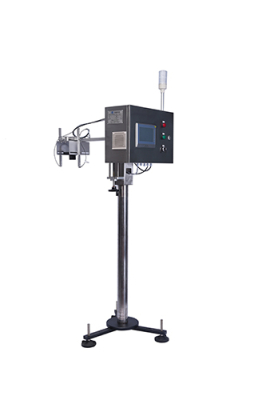
Tetra Pak Straw Visual Inspection Technology: Intelligent Guardian of Food Safety and Quality
In today's world, where food safety is a major concern, even a small straw requires such sophisticated technology to ensure its safety and quality.
As a crucial component of beverage packaging, the quality of Tetra Pak straws directly impacts consumer experience and food safety. Traditional manual inspection methods are inefficient and prone to errors, making them unsuitable for modern high-speed production lines.
With the advancement of machine vision technology, vision-based automatic straw inspection technology has become the mainstream solution in the industry. This technology simulates human vision to achieve rapid, accurate, and automated detection of straw defects, bringing a revolutionary breakthrough to quality control in the food and beverage industry.
1. The Importance and Challenges of Straw Inspection
In the food and beverage industry, straws, as components that come into direct contact with the mouth, are critically important in terms of quality and safety. Common defects in Tetra Pak straws include internal foreign objects, surface stains, length deviations, and shape deformations. These defects not only affect the user experience but may also pose food safety risks.
Taking plastic straws as an example, their production process involves multiple steps, including raw material mixing, extrusion molding, and cooling and shaping. The entire process is complex, and even subtle variations can lead to defects. Manufacturers typically increase manual labor to control product quality, but manual inspection is inefficient, costly, and limited by human resources, making it highly unstable.
The main technical challenges in straw inspection include: difficulty in identifying minute defects, interference from reflective surfaces, the need for real-time detection at high production speeds, and complex scenarios with multiple types of defects. In particular, the transparent or translucent materials commonly used for Tetra Pak straws, with their reflective properties and complex backgrounds, further increase the difficulty of detection.
With the strengthening of national environmental regulations, the market share of plastic straws has decreased, and new types of straws made from paper, biodegradable materials, etc., are becoming increasingly popular. These materials are more prone to defects such as burrs and deformation during the production process, placing higher demands on detection technology.
2. Principles and System Components of Visual Inspection Technology
The basic working principle of a machine vision inspection system is to use a high-resolution camera to capture product images, then analyze the images using professional image processing software, and finally make judgments based on preset standards. A complete straw visual inspection system typically consists of an image acquisition module, a pre-processing and feature enhancement unit, a defect segmentation and classification unit, and a real-time output unit.
The image acquisition module is the foundation of the system and usually includes an industrial camera, a light source, and an image acquisition card. Due to the specific requirements of straw inspection, the system often employs a multi-camera collaborative working mode. For example, a pipe appearance visual inspection device uses a first camera and a second camera positioned opposite each other on either side of the pipe conveying device, and a fiber optic sensor positioned directly above, to achieve comprehensive multi-angle inspection of the straws.
The pre-processing and feature enhancement unit is responsible for optimizing the raw images. This step includes extracting the straw centerline, performing posture alignment based on the centerline, and normalizing lighting artifacts to generate a standardized image. By calculating the symmetry residual component of the standardized image and the template difference component based on a preset standard straw template, a defect-enhanced residual heatmap is generated, significantly improving defect recognition capabilities.
The defect segmentation and classification unit is the core of the system, employing advanced image processing algorithms and machine learning techniques. This unit uses the standardized image and the defect-enhanced residual heatmap as multi-channel input, utilizes a segmentation neural network containing a coordinate attention mechanism to generate an image defect mask, and performs feature extraction and classification on the masked area to ultimately determine the defect type.
The real-time output unit is responsible for converting the detection results into executable instructions, controlling the sorting equipment to remove defective products, and recording detection data for quality traceability. This unit requires high-speed response capabilities to adapt to the pace of high-speed production lines.
3.Detection Algorithms and Technological Innovations
The core of straw visual inspection algorithms lies in accurately identifying and classifying various defect types. Researchers have developed a variety of specialized algorithms for different detection needs. For example, in the simple but important application scenario of detecting the presence or absence of straws in Tetra Pak packaging, the core of the algorithm is to use a template matching algorithm to locate the area where the straw appears in the image under inspection. The image of this area is then binarized, and a series of region processing algorithms are used to extract the straw region. For more complex defect detection, such as identifying foreign objects inside straws, the algorithm typically includes the following steps: obtaining infrared detection images of the straw at a preset shooting point; obtaining the detection pixel chromaticity of each pixel in the infrared detection image; defining pixels whose detection pixel chromaticity is within a preset required chromaticity range as normal pixels; grouping adjacent abnormal pixels into the same preset, initially empty, pixel set; counting the abnormal pixels in each pixel set to determine the number of pixels in the set; and defining pixel sets with a number of pixels greater than a preset baseline number of pixels as foreign object feature sets.
The application of deep learning technology in straw defect detection represents the latest technological trend. Modern machine vision methods are increasingly adopting deep learning models, such as U-Net or Mask R-CNN, which can learn complex spatial patterns and contextual information from large amounts of data, demonstrating the potential for achieving high-precision defect boundary segmentation even in the presence of material-induced reflections or transparent artifacts.
Lighting adaptive algorithms are another important area of innovation. Some systems can analyze the external ambient brightness value at the shooting point before image acquisition. When the external ambient brightness value is not within the preset required brightness range, the system automatically determines whether supplementary lighting or adjustment of shooting parameters is needed to ensure high-quality image acquisition. This adaptive capability greatly improves the stability and reliability of the detection system in different production environments.
4. Industrial Applications and Implementation Cases
Visual inspection technology has achieved significant results in the inspection of Tetra Pak straws. Taking the inspection of straws on a certain brand of milk carton as an example, the deployment of a visual inspection system has enabled automated detection of the presence or absence of straws on milk cartons. This system uses an LVM-2630 model visual sensor, which can accurately identify the presence of straws, with a detection error rate of 0.00%, and a detection speed far exceeding that of manual inspection.
In actual production environments, visual inspection systems are usually tightly integrated with the production line. A typical implementation involves installing a pipe appearance visual inspection device on the production line, including a pipe conveying device for continuously transporting the pipes to be inspected and a visual inspection system for image information comparison and analysis. An encoder component, an image acquisition component, and a sorting component are sequentially arranged along the conveying direction of the pipes to achieve uninterrupted continuous detection. The encoder component is responsible for monitoring the production line status and accurately tracking the position of each straw; the image acquisition component triggers the camera to take a picture when the fiber optic sensor detects that the straw is in place; the acquired image is transmitted to the visual inspection system for analysis and processing; finally, the sorting component removes defective products based on the inspection results. This integrated solution achieves continuous feeding, inspection, and automatic sorting without downtime, eliminating the need for manual intervention and greatly improving production efficiency.
Actual application data shows that the advanced visual inspection system can achieve a detection speed of 1200 pieces/minute and an accuracy rate of up to 99.8%, far exceeding the limits of manual inspection. This not only helps companies reduce labor costs but also standardizes inspection standards, effectively controlling the quality of products leaving the factory.
5. Technical Advantages and Future Development Trends
Compared with traditional manual inspection, visual inspection technology has unparalleled advantages. In terms of inspection efficiency, machine vision systems can work 24 hours a day without interruption, with detection speeds dozens or even hundreds of times faster than manual inspection. In terms of inspection accuracy, the system can identify tiny defects that are difficult for the human eye to detect, improving inspection accuracy.
Visual inspection technology can also eliminate subjective factors, standardize inspection standards, and avoid judgment differences caused by factors such as human fatigue and emotional fluctuations. The inspection data generated by the system can be used for quality analysis and production process optimization, providing data support for corporate decision-making, a function that is difficult to achieve with manual inspection.
In the future, straw visual inspection technology will develop towards greater intelligence, efficiency, and integration. On the one hand, with the advancement of artificial intelligence technology, deep learning algorithms will play a greater role in defect detection, improving the system's ability to identify complex defects and its adaptability.
On the other hand, the application of 3D vision technology will further enhance detection capabilities. For example, Yishi Technology's 3D intelligent sensor can obtain three-dimensional information of objects, thereby achieving precise measurement of the three-dimensional characteristics of straws, such as shape and size, greatly expanding the application range of the detection system.
Multi-technology integration is also an important trend in future development. Combining visual inspection with technologies such as spectral analysis and infrared imaging can simultaneously complete appearance inspection and material analysis, comprehensively improving product quality control. At the same time, with improved hardware performance and algorithm optimization, the cost of visual inspection systems will gradually decrease, allowing small and medium-sized enterprises to also benefit from this advanced technology.
With continuous technological advancements, visual inspection systems are becoming more intelligent and efficient. From initial simple presence/absence detection to current micro-defect identification and 3D dimensional measurement, the accuracy and scope of straw visual inspection are constantly expanding.
In the future, with the deep integration of artificial intelligence and 3D vision technologies, we have reason to believe that visual inspection technology will not only safeguard the quality of Tetra Pak straws but also provide crucial technological support for the intelligent upgrading of the entire food and beverage industry.
That tiny straw embodies the latest innovations in machine vision technology and is an indispensable part of the food safety production process.