Code Inspection Machine Rejects Defects Before Packing
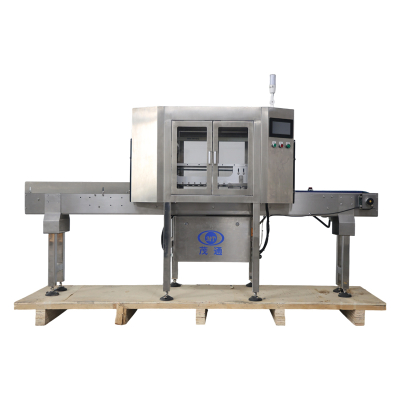
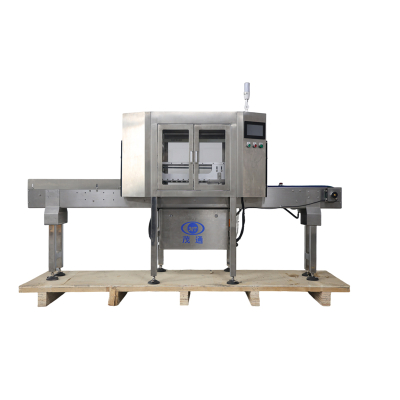
A Code Inspection Machine plays a practical role on PET bottle production lines where cap condition, fill level, and printed code quality must be checked before bottles move toward packing. The system is installed on the conveyor line at a suitable point downstream of the filler to ensure stable bottle movement and accurate detection. That position matters because bottles have already passed filling, while still remaining accessible for visual inspection and automatic rejection.

Why the downstream position matters
For a Code Inspection Machine, the downstream-of-filler position supports more consistent inspection because bottle movement can be monitored after filling and before final packaging. The system is designed for PET bottles and is used within a PET Bottle Cap, Anti-theft Ring, Liquid Level, and Inkjet Printing Inspection System. Its project description covers online inspection of cap integrity, anti-theft ring condition, liquid level accuracy, and inkjet printing quality, followed by automatic rejection of non-conforming bottles.
This makes the Code Inspection Machine especially relevant for beverage and PET packaging lines where multiple visible quality points must be checked in one inspection flow. Instead of relying only on manual observation, the system uses image capture and processing to identify specified defects and send results for rejection control.
Inspection scope of the Code Inspection Machine
The inspection scope should stay focused on the defined PET bottle quality risks. This Code Inspection Machine checks the following conditions:

These items cover the visible defects most directly connected with closing quality, tamper-evident ring condition, fill consistency, and printed identification. A PET Bottle Code Detection Machine also supports code inspection in different positions, making it useful when inkjet print placement varies across bottle or cap surfaces.
How detection and rejection work
The Code Inspection Machine operates through coordinated sensing, imaging, processing, and rejection logic. As each PET bottle passes the positioning sensor, the control unit records the bottle ID and synchronizes the encoder signal. The sensor triggers the camera system to capture images of the cap, liquid level, and inkjet marking areas.
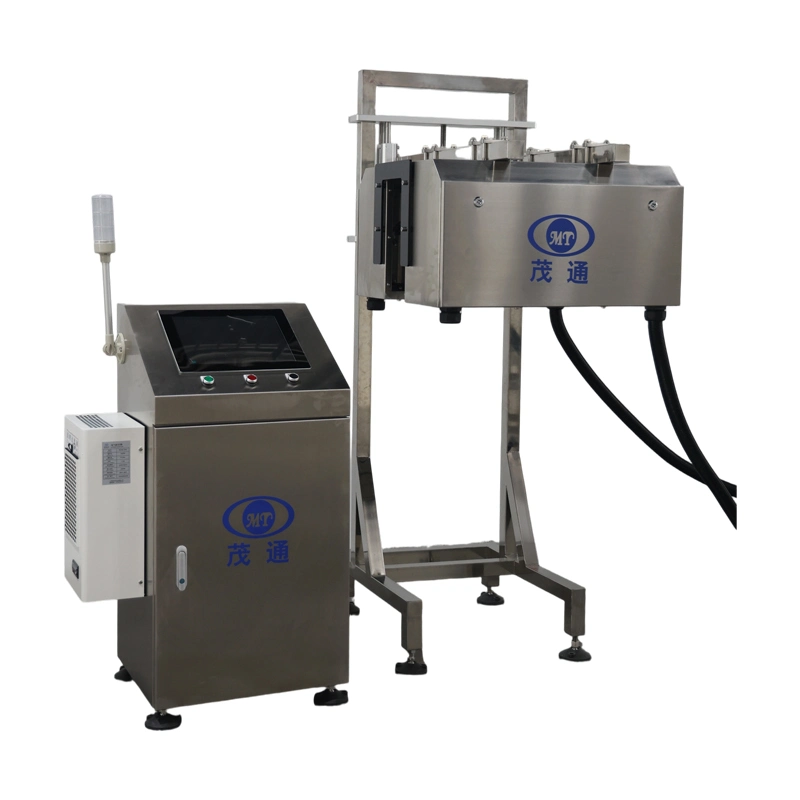
The captured images are then processed by the image processor. Results are displayed on the HMI in real time and transmitted to the PLC for rejection logic. When a non-conforming bottle is identified, the control unit associates the defect with the corresponding bottle ID and activates the rejector to remove that bottle from the line. This structure helps the Code Inspection Machine connect inspection results with the correct physical bottle, which is essential on moving conveyors.
Key operating details buyers usually compare
| Item | Specification |
|---|---|
| Applicable container | PET bottles |
| Product volume range | 200 mL – 2 L |
| Integrated system throughput | Up to 60,000 bottles/hour |
| Code detection machine speed | Up to 72,000 BPH |
| Power supply | 220V AC, 50 Hz, single-phase |
| Total power consumption | Approx. 2.4 kW |
| Control voltage | 24 VDC |
| Operating temperature | 5°C – 40°C |
| Recommended humidity | 50% – 65% RH |
| Installation altitude | 5 – 3000 m above sea level |
The Code Inspection Machine also uses an LED light source, industrial CCD camera, and sensor within the detection module. The equipment structure includes a distribution cabinet, detection module, and rejection device. For production teams planning installation, these details help align the machine with line speed, factory utilities, conveyor layout, and inspection objectives.
Practical planning checklist
Before installing a Code Inspection Machine, engineering teams should confirm that the conveyor provides stable bottle movement at the selected point downstream of the filler. The camera views should correspond to the cap area, liquid level area, and inkjet printing area. The rejection device should be positioned so that rejected bottles can be removed cleanly after the system has matched the inspection result with the correct bottle ID.
It’s also important to confirm environmental conditions, power supply, compressed air connection, and storage requirements before commissioning. A well-positioned Code Inspection Machine can support consistent inspection of PET bottles without expanding the defect scope beyond the intended cap, anti-theft ring, liquid level, and inkjet printing checks.
FAQs
What does a Code Inspection Machine inspect on PET bottles?
It inspects missing caps, high caps, crooked caps, broken or damaged anti-theft rings, low liquid level, absence of inkjet printing, and excessive or incorrect inkjet printing.
Where should the Code Inspection Machine be installed?
It should be installed on the conveyor line at a suitable point downstream of the filler to ensure stable bottle movement and accurate detection.
What bottle types and sizes are covered?
The system is specified for PET bottles with a product volume range of 200 mL to 2 L.
How are defective bottles removed?
After image processing identifies a non-conforming bottle, the result is sent for PLC rejection logic, and the rejector removes the corresponding defective bottle from the line.
What is the maximum throughput?
The integrated PET bottle inspection system is specified at up to 60,000 bottles per hour, while the code detection machine page lists maximum speed up to 72,000 BPH.