How Code Inspection Machine Tracks Every PET Bottle
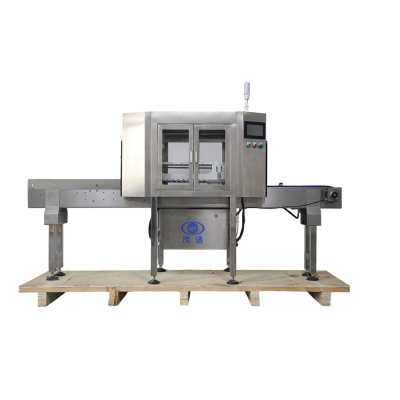
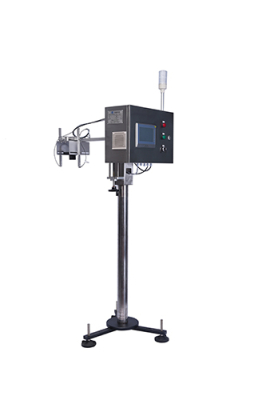
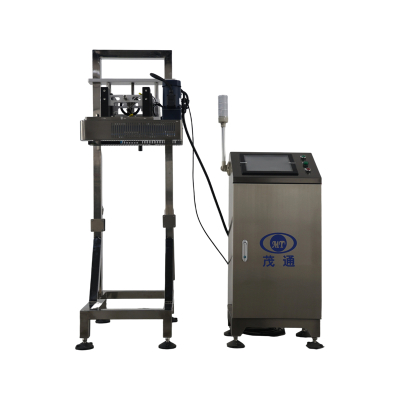
In a high-speed PET bottle line, a Code Inspection Machine becomes valuable when it does more than check whether an inkjet mark exists. The stronger approach is to connect each bottle’s identity with image evidence from the cap, liquid level, and inkjet marking before a rejection decision is made. Our PET bottle inspection system is designed for PET bottles from 200 ml to 2 L and supports automated rejection for defects involving caps, anti-theft rings, liquid levels, and inkjet printing.

Bottle Identification Comes Before Image Judgment
A Code Inspection Machine begins with stable identification. As each PET bottle passes the positioning sensor, the sensor detects its presence and signals the control unit. The control unit records the bottle ID and encoder signal so the inspection result remains associated with the correct bottle as it moves toward the rejection point.
This timing step is essential because integrated PET bottle inspection equipment may operate at high throughput, with project documentation listing a maximum capacity of up to 60,000 bottles per hour. At that speed, the system must know not only what defect was detected, but also which bottle the Code Inspection Machine should remove.
Image Capture and Processing Workflow
Once the bottle is identified, the positioning sensor triggers cameras to capture images from the relevant inspection zones: the bottle cap, the liquid level, and the inkjet marking. The captured images are processed by the image processor, then results are sent to the HMI for monitoring and to the PLC for rejection preparation.
| System part | Main role in the workflow |
|---|---|
| Distribution cabinet | Provides power, processes images, and controls defective product rejection through the image processor, interface processor, strobe controller, and PLC. |
| Detection module | Uses LED light source, industrial CCD camera, and sensor to capture dynamic images of PET bottles. |
| Rejection device | Uses solenoid valves and mechanical components to remove defective products from the line. |
This is where the Code Inspection Machine connects visual judgment with physical sorting. If the image processor identifies a non-conforming bottle, the control unit activates the rejector for the bottle ID already recorded.
Three Inspection Zones in One Decision Chain
The Code Inspection Machine works as part of a broader bottle vision inspection system rather than a standalone code reader only. It links three inspection zones into a single decision chain. Instead of isolating one print check from the rest of the package condition, the system compares visual evidence across the bottle top, fill area, and printed coding zone, making the final reject action more dependable under fast conveyor movement and frequent product changeovers.

The cap inspection module uses three CCD cameras to capture bottle images from multiple angles, reducing blind spots. It is used to detect defects such as missing caps, high caps, crooked caps, and broken or damaged cap conditions. In a high-speed line, this helps the Code Inspection Machine maintain stable cap inspection without relying on manual checks.
For liquid level detection, a CCD camera captures a frontal image of the bottle. Image processing distinguishes the area below the liquid level from the empty area above it, and a dedicated algorithm judges whether the level is above or below the preset standard.
Inkjet printing inspection
The inkjet printing module captures frontal images of inkjet markings on bottles and caps. It supports inspection of missing inkjet print, excessive inkjet printing, and blurred or incomplete markings. Documented examples include black ink on yellow caps and white ink on black caps, allowing the Code Inspection Machine to adapt to common packaging schemes.
Accuracy Points Buyers Should Review
A Code Inspection Machine should be evaluated by how reliably it identifies and rejects defined defects under the stated production conditions. The documented PET bottle system provides the following inspection references:
| Inspection area | Defect or threshold | Documented performance |
|---|---|---|
| Bottle cap | No cap | Rejection rate ≥99.99% |
| Bottle cap | High cap over 0.8 mm | Detection accuracy ≥99.98% |
| Bottle cap | Crooked cap over 0.8 mm | Detection accuracy ≥99.5% |
| Anti-theft ring | 100% disconnected, gap over 1 mm | Detection accuracy ≥99.99% |
| Liquid level | 3 mm above or below standard | Detection accuracy ≥99.92% |
| Inkjet printing | No inkjet print | Detection accuracy ≥99.99% |
| Inkjet printing | Overall print 30% missing | Detection accuracy ≥99.9% |
For buyers comparing a Code Inspection Machine, these figures should be reviewed together with bottle type, line speed, lighting conditions, installation position, power supply, and compressed air preparation. The documented system is installed directly on the conveyor line at the designated inspection and rejection section, making the inspection-to-rejection sequence part of continuous online production.
FAQs
What does a Code Inspection Machine inspect on PET bottles?
It can inspect inkjet printing while working with related inspection zones such as caps, anti-theft rings, and liquid levels in the documented PET bottle system. By combining these zones, the Code Inspection Machine supports more reliable rejection decisions than a basic code reader.
How does the system know which bottle to reject?
The positioning sensor detects the bottle, and the control unit records the bottle ID and encoder signal. This allows the rejection signal from the Code Inspection Machine to match the correct bottle at the reject point, even at high line speeds.
What defects can be rejected automatically?
Documented defects include missing caps, high caps, crooked caps, broken anti-theft rings, low liquid level, missing inkjet print, excessive inkjet printing, and blurred or incomplete inkjet markings. When these conditions are detected, the Code Inspection Machine triggers the reject mechanism automatically.
Is the Code Inspection Machine suitable for PET bottles of different sizes?
The documented PET bottle inspection project applies to PET bottles within a 200 ml to 2 L capacity range. Within this range, the Code Inspection Machine can keep the same inspection logic while the line changes between different bottle formats.