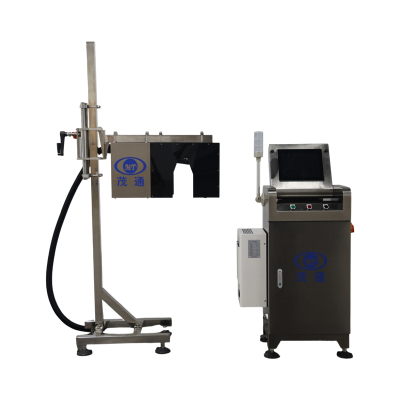
Power Your Code Inspection Machine Before Commissioning
Code Inspection Machine is only as stable as the line conditions prepared for it. For PET bottle inspection projects that include cap integrity, anti-theft ring condition, liquid level accuracy, and inkjet printing quality, the operating environment should be confirmed before installation. Power supply, control voltage, compressed air, temperature, humidity, and conveyor placement all influence whether the inspection system can run smoothly and reject nonconforming bottles at the right point on the line.

Where the Code Inspection Machine Fits on a PET Line
The Code Inspection Machine is part of a PET bottle quality inspection system designed for online inspection and automatic rejection of defective bottles. Within this inspection scope, the system checks bottle cap condition, anti-theft ring status, liquid level, and inkjet printing quality in real time to protect downstream packaging quality.
It is installed on the conveyor line at a suitable point downstream of the filler, where bottle movement should remain stable enough for accurate image capture and rejection control. A calm, vibration-free section of conveyor helps the Code Inspection Machine maintain consistent detection accuracy at high speeds.
This type of inspection is commonly paired with machine vision technology, which uses cameras, lighting, image processing, an HMI, PLC control, and a rejection device to identify nonconforming products during production.
Operating Conditions Buyers Should Confirm Early
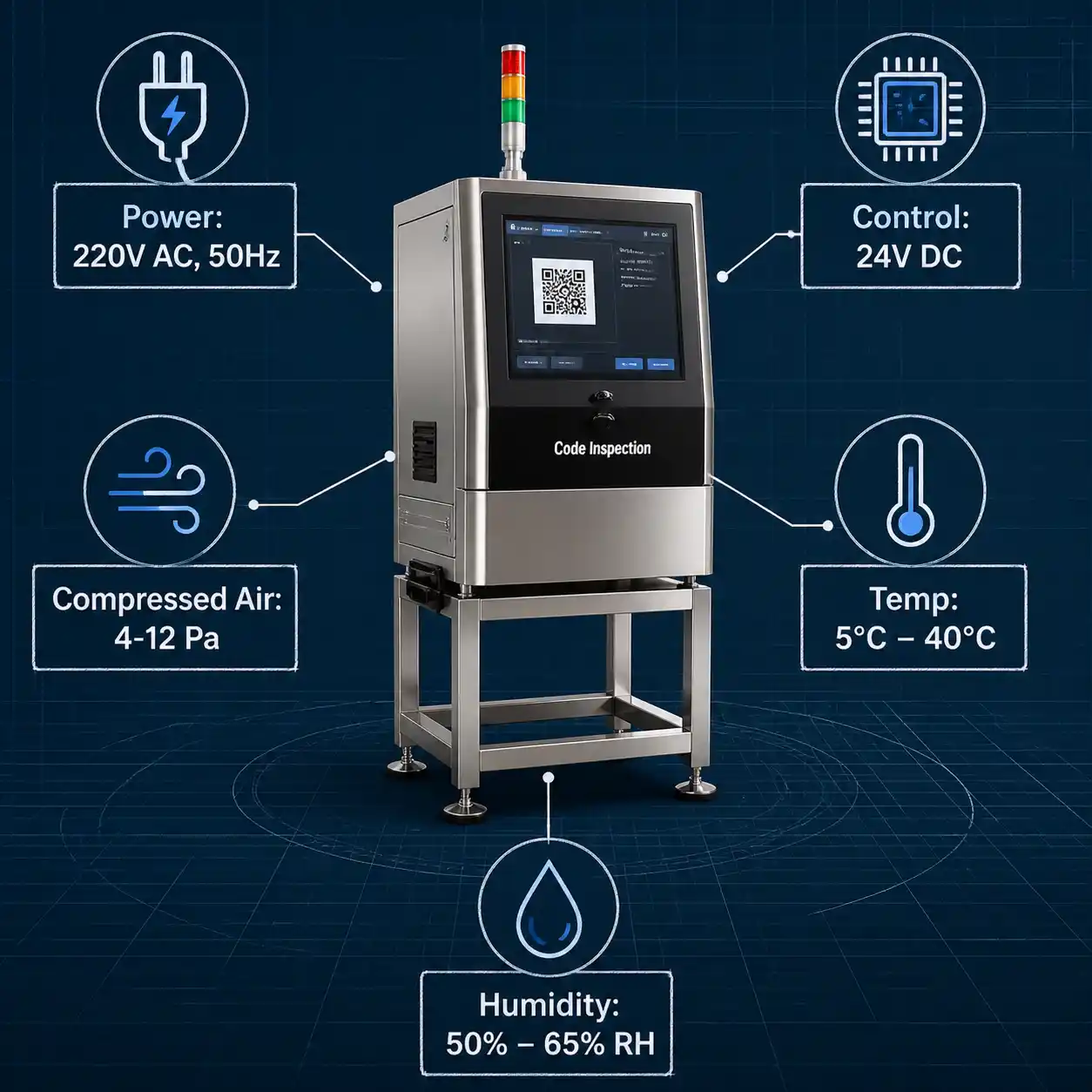
Before commissioning a Code Inspection Machine, plant engineers should prepare the required utilities and site conditions. The following values are central to installation planning and should be confirmed against the actual production line design:
| Item | Requirement |
|---|---|
| Power supply | 220V AC, 50 Hz, single-phase, customer provided |
| Special voltage | Must be communicated in advance because it may affect specifications, delivery schedule, and pricing |
| Total power consumption | Approx. 2.4 kW |
| Control voltage | 24 VDC |
| Compressed air | 4 Pa – 12 Pa, with customer-provided pipeline connection from air source to equipment |
| Operating altitude | 5 – 3000 m above sea level |
| Operating temperature | 5°C – 40°C |
| Relative humidity | 50% – 65% RH |
These conditions help maintenance teams prepare electrical supply, control wiring, and air-line routing before the Code Inspection Machine arrives on site. Having these elements in place also shortens commissioning time and reduces on-site changes.
Why Power and Control Voltage Matter
A Code Inspection Machine depends on coordinated timing between sensors, cameras, image processing, PLC logic, and the rejection mechanism. The specified 220V AC, 50 Hz, single-phase power supply supports the main equipment, while 24 VDC is used as the control voltage for sensors, actuators, and control modules.
Keeping these values clear during project planning reduces installation delays and helps the electrical team prepare the correct cabinet connection and protection approach. Cable sizing, breaker selection, and panel layout can all be completed in advance when the power and control voltage requirements of the Code Inspection Machine are known.
If a facility requires a non-standard voltage, that requirement should be raised before production planning. Special voltage requirements may affect equipment specifications, lead time, and pricing, so they should not be treated as a final-stage adjustment.
Compressed Air and Rejection Stability
The Code Inspection Machine uses compressed air within the stated 4 Pa – 12 Pa range, and the customer is responsible for the pipeline connection from the air source to the equipment. This connection should be arranged so the rejection device can respond consistently when the system identifies bottles with missing inkjet print, excessive inkjet printing, or unreadable overall inkjet print.
Stable compressed air supply allows the rejector to remove each nonconforming bottle at the correct point on the conveyor without disturbing surrounding bottles. Fluctuating pressure can lead to weak or excessive rejection force, so line designers often include a local regulator and shut-off valve near the Code Inspection Machine.
The same inspection platform may also support liquid level detection, cap inspection, and anti-theft ring inspection, so stable utilities are important for the complete inspection workflow rather than for code checking alone.
Site Preparation Checklist
Before installing a Code Inspection Machine, production and maintenance teams should review these points:
A short on-site review using this checklist helps ensure that the Code Inspection Machine can be installed, powered, and tested without additional civil or electrical work.
FAQs
What does the Code Inspection Machine inspect?
It is used within a PET bottle inspection system that checks cap integrity, anti-theft ring condition, liquid level accuracy, and inkjet printing quality, with automatic rejection of defective bottles.
What power supply is required?
The required supply is 220V AC, 50 Hz, single-phase, provided by the customer.
What if the plant uses a special voltage?
Special voltage requirements should be communicated in advance because they may affect specifications, delivery schedule, and pricing.
What is the control voltage?
The control voltage is 24 VDC.
Who provides the compressed air connection?
The customer provides the pipeline connection from the air source to the equipment. The stated compressed air range is 4 Pa – 12 Pa.