Track Every Empty Can Before Filling Starts
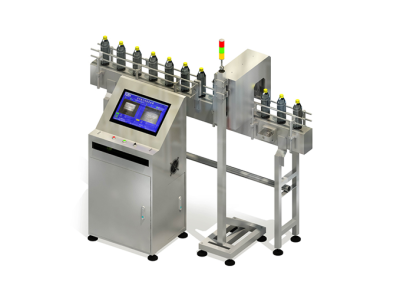
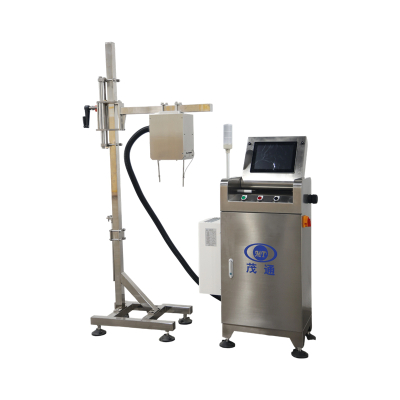
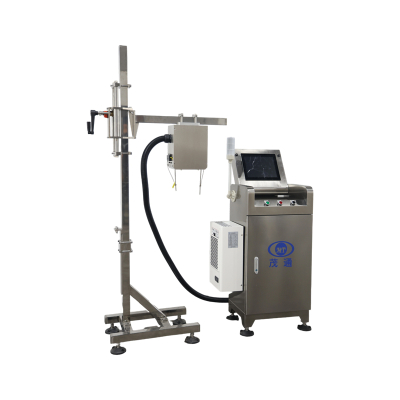
For high-speed canning lines, the most expensive defect is often the one that reaches the filler unnoticed. An Empty Can Inspection Machine helps move quality control upstream by inspecting two-piece empty cans before filling, identifying visible defects, and triggering online rejection before the affected container continues through the line. The MT-YLG-KG-C1-01 Empty Can Detector is designed for production lines up to 1000 cans per minute and uses machine vision for automated, non-contact inspection.

Why Inspection Before Filling Matters
The Empty Can Inspection Machine is installed on a single-lane conveyor section before the filling station. This location is important because defects such as can mouth deformation, cracks, V-notches, flaps, dents, body contamination, internal foreign matter, and collapsed cans are easier to manage before product enters the container.
For buyers comparing empty can inspection equipment, the key value is not only detection. It is the complete control loop: each can is detected, imaged, judged, displayed, tracked, and rejected according to its recorded ID. That closed loop is what allows the Empty Can Inspection Machine to support continuous production without relying on manual checking.
How the Empty Can Inspection Machine Tracks Each Can
The inspection process follows a clear sequence. First, a positioning sensor detects the incoming can, records its ID, and logs the encoder value through the control unit. This creates the tracking basis for the can as it moves through the inspection zone.

Next, the camera is triggered to capture the can image. The image processor analyzes the image and sends results to the HMI for live display. At the same time, the control unit receives the information needed for the rejection decision.
Finally, when a defect is identified, the PLC receives the rejection command and signals the rejector to remove the defective can corresponding to the recorded ID. This workflow allows the Empty Can Inspection Machine to connect inspection results with physical rejection on the line.
Inspection Scope and Key Parameters
The MT-YLG-KG-C1-01 Empty Can Inspection Machine is suitable for two-piece cans with a volume range of 100 mL to 600 mL. Its rated capacity is 1000 cans per minute, and it is intended for packaging lines with speeds not exceeding 1000 cans per minute.
| Area inspected | Defects covered |
|---|---|
| Can mouth | Curling notches, flange deformation, depressions, ovality, edge dirt |
| Inner wall | Dirt in the middle of the inner wall |
| Can bottom | Foreign matter, opaque foreign matter in the bottom ring, bottom holes |
| Can body | Deformation, dents, scratches, surface contamination |
| Integrity | Collapsed or under-pressurized cans |
The inspection solution uses a single-station, single-lens method. Its main purpose is strict control of the can mouth, large flat cans, and large foreign objects. Since later processes may include hot water washing and nitrogen filling, small foreign objects and minor can wall deformation have lower detection accuracy than the primary inspection targets.
Installation Conditions Buyers Should Confirm
A stable Empty Can Inspection Machine installation depends on the conveyor layout. The customer must provide a straight conveyor section of 2 m. Cans should not be squeezed together, and a spacing of about 2 cm between cans is essential for reliable inspection.
Environmental and utility conditions also matter. The equipment is designed for an altitude range of 5–3000 m, an operating temperature of 5°C–40°C, and relative humidity of 50%–65% RH. The required power supply is 220V, 50Hz, single-phase, with total power consumption of approximately 1.0 kW and a control voltage of 24VDC. Noise level is specified at ≤85 dB, with actual values depending on container type, power, and site acoustics.
Practical Buying Takeaway
A well-specified Empty Can Inspection Machine should be evaluated by more than inspection speed alone. Buyers should check the container type, line speed, defect categories, conveyor spacing, installation point, power supply, and rejection workflow. For two-piece cans running before the filler, the MT-YLG-KG-C1-01 provides a focused inline inspection setup with sensor triggering, camera imaging, HMI display, PLC control, and automatic rejection.
FAQs
What cans are suitable for this Empty Can Inspection Machine?
It is suitable for two-piece empty cans with a volume range of 100 mL to 600 mL.
Where should the Empty Can Inspection Machine be installed?
It is installed on a single-lane conveyor before the filling station.
What line speed does the machine support?
The specified inspection speed is 1000 cans per minute, suitable for lines not exceeding 1000 cans per minute.
What conveyor condition is required?
A 2 m straight conveyor section is required, and cans should keep about 2 cm spacing without compression or overlap.
What defects can be detected?
The system detects can mouth defects, dents, scratches, contamination, internal foreign objects, and collapsed or under-pressurized cans.