Control Bottle Finish Risk Before Filling Starts
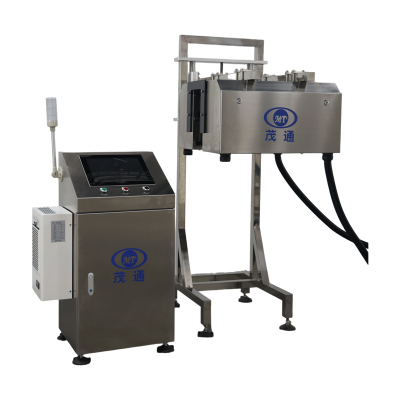
In beverage and packaging production, the bottle finish is where sealing quality is won or lost. A small chip, through-hole, or oval neck can affect capping stability and increase the risk of leakage. The PET Bottle Mouth Inspection Machine is designed for fully automated, non-contact online inspection of PET and PE bottle mouths, helping production lines identify and reject bottles with deformation or damage on the sealing surface before filling and capping.

Why Bottle Mouth Inspection Matters
The bottle mouth, often called the bottle finish, is the sealing interface between the container and the cap. If this area is damaged, the container may pass through earlier production stages but fail during capping, storage, or transport. A PET Bottle Mouth Inspection Machine focuses on this critical zone and checks whether the sealing surface remains suitable for downstream packaging.
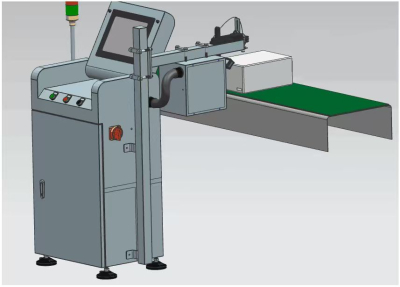
The equipment is suitable for PET and PE bottles and is designed with a rated capacity of 48,000 bottles per hour. It can be installed inside the blow molding machine, at the bottle discharge section, or on the conveyor chain. This placement allows defects to be detected early, before they create filling losses or affect finished product quality.
Early detection is especially useful in high-speed production environments where a single unstable bottle finish can create repeated capping problems, sealing inconsistency, and avoidable waste. By screening bottle mouths before filling, manufacturers can reduce downstream disruption and support more stable packaging quality across the line.
How the Inspection Workflow Runs
A PET Bottle Mouth Inspection Machine uses machine vision for automatic online inspection. As each bottle passes the positioning sensor, the control unit records the bottle ID together with the current encoder value. The sensor then triggers the camera to capture the bottle mouth image.
After image acquisition, the image processor analyzes the bottle finish and sends the result to the HMI for real-time display. At the same time, the control unit prepares the rejection action. If the bottle is judged defective, the rejector removes the corresponding bottle according to the stored ID. This process supports continuous inspection without physical contact with the bottle mouth.
Vision Components That Support Stable Detection
The image acquisition system combines an LED area light source, lens, CCD camera, image processor, and control unit. The LED area light source has a service life of up to 30,000 hours and uses front illumination so the inspected features are clearly visible. In the captured image, the bottle mouth appears as a continuous bright ring, helping the system identify changes in the sealing surface.
The camera is an area-array CCD analog camera with 640 × 480 pixels resolution and an acquisition rate of up to 60 frames per second. A fixed-focus lens with manual aperture adjustment is used to achieve image clarity and suitable brightness. These components work together to keep the PET Bottle Mouth Inspection Machine stable during high-speed production.
Defect Scope and Detection Accuracy
The system inspects defects that directly affect sealing reliability. Typical inspection items include through-holes, internal chipping, external chipping, spot chipping, and deformed or oval-shaped bottle necks. In practical production, these issues are critical because even a small defect on the sealing surface can reduce cap engagement quality, increase leakage risk, or create instability during transport and storage. For this reason, defect criteria are usually defined around dimensional thresholds and repeatable vision recognition performance rather than visual appearance alone.

| Inspection Item | Defect Dimension | Detection Accuracy | False Rejection Rate |
|---|---|---|---|
| Penetration | Vertical section width 0.8 mm, depth 0.25 mm | ≥99.99% | ≤0.03% |
| Internal defects | Vertical section width 0.8 mm, depth 0.25 mm | ≥99.95% | — |
| External defects | Vertical section width 0.8 mm, depth 0.25 mm | ≥99.95% | — |
| Point defects | Diameter 0.8 mm, depth 0.25 mm | ≥99.99% | — |
| Neck deformation | Diameter difference 2 mm | ≥99.95% | — |
For buyers comparing a Preform Mouth Defect Detection Machine with a finished bottle inspection solution, the main purchasing point is where the risk needs to be controlled. This PET Bottle Mouth Inspection Machine is positioned for PET/PE bottle finish inspection after blow molding or along the conveyor before filling.
Operating Conditions to Confirm Before Installation
Stable inspection depends on both the machine and the site environment. The recommended operating altitude is 5–3000 meters above sea level. Ambient temperature should be 5°C–40°C, with relative humidity at 50%–65% RH. Noise level is specified as ≤85 dB, although actual values may vary with bottle type, equipment power, workshop acoustics, and other site factors.
Electrical and pneumatic conditions should also be confirmed before startup. The main power supply is 3 × 380V AC ±10%, 50 Hz, 3PH + N + PE. Lighting power supply is 220V AC, 50 Hz, single-phase. Total power consumption is approximately 1.0 kW, control voltage is 24 VDC, and compressed air requirement is 4–6 bar.
Factory and Storage Requirements
Factory floor flatness, load-bearing strength, and related site parameters should comply with national standards to ensure proper machine operation. This is especially important because vibration, uneven installation, or unstable positioning can influence image acquisition and rejection timing.
After delivery, the equipment and components should be stored in facilities that meet national standards. During storage, adequate lubrication and maintenance are required to prevent surface damage, corrosion, or deformation that may affect installation, commissioning, or operation. These practical details help preserve the long-term performance of a PET Bottle Mouth Inspection Machine.
FAQs
What containers can the machine inspect?
The machine is suitable for PET and PE bottles and focuses on deformation or damage on the sealing surface of the bottle finish.
Where is the machine usually installed?
It can be installed inside the blow molding machine, at the bottle discharge section, or on the conveyor chain before filling.
Is the inspection contact-based?
No. The PET Bottle Mouth Inspection Machine uses non-contact online vision inspection, avoiding direct physical contact with the bottle mouth.
What defects are included in the inspection scope?
The system checks through-holes, internal chipping, external chipping, spot chipping, and oval-shaped neck deformation.
What site conditions should be confirmed first?
Altitude, temperature, humidity, power supply, compressed air, floor flatness, and load-bearing strength should be checked before installation and operation.