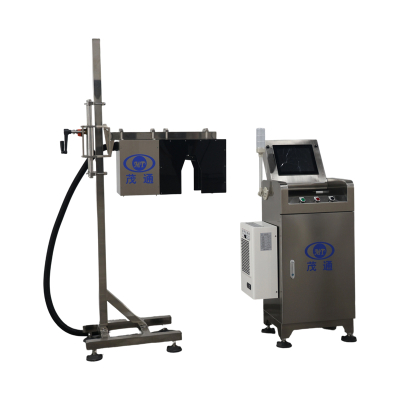
How Bottle Mouth Inspection Stays Accurate at Speed
Bottles Mouth Inspection Machine protects one of the most critical areas of a container: the sealing finish. Chips, through-holes, edge damage, and oval deformation can compromise capping quality, create leakage risk, or interrupt downstream production. By combining positioning sensors, encoder tracking, controlled illumination, CCD imaging, image processing, HMI display, and automatic rejection, the system turns bottle finish inspection into a stable inline process rather than a manual sampling task.

From Sensor Detection to Bottle Tracking
The working sequence of a Bottles Mouth Inspection Machine begins when a bottle passes the positioning sensor. The sensor detects the bottle’s presence, and the control unit records the bottle ID together with the corresponding encoder value. This step is essential because the inspection result must later be matched to the same physical bottle when it reaches the rejector.
In continuous production, this encoder-based tracking keeps rejection accurate even when bottles are moving at high speed on a conveyor. Instead of treating inspection and rejection as unrelated actions, the Bottles Mouth Inspection Machine links the two through the stored position and ID. That is why the rejector can remove the correct defective bottle without disturbing qualified bottles nearby.
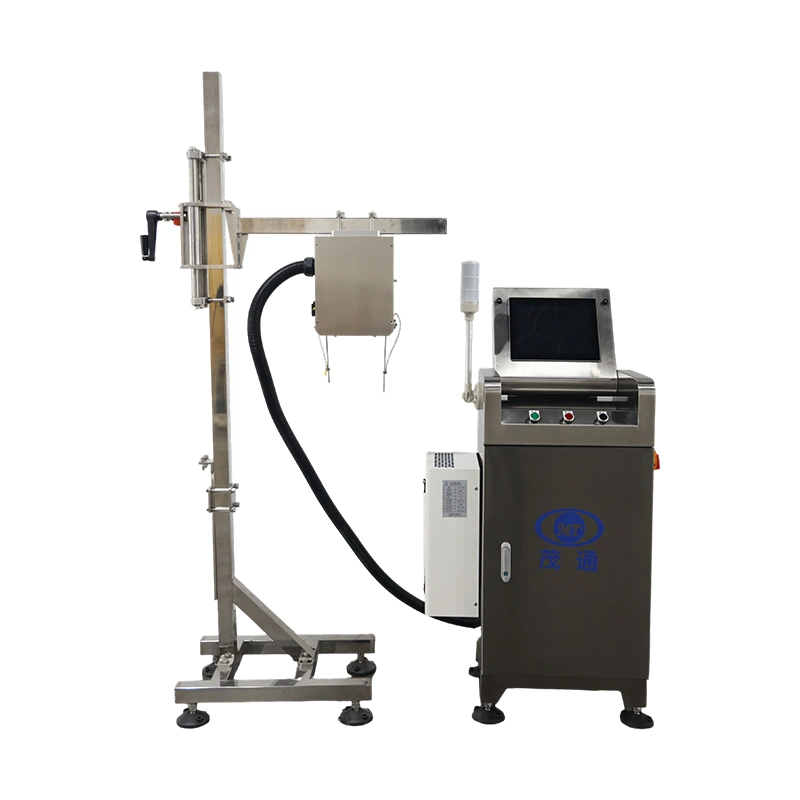
Camera Triggering and Image Acquisition
After the bottle is detected, the positioning sensor activates the camera at the inspection point. The camera captures the bottle mouth image and sends it to the image processor for real-time analysis. This reflects the standard workflow used in machine vision inspection: stable presentation, controlled lighting, image capture, processing, decision, and rejection.
The Bottles Mouth Inspection Machine uses an LED area light source with a service life of up to 30,000 hours. Front illumination makes the bottle mouth appear as a continuous bright ring in the captured image. A fixed-focus lens with manual aperture adjustment is used; the focus ring optimizes clarity on the CCD sensor, while the aperture ring fine-tunes brightness. The area-array CCD analog camera provides 640 × 480 pixel resolution and can capture images at up to 60 frames per second.
| Component | Configuration | Practical Role |
|---|---|---|
| LED area light | Up to 30,000-hour service life | Creates stable front illumination |
| Lens | Fixed focus with manual aperture | Adjusts clarity and brightness |
| CCD camera | 640 × 480 pixels, up to 60 fps | Captures bottle finish images |
| HMI | Real-time visualization | Displays inspection results |
| Rejector | Controlled by bottle ID and encoder value | Removes the matched defective bottle |
The coordination of sensor timing, image capture, and analysis is what allows inline bottle finish inspection to operate reliably at industrial throughput. Each subsystem contributes to repeatability: the sensor determines when a bottle is in the correct position, the lighting defines the visual contrast, the lens and camera convert the finish into a measurable image, and the control logic links the decision to the downstream reject event.
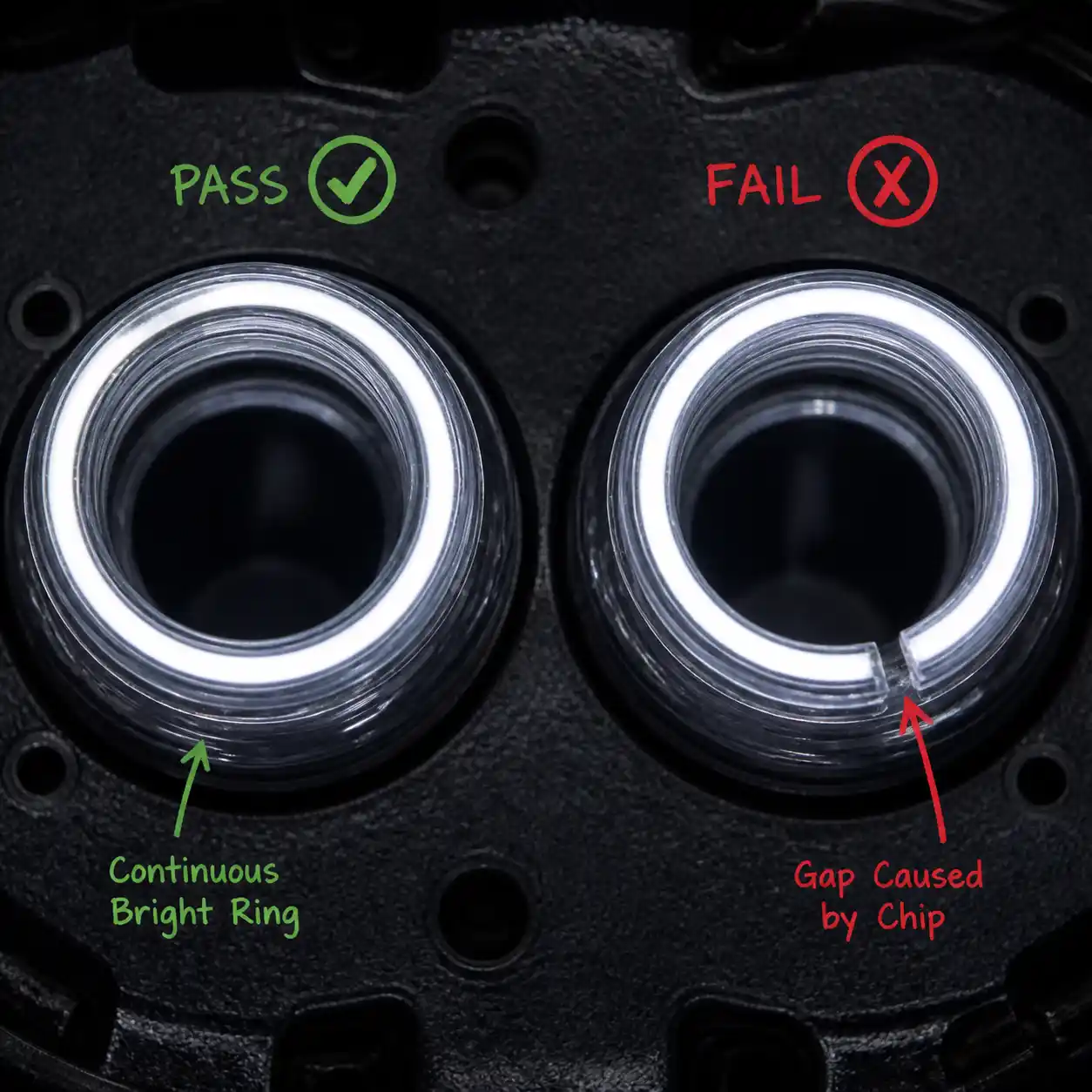
Bright Ring Inspection Logic
The bright ring image is the core visual feature used by the Bottles Mouth Inspection Machine. A normal finish appears as a continuous ring. When the bottle mouth has a through-hole, internal chip, external chip, point chip, or deformation, the ring may show dark interruptions, missing sections, or an irregular shape. This makes the inspection target easier to distinguish from the background and supports fast decision-making on high-speed lines.
A Bottle Mouth Inspection Machine is especially valuable before filling and capping because finish defects are easier to remove early than after product, cap, label, and packaging costs have already been added.
Detection Scope and Accuracy
The Bottles Mouth Inspection Machine is designed to detect finish defects that directly affect sealing reliability and container quality. The inspection scope includes through-holes, internal chipping, external chipping, point defects, and oval-shaped neck deformation.
| Inspection Item | Reference Dimension | Detection Accuracy | False Rejection Rate |
|---|---|---|---|
| Penetration | Vertical section width 0.8 mm, depth 0.25 mm | ≥99.99% | ≤0.03% |
| Internal defects | Vertical section width 0.8 mm, depth 0.25 mm | ≥99.95% | — |
| External defects | Vertical section width 0.8 mm, depth 0.25 mm | ≥99.95% | — |
| Point defects | Diameter 0.8 mm, depth 0.25 mm | ≥99.99% | — |
| Neck deformation | Diameter difference 2 mm | ≥99.95% | — |
For buyers evaluating inline quality equipment, these figures clarify the intended defect scale and performance target of the Bottles Mouth Inspection Machine. Actual production stability also depends on correct installation, bottle presentation, conveyor smoothness, lighting adjustment, and maintenance discipline.
Installation and Operating Conditions
The equipment description identifies the Bottle Finish Inspection Machine model MT-PK021, with one set configured for a 48,000 bottles/hour PET/PE bottle packaging line. The installation point can be inside the blow molding machine at the bottle discharge position or on the conveyor chain. The function is to detect and remove PET/PE bottles with deformation or surface damage on the bottle finish.
Stable operating conditions are important for every Bottles Mouth Inspection Machine. The documented requirements include an operating altitude of 5–3000 meters above sea level, ambient temperature of 5°C–40°C, relative humidity of 50%–65% RH, main power of 3 × 380V AC ±10%, 50 Hz, lighting power of 220V AC, control voltage of 24 VDC, total power consumption of approximately 1.0 kW, and compressed air of 4–6 bar.
Role in a Complete Inspection Line
A Bottles Mouth Inspection Machine is often evaluated alongside other quality checkpoints, including cap inspection, liquid level inspection, coding inspection, and leakage detection. For example, a Cap and Liquid Level Inspection Machine can support downstream checks after filling and capping, while the mouth inspection station focuses on the container finish before those later stages.
For packaging operations, the main value is straightforward: the Bottles Mouth Inspection Machine helps remove defective containers early, supports consistent sealing conditions, and reduces the chance that finish defects continue into filling, capping, or final packaging.
FAQs
What does a Bottles Mouth Inspection Machine inspect?
It inspects the bottle finish area for defects such as through-holes, internal chips, external chips, point defects, and oval-shaped neck deformation.
How does the machine reject the correct bottle?
The system records the bottle ID and encoder value when the bottle passes the positioning sensor. If a defect is confirmed, the control unit activates the rejector when that specific bottle reaches the rejection point.
Why does the bottle mouth appear as a bright ring?
Front illumination from the LED area light highlights the finish area. A qualified finish appears as a continuous bright ring, while defects may create dark interruptions or irregular shapes.
What camera configuration is used?
The system uses an area-array CCD analog camera with 640 × 480 pixel resolution and an image capture rate of up to 60 frames per second.
Where can the system be installed?
It can be installed inside the blow molding machine at the bottle discharge position or on the conveyor chain, depending on the production line layout.