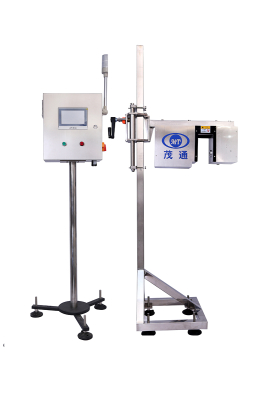
Glass Bottle and Jar Code Printing Visual Inspection Technology: The Quality Guardian of Smart Packaging
On high-speed canning production lines, an invisible light silently guards the identity of each product.
In the modern food industry, glass bottles and jars are important food packaging methods, and the printed code information on their packaging directly relates to product quality traceability, anti-counterfeiting identification, and market management. Code printing visual inspection systems, through advanced optical imaging and intelligent algorithms, ensure that the markings on each can and bottle are clear, legible, and accurate.
1. Technological Evolution: The Leap from Manual Inspection to Intelligent Detection
Traditional glass bottle and jar code printing inspection primarily relied on manual visual inspection. Production line workers had to identify the presence, clarity, and correct position of the printed code through high-intensity, repetitive labor using only their eyes. This method was not only inefficient but also had a high rate of missed detections, making it difficult to meet the demands of modern high-speed production lines.
With technological advancements, automated visual inspection technology gradually replaced manual labor. Early visual inspection systems used multiple industrial cameras to photograph containers from different angles, but still suffered from high costs and limited detection range.
The real breakthrough came with the emergence of single-camera multi-angle imaging systems. This innovative design, through a sophisticated mechanical structure, allows a single camera to complete comprehensive inspection of both bottle labels and cap codes, significantly reducing system costs while improving detection efficiency.
In recent years, the introduction of deep learning algorithms has given visual inspection systems even more powerful recognition capabilities. Complex backgrounds, tiny defects, and font variations that were difficult for traditional algorithms to handle can now be effectively solved using AI technology.
2. System Components: The Core Components of Visual Inspection
A complete glass bottle and jar code printing visual inspection system includes several precisely coordinated components.
The imaging system is the "eyes" of the visual inspection. Modern inspection equipment is usually equipped with high-resolution industrial cameras (such as 1.3-megapixel color cameras) that can capture subtle code printing features. Camera selection should consider parameters such as global exposure and high signal-to-noise ratio to ensure image clarity.
The quality of the optical lens directly affects the imaging effect. Lenses with a focal length of 6mm or 8mm are usually chosen, balancing the field of view and spatial constraints. High-quality lenses can correct aberrations and ensure minimal image distortion.
The lighting system is crucial to the entire detection system. Appropriate lighting can highlight target features and reduce reflective interference. The bowl-shaped light source, due to its continuous diffuse reflection characteristics, effectively avoids the impact of glass bottle reflections on image acquisition; while the ring light source provides uniform illumination, ensuring consistent image contrast.
The processing unit is the "brain" of the system. Modern inspection hosts mostly adopt an embedded architecture, integrating powerful image processing and analysis capabilities. For example, the TNP-01 host uses AI technology, is small in size, low in power consumption, and fast in response, supporting remote upgrades and maintenance.
The actuator is responsible for translating the detection results into action. When the system identifies a product with an unqualified code, it triggers a rejection device (such as a pneumatic push rod) to automatically remove the defective product from the production line.
3. Working Principle: The Complete Process of Code Inspection
Glass bottle and can code visual inspection is a precise multi-step process.
Image acquisition is the first step. When the can or bottle enters the inspection station, a photoelectric sensor detects the presence of the product, triggering the camera to take a picture under precise lighting conditions. High-speed industrial cameras can complete image capture in milliseconds, ensuring clear images even on high-speed production lines.
The image preprocessing stage optimizes the captured images. Through algorithms such as noise reduction, enhancement, and contrast adjustment, it eliminates interference caused by shooting, lighting, and focusing problems, enhancing image consistency and analyzability.
Feature extraction and recognition are the core steps. The system uses algorithms such as OCR (Optical Character Recognition), OCV (Optical Character Verification), and OPD (Optical Presence Detection) to read and verify the code content.
OCR is responsible for parsing characters into strings and comparing them with the expected results; OCV compares the similarity between the code and the expected encoded image; OPD detects whether the code exists and whether its position is correct, without focusing on the content.
Result judgment and execution are the final steps. The system compares the recognition results with preset standards. Once errors such as incorrect codes, missing codes, unreadable codes, or positional deviations are detected, it immediately issues an instruction to automatically remove the unqualified product from the production line through the rejection device and triggers an audible and visual alarm to alert the operator.
4. Detection Methods: Comparison of Three Major Technical Paths
Code visual inspection mainly relies on three technical paths, each with its own advantages.
Optical Character Recognition (OCR) technology can analyze the code content in detail, providing reliable code confirmation. It can not only verify whether the inkjet code is correct but also send the parsed information to a database for recording and traceability.
Optical Character Verification (OCV) focuses on image comparison. It checks whether the inkjet code image is similar to the expected code, focusing on pixel-level matching. The advantage of OCV lies in its flexibility, adapting to different fonts and print qualities, and is particularly suitable for checking special characters (such as Cyrillic, Arabic, or Asian characters).
Optical Presence Detection (OPD) is the most basic detection method, only verifying the presence and correct position of the inkjet code, without considering the specific content. This method is suitable for challenging conditions and works effectively even with unstable or inconsistent printing backgrounds.
Advanced vision inspection systems like Eagle Vision combine the advantages of these three technologies, achieving triple verification to ensure accurate inkjet coding. This comprehensive solution enables comprehensive inspection of various inkjet code types in high-speed production environments.
5. Application Value: A Revolutionary Improvement in Quality Control
Inkjet code vision inspection systems bring multifaceted value improvements to glass bottle and can production.
In terms of quality assurance, the system can achieve 100% full inspection, completely eliminating missed inspections. The detection speed can reach up to 72,000 bottles per hour, with an accuracy rate exceeding 99.9%, far surpassing the limits of the human eye.
The improvement in production efficiency is also significant. The vision inspection system can work continuously 24/7, unaffected by fatigue, greatly increasing the production line utilization rate. At the same time, it frees up labor, allowing workers to engage in higher-value tasks.
In terms of compliance and traceability, the system can record the inkjet code image and data of each product, providing a complete basis for quality traceability. When quality problems occur, the problematic batch can be quickly and accurately identified, narrowing the scope of recalls and reducing losses.
From a cost-benefit perspective, although initial investment is required, the vision inspection system can greatly reduce customer complaints, product recalls, and waste caused by inkjet coding errors, significantly reducing quality costs in the long run.
6. Challenges and Solutions: Addressing Difficulties in Practical Applications
Glass bottle and can inkjet code vision inspection faces various challenges in practical applications, and corresponding solutions are constantly evolving.
Reflection and curved surface imaging are major difficulties in glass bottle inspection. The high reflectivity of glass material and the curved structure of the bottle body make imaging difficult. The solution includes using a special polarized light source and a multi-angle imaging system to effectively suppress reflections and obtain clear images.
Detection stability in high-speed production environments is another major challenge. The high-speed operation of the production line requires the vision system to have an extremely fast response speed. Using a global exposure camera and optimized algorithms, the processing speed is reduced to within 100ms, matching the pace of high-speed production lines.
The diversity of coding methods requires the system to have strong adaptability. Different manufacturers and different products may use different coding methods (such as inkjet, laser, thermal transfer) and different content formats. Deep learning algorithms, trained with a large number of samples, can adapt to various coding styles, improving the system's generalization ability.
Environmental interference factors such as vibration, temperature changes, and dust also affect detection stability. The system eliminates these interferences through anti-vibration design, environmentally adaptive hardware selection, and image pre-processing algorithms, ensuring detection reliability.
7. Future Trends: The Development Direction of Intelligent Detection Technology
Visual inspection technology for coding on glass bottles and cans is developing towards a more intelligent and efficient direction.
Deep learning and adaptive algorithms will become the mainstream technology. Traditional algorithms rely on manually defined features, while deep learning can automatically learn features and adapt to more complex changes. Future systems will have stronger self-learning capabilities, adapting to new products and environments, reducing the workload of retraining.
Three-dimensional vision inspection technology is expected to solve the problem of inspecting curved bottle surfaces. Through 3D imaging, the system can more accurately identify coding defects on curved surfaces, improving detection accuracy.
Edge computing and cloud computing collaboration will optimize the system architecture. Simple detection tasks are completed at the edge, ensuring real-time performance; complex analysis and data storage are implemented through the cloud, improving system flexibility and scalability.
System integration and miniaturization are another important trend. Future visual inspection systems will be more compact, easier to install and maintain, and integrate more functions, such as simultaneous coding detection, label detection, and packaging integrity detection.
The human-machine interface will also become more user-friendly. The introduction of augmented reality (AR) technology will allow operators to more intuitively set parameters, monitor status, and diagnose faults, lowering the barrier to entry.
With the advent of the Industry 4.0 era, the integration of visual inspection systems and coding machines has changed from an "option" to a "necessity." Major manufacturing companies are actively introducing intelligent visual inspection systems to build a solid defense line for product quality assurance. In the future, with the deep integration of artificial intelligence, 5G communication, and edge computing technologies, visual inspection of glass bottle and can labeling will become more accurate, efficient, and intelligent. It will not only act as a tireless quality inspector but also serve as a bridge connecting the physical and digital worlds, providing crucial data support for enterprises to achieve intelligent manufacturing.