Glass Bottle Label and Inkjet Code Visual Inspection Technology: An Intelligent Path to Enhanced Packaging Quality Control
1. Introduction
In today's highly automated industrial production environment, glass bottles, as important packaging containers for numerous industries such as pharmaceuticals, beverages, and cosmetics, have their appearance quality and the accuracy of their identification information directly related to product image, safety compliance, and brand reputation. Among these, the quality of label application and the accuracy of inkjet printing information are critical aspects that require strict monitoring during the production process. Traditional manual visual inspection methods are not only inefficient but also susceptible to factors such as human fatigue and subjective judgment, making it difficult to meet the demands of modern production lines for efficient and precise inspection. With the rapid development of machine vision technology and artificial intelligence algorithms, vision-based glass bottle label and inkjet code inspection systems have emerged, becoming a significant breakthrough in the field of industrial automation.
Visual inspection technology simulates human vision, using hardware devices such as cameras, lenses, and light sources to acquire images, and then uses computers for image processing and analysis to achieve detection, recognition, and measurement of target objects. This technology has the characteristics of non-contact, high precision, high efficiency, and strong reliability, making it very suitable for quality inspection applications in industrial production environments. The glass bottle label and inkjet code visual inspection system can automatically detect whether the label is present, whether its position is correct, whether the content is clear and readable, and whether the inkjet code information is accurate, significantly improving production efficiency and product quality control.
This article will comprehensively discuss the latest developments and application prospects of glass bottle label and inkjet code visual inspection technology from the aspects of technological evolution, core technological innovation, system applications, challenges, and future trends, providing technical reference for related industries to achieve high-quality production.
2. Technological Evolution: From Manual Inspection to Intelligent Detection
Glass bottle packaging inspection technology has undergone an evolution from traditional manual inspection to automated visual inspection. In traditional production lines, label and inkjet code inspection mainly relied on workers' visual inspection. This inspection method is not only labor-intensive and inefficient, but the inspection results are also easily affected by the technical level, working status, and psychological factors of the inspectors, leading to high rates of missed inspections and poor consistency. As production speeds continue to increase, manual inspection has become a bottleneck limiting production efficiency.
The emergence of automated visual inspection technology has solved this problem. The initial visual inspection systems used simple photoelectric sensors or single industrial cameras, which could only perform limited range detection, such as detecting the presence of a label. With technological advancements, multi-camera collaborative detection systems are increasingly being applied in industrial production. For example, four industrial cameras are used, each responsible for a 90° shooting range, to achieve comprehensive inspection of the container bottle body. However, this system requires multiple industrial cameras working together, leading to increased production costs, and still struggles to comprehensively detect labels on the bottle body and printed information on the bottle cap.
Table: Evolution of Glass Bottle Label and Code Inspection Technology
| Development Stage | Technical Characteristics | Advantages | Limitations |
| Manual Visual Inspection Stage | Relies on human eye recognition and judgment | Low cost, strong adaptability | | Low efficiency, poor consistency, prone to fatigue |
| Initial Automation Stage | Single sensor or camera, simple rule-based judgment | Improved efficiency, non-contact | Limited detection range, poor flexibility |
| Multi-camera Collaboration Stage | Multiple cameras shooting from different angles | Increased detection coverage | High cost, complex system, difficult integration |
| Intelligent Detection Stage | Single camera multi-angle shooting, AI algorithms | Reduced cost, comprehensive detection, strong adaptability | Complex technology, requires professional algorithm support |
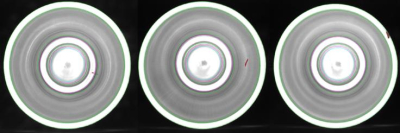
In recent years, with the integrated development of machine vision and artificial intelligence technologies, intelligent visual inspection systems have achieved significant breakthroughs. Modern detection systems require only one industrial camera, combined with lifting and rotating drive mechanisms, to achieve comprehensive inspection of the entire container bottle label and bottle cap printing. This system adjusts the camera height through a lifting drive mechanism to capture the printed information on the bottle cap, and uses a rotating drive mechanism to drive the camera to rotate intermittently, capturing label information at different positions on the bottle body. In addition, the introduction of imaging components expands the camera's single-shot range, ensuring detection effectiveness while reducing the number of cameras.
At the same time, the continuous development of machine vision software platforms (such as HALCON, EVISION, etc.) provides powerful image processing and analysis capabilities for visual inspection. These software platforms integrate a wealth of image processing algorithms, such as Blob analysis, morphological processing, pattern recognition, and measurement, greatly improving the development efficiency and application flexibility of visual inspection systems.
3 Core Technologies and Innovative Solutions
3.1 Multi-camera Collaboration and Single-camera Multi-angle Imaging System
In glass bottle label and code inspection systems, the imaging system is one of the core technologies. Traditional detection systems usually use four industrial cameras to shoot the container bottle body from different angles to achieve comprehensive coverage. However, this solution is not only costly but also involves complex system integration, and the synchronization and coordination between cameras present technical challenges.
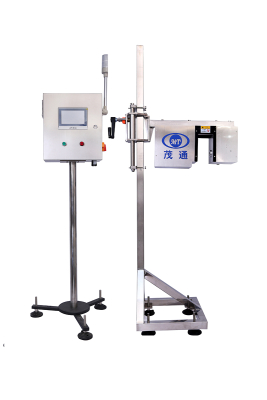
The new generation of detection equipment adopts a single-camera multi-angle imaging system. Through ingenious mechanical structure and optical design, a single camera achieves comprehensive inspection of both the container body and cap. Such systems typically include the main device body, a mounting platform for the camera, a lifting drive mechanism to raise and lower the mounting platform for photographing the container cap, and a rotating drive mechanism that intermittently rotates the mounting platform to photograph the container body. The intermittent transmission component in the rotating drive mechanism uses an eccentric wheel and gear combination to achieve intermittent rotation of the camera, allowing the camera to clearly photograph the container body from a fixed angle, avoiding image blurring caused by rotation.
The lifting drive mechanism usually employs a sleeve assembly and a lifting transmission component. Threaded transmission converts the rotational motion of the drive rod into linear motion of the lifting sleeve, thereby driving the camera to move up and down, precisely positioning it above the container cap for photographing the printed information on the cap. This design allows for precise adjustment of the camera position, enabling high-definition imaging of the container cap's printed information.
The lighting system is a key factor affecting image quality. Appropriate lighting can highlight target features and reduce reflections and shadow interference. Modern detection systems typically use a ring light source, distributed around the periphery of the mounting platform, and set at a height above the conveyor belt. This provides sufficient and uniform light for the camera to photograph the container body and cap, significantly improving the clarity of the captured images. For glass bottles of special materials (such as transparent and translucent), near-infrared illumination and fixed-angle light sources are also used to enhance image contrast and improve the accuracy of label edge recognition.
3.2 Image Processing and Defect Recognition Algorithms
Image processing algorithms are the "brain" of the visual inspection system, responsible for extracting useful information from the acquired images and making judgments. Traditional image processing methods include edge detection, threshold segmentation, and morphological processing. These methods perform well under specific conditions, but their adaptability to interference factors such as lighting changes and complex backgrounds is poor.
For glass bottle label detection, modern systems employ multi-level, multi-scale data analysis methods. First, the acquired high-resolution image is preprocessed using gradient enhancement filtering to suppress noise and enhance label edge features. Then, an edge detection algorithm is used to identify the boundaries of the label area, accurately extracting the label region. This step is crucial for subsequent defect detection; only by accurately extracting the label area can effective defect analysis and judgment be performed.
Based on the extracted label area, the system divides local detection units, analyzes the fiber arrangement direction, calculates the principal direction angle and analyzes the direction gradient change rate to determine whether the fiber arrangement is abnormal. By detecting fiber direction mutation points within the abnormal areas of the label surface, the spatial density value of the mutation points is calculated, and the mutation point density is filtered according to the fracture density threshold to identify fiber fracture areas.
Multi-scale analysis is an important feature of modern detection algorithms. By obtaining fiber direction consistency indicators and fracture point density at different scales, calculating the difference value of abnormality degree at each scale, and filtering abnormal areas where the difference value exceeds the threshold, defects can be identified more comprehensively and accurately. Finally, by analyzing the cumulative amplitude of fluctuations and the directional concentration deviation value of each abnormal area, the classification and identification of different defect types such as slight scratches, tears, drops, and label misalignment are achieved.
For inkjet code recognition, especially the recognition of characters such as batch numbers and production dates, Optical Character Recognition (OCR) technology is widely used. Traditional OCR methods usually include image preprocessing, character segmentation, and feature matching steps, but in practical applications, due to factors such as inkjet code quality and lighting conditions, the recognition accuracy is difficult to guarantee. The improved template matching algorithm improves the accuracy and robustness of character recognition by incorporating adaptive binarization and contour detection techniques.
3.3 Application of Deep Learning in Inkjet Code Recognition
In recent years, deep learning technology has made breakthrough progress in the field of image recognition, providing new solutions for glass bottle inkjet code recognition. Traditional image processing methods often rely on manually designed features, which have poor adaptability to complex inkjet code defect recognition tasks. Deep learning algorithms, on the other hand, can automatically learn feature representations in images and have stronger robustness to lighting changes, rotation, and scale changes.
Deep learning-based inkjet code recognition methods usually include the following steps: creating a detection template and setting the detection area to ensure that the detection area corresponds to the inkjet code position; collecting a large number of inkjet code samples and annotating them to build a training set and a test set; designing a deep learning model architecture, and performing model training and optimization; using the trained model to recognize the inkjet code to be detected and outputting the recognition result. During model training, data augmentation techniques (such as rotation, scaling, and adding noise) are used to increase the diversity of training samples and improve the model's generalization ability. Simultaneously, training strategies such as adjusting the learning rate and setting batch size are employed for batch training and optimization of the model, ensuring stable convergence and good performance.
Deep learning models can identify various inkjet printing defects, including skewed printing, incomplete printing, positional deviations, duplicate printing, and missing printing. Compared to traditional methods, deep learning technology performs better in challenging scenarios such as complex backgrounds, low contrast, and character adhesion.
In practical applications, deep learning is often combined with traditional image processing algorithms. Traditional algorithms are responsible for image preprocessing and region extraction, while deep learning algorithms handle recognition and classification in complex situations. This combined approach leverages the high computational efficiency of traditional algorithms and the strong recognition capabilities of deep learning, achieving efficient and accurate inkjet printing detection.
4 System Application and Implementation Results
4.1 System Integration and Workflow
A complete glass bottle label inkjet printing visual inspection system integrates multiple components, including mechanical, optical, electronic, and software, forming an efficient and stable automated inspection system. A typical system includes core components such as a conveying mechanism, imaging system, image processing unit, and sorting mechanism.
The system workflow typically includes the following steps: First, the conveyor belt transports the glass bottles to the inspection station. After the photoelectric sensor detects the bottle's arrival, it triggers the imaging system to capture an image. Then, the image acquisition unit transmits the captured image to the image processing unit, where image processing algorithms analyze and evaluate the image. Finally, based on the evaluation results, the control system decides whether to trigger the sorting mechanism to remove defective products.
In the entire detection process, the incoming material detection component plays a crucial role. The incoming material detection component typically includes a photoelectric sensor that senses the container and a first controller that receives the signal and controls the opening and closing of the rotary drive, the lifting and lowering drive, camera shooting, and the opening and closing of the ring light source. When the photoelectric sensor senses the container, the first controller automatically controls the start and execution of the detection process based on the sensing signal, achieving automated detection.
The detection system's software platform usually provides a graphical user interface, allowing operators to easily set parameters, monitor status, and query results. Software platforms generally include modules such as parameter settings, preprocessing, image processing, intelligent judgment, rejection, communication, and user interface. The parameter setting module provides settings and storage operations for database data files; the preprocessing module completes initialization operations according to the set values; the digital image processing module completes the digital processing of real-time acquired images; the intelligent judgment and decision-making module performs comparison and judgment processing of image data; the rejection module controls the rejection mechanism to perform sorting actions; the communication module realizes two-way communication between the detection system and the host computer and database; and the user interface uses a graphical method to provide users with convenient operation and statistical display functions.
4.2 Application Cases in Different Industries
Visual inspection technology has been widely applied in glass bottle label and inkjet code inspection across multiple industries, each with its specific needs and characteristics.
In the pharmaceutical industry, the inspection of labels and inkjet codes on pharmaceutical glass bottles is directly related to medication safety and drug traceability. Machine vision-based inspection systems can detect multiple indicators such as liquid volume, bottle batch number, and label status. Liquid volume detection actually involves detecting the liquid level in the bottle. The system uses a grayscale morphological algorithm to analyze real-time images, determining whether the liquid volume is qualified by measuring the relative position of the liquid surface. Bottle batch number detection uses OCR image processing methods to identify and verify individual digits in the batch number. Label inspection defines a region of interest (ROI) to detect the position and presence of the label, ensuring correct label placement.
In the alcoholic beverage industry, the high-end feel and brand image of product packaging place extremely high demands on label and inkjet code quality. The visual inspection system needs to detect not only the presence and correct position of the label, but also subtle differences in printing quality and color consistency. At the same time, the inkjet code information on the bottle cap (such as production date and batch number) also needs to be accurately identified and verified. Deep learning-based inspection systems can adapt to the diverse shapes, sizes, and materials of wine bottles, achieving efficient and accurate detection.
In the beverage and edible oil industries, high production speed and large output require extremely high speed and stability from the inspection system. The visual inspection system can adapt to high-speed production lines, real-time detecting the label and inkjet code quality of each bottle, ensuring that only qualified products enter the next stage. The system can also collect data such as production quantity and pass rate, providing decision support for production management.
Table: Glass Bottle Label and Inkjet Printing Inspection Requirements and Solutions in Different Industries
| Industry Sector | Main Inspection Requirements | Technical Solution Features | Implementation Effects |
| Pharmaceutical Industry | Accuracy of liquid volume and batch number, label integrity | High precision, compliant with GMP standards, strict traceability | Ensures medication safety and compliance with regulations |
| Alcohol Industry | Label appearance quality, inkjet printing clarity, brand consistency | High-end imaging, deep learning algorithms, subtle defect identification | Maintains brand image and prevents counterfeiting |
| Beverage Industry | High-speed production, label presence, accuracy of basic information | High-speed detection, strong stability, easy integration | Improves production efficiency and reduces labor costs |
| Daily Chemical Industry | Diverse containers, label position, appearance defects | Flexible detection, multi-template support, rapid switching | Adapts to multi-variety production and improves flexibility |
4.3 Implementation Effects and Economic Benefits
After introducing the glass bottle label and inkjet printing visual inspection system, manufacturing companies have achieved significant quality improvements and economic benefits. On the one hand, the inspection system can operate continuously 24/7, without being affected by factors such as fatigue or distraction, greatly improving the stability and consistency of the inspection. On the other hand, the detection speed and accuracy are far superior to manual inspection, meeting the needs of high-speed production lines.
From a quality perspective, modern visual inspection systems can achieve a pass rate of over 99.9%, with a detection speed of over 4000 units per hour, far exceeding the limits of manual inspection. The system can display real-time statistical data such as production speed, total number of inspections, number of qualified products, number of defective products, and pass rate, providing a basis for quality management.
From an economic perspective, although visual inspection systems require a certain initial investment, they can significantly reduce long-term operating costs. On the one hand, the system reduces the reliance on skilled inspection workers, lowering labor costs. On the other hand, the system can promptly identify quality problems in the production process, avoiding the production of large quantities of defective products and reducing losses and rework costs.
In addition, the visual inspection system can record and store images and relevant information of each defective product, facilitating quality traceability and process improvement. The system usually has data storage and query functions, and can automatically save images of defective products. The number of images saved and the number of days saved can be customized, facilitating historical queries and quality analysis.
5 Challenges and Future Development Trends
Although significant progress has been made in visual inspection technology for glass bottle label printing, some challenges remain in practical applications. First, the reflective properties and diverse shapes of glass materials pose difficulties for imaging. Different shapes and sizes of glass bottles require different imaging schemes and parameter settings, increasing the complexity of system debugging. Secondly, interfering factors such as vibration, dust, and temperature changes in the production environment may affect the stability of the detection. In addition, the diversity of label materials (such as paper, plastic, metal, etc.) and the differences in printing methods (such as laser printing, inkjet printing, etc.) also require the detection system to have sufficient adaptability and flexibility.
In the future, visual inspection technology for glass bottle label printing will develop towards a more intelligent, efficient, and integrated direction. Specific trends include:
Further improvement of curved surface adaptive recognition capabilities. With the development of algorithm optimization and 3D imaging technology, visual inspection systems will be able to better adapt to various curved containers, accurately identify defects in curved labels and printing, and improve the accuracy and applicability of detection.
Enhanced real-time processing capabilities. With the development of edge computing technology and dedicated image processing hardware, the processing speed of visual inspection systems will be further improved, meeting the real-time detection needs of higher-speed production lines.
Improved algorithm generalization capabilities. Through advanced artificial intelligence technologies such as transfer learning and meta-learning, visual inspection systems will be able to adapt to new products and environments more quickly, reducing the workload of retraining and parameter adjustment.
Deepening of human-machine collaboration. Future systems will provide a more user-friendly human-machine interface, combining technologies such as augmented reality (AR) to enable operators to perform parameter settings, status monitoring, and fault diagnosis more intuitively.
In-depth data value mining. The large amount of data generated by visual inspection systems, through artificial intelligence analysis, can identify potential problems and areas for improvement in the production process, providing support for process optimization and intelligent decision-making.
Improved system integration. Future visual inspection systems will be more modular and compact, making them easier to install and maintain. At the same time, the systems will be easier to integrate with other equipment on the production line (such as robots, PLC controllers, etc.), achieving more advanced automation functions.
6. Conclusion
As an important component of industrial automation, visual inspection technology for glass bottle label printing has developed into a comprehensive technology integrating optics, mechanics, electronics, and computer science. From the initial simple pass/fail judgment to today's ability to achieve complex defect recognition and character verification, visual inspection technology has made significant progress. With the integration of new technologies such as artificial intelligence and edge computing, the capabilities of visual inspection systems are constantly expanding, and their application effects are continuously improving.
In the future, with the in-depth advancement of Industry 4.0 and intelligent manufacturing, visual inspection technology for glass bottle label printing will continue to develop towards higher precision, faster speed, and stronger adaptability. The inspection system will no longer be a single quality control tool, but will become a key node in the digitalization, networking, and intelligence of the production process, providing strong support for enterprises to improve product quality, optimize production processes, and achieve intelligent manufacturing.
For manufacturing enterprises, introducing advanced visual inspection technology is not only an important means of improving product quality, but also a strategic choice to improve production efficiency, reduce production costs, and enhance market competitiveness. With the continuous maturity of the technology and the gradual reduction of costs, visual inspection technology will be applied in a wider range of fields, injecting new impetus into the development of industrial automation.