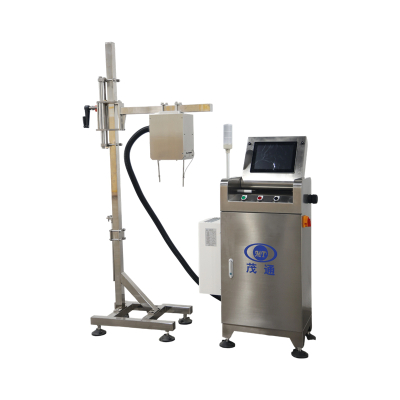
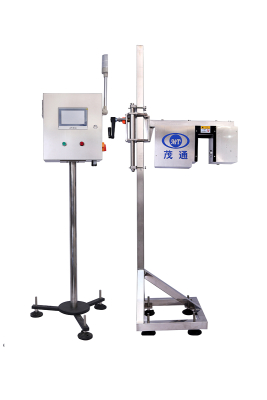
How to Select Maotong Inspection Equipment for a New Canning Line
When installing a new canning line and choosing Maotong equipment, the core principle is to finalize your can type and line speed first, then configure the equipment according to the production stations. Maotong is a mainstream domestic supplier for complete can inspection lines. Their product range covers everything from empty cans to fully packed cartons. However, the downstream inspection requirements vary significantly depending on the can type (e.g., two-piece aluminum cans for carbonated drinks vs. three-piece tinplate cans, or whether nitrogen flushing is used). Choosing the wrong configuration leads to wasted investment.
Below, I break this down by Station Configuration → Corresponding Maotong Models → Selection Criteria.
Part 1: First, Define Two Things: Can Type & Line Speed
Maotong’s can inspection equipment is categorized by CPH (Cans Per Hour). For a new line, it's recommended to leave a 15–20% margin above your target speed:
Low-speed line: 48,000 CPH (Economy tier)
Mid-speed line: 72,000 CPH (This applies to models like the MT-YLG-GK01 Empty Can Inspector)
High-speed line: 90,000 CPH (Applies to models like the MT-YLDJ-02 Pressure Tester and Coding Inspectors)
Ultra-high-speed line: 120,000 CPH (Top-tier Liquid Level Inspector, e.g., the CBST2021 model)
The can type determines whether you need Pressure Testing or Vacuum Testing downstream—this is the most common configuration mistake:
Can Type | Typical Products | Downstream Detection Method |
|---|---|---|
Two-piece Aluminum (Carbonated/Nitrogen) | Beer, Carbonated Drinks | Post-Pasteurization → Squeeze/Pressure Testing (MT-YLDJ-02 Eddy Current) |
Two-piece Aluminum (Non-carbonated) | Coffee, Herbal Tea | Post-Pasteurization → Squeeze Leak Detection |
Three-piece Tinplate | Canned Foods, Congee | Post-Pasteurization → Vacuum Testing |
(Reference configurations from Tianlang can be aligned with Maotong's corresponding models.)
Part 2: Station-by-Station Maotong Model Mapping
🔧 Station 1: Pre-Rinsing · Empty Can Inspector (MT-YLG-GK01)
Location: Single-lane conveyor before the filler.
Inspects: Flange deformation/tears/V-notches, dents, bottom debris.
Speed: 72,000 CPH; compatible with both 2-piece and 3-piece cans.
Rejection: Single-stage pneumatic rejector.
Selection Tip: Essential if incoming empty cans face risks of damage during unpacking or transport. If using brand-new cans from an automated silo system, some plants omit this unit, but you must weigh the risk of defects reaching the filler.
🔧 Station 2: Post-Filling · Liquid Level Inspector (X-Ray)
Location: After the filler, before the pasteurizer.
Specs: Accuracy up to ±0.5mm (New CBB2024 model), false rejection rate <0.02%, high-speed models up to 90k CPH.
Inspects: Low/high fill levels, missing caps (can trigger filler valve management/sampling).
Selection Tip:
X-ray penetrates aluminum/tinplate, suitable for both carbonated and non-carbonated cans.
For 120k CPH lines, select the top-tier CBST2021 model. For 72k CPH, choose the MT-x1500 (±0.75mm).
Core components use Japanese X-ray tubes/receivers + SMC cylinders, comparable to Krones standards.
🔧 Station 3: Post-Pasteurization · Leak/Pressure Testing
For Carbonated Two-Piece Cans (Beer/Soda): Select MT-YLDJ-02 Pressure Tester
Principle: Eddy current scanning of lid curvature (accuracy 0.1mm) to determine internal pressure.
Speed: 90,000 CPH. Installed on single-lane post-pasteurizer conveyors.
Inspects: Leaks, swells (over-pressure), empty cans, missing lids, inverted cans, dents.
Features proprietary DSP wavelength processing to reduce false positives. IP65 enclosure; optional network remote access.
For Three-Piece Tinplate: Select Vacuum Tester
(Maotong offers these; similar logic applies—using sound waves/EM waves to measure lid deflection and infer vacuum levels.)
For Non-Carbonated Two-Piece Cans: Select Squeeze Leak Detector
Dual-side belt compression + high-precision pressure sensors (±0.01MPa) to detect micro-leaks or faulty foil seals.
💡 This station is the "Goalkeeper" of the canning line. Omitting it means discovering issues only after packing or shipping, multiplying losses tenfold.
🔧 Station 4: Coding Inspector (MT-YLG-OCD)
Location: After Level/Pressure testing, before the cartoner.
Speed: Standard 72,000 CPH; High-speed version 90,000 CPH.
Inspects: Presence, blurriness, absence, offset, errors, or duplication of codes. Bottom-code OCR is a Maotong strength—capable of reading date/lot codes and plant identifiers (e.g., TN/HB/GM). Date parameters auto-adjust without manual input.
Selection Tip: Confirm compatibility with both inkjet and laser codes on the can bottom. If implementing traceability ("one code per can"), state this upfront as the algorithm requires specific training.
🔧 Station 5: Downstream · Full Carton Checkweigher + Pre-Palletizing Sampling
Maotong offers online checkweighers and full-carton inspectors, typically placed after the cartoner. For carbonated/beer lines requiring "missing can in carton" control, consider adding an X-ray full-case scanner (though Maotong is less dominant here compared to their liquid level/coding systems; compare with suppliers like Haishen or Mingjia).
Part 3: New Line Selection Checklist (Use this with Maotong Sales)
Can Type List: 2-piece vs. 3-piece? Aluminum vs. Tinplate? Carbonated vs. Non-carbonated vs. Nitrogen-flushed? — Determines Station 3 configuration.
Design Speed + Margin: e.g., Actual 60k CPH -> Specify 72k CPH. Don't max out the capacity.
Can Diameter Range: Maotong liquid level sensors typically cover φ20~100mm / 200~1000ml. Customization is needed for sizes outside this range.
Rejection Accuracy: Maotong uses encoders to track can IDs, ensuring accurate rejection even if the line stops or fluctuates in speed—more reliable than older photo-eye systems. Verify this.
Flexibility for Changeovers: If running multiple SKUs (e.g., 330ml + 500ml), confirm if the "10 Product Recipe Storage" is sufficient.
After-Sales: Maotong offers a 14-month warranty. Lock response times into the contract. Clarify spare parts inventory for core components (X-ray tubes, SMC cylinders).
Budget Benchmark: Reference Gaide.com pricing anchors—approx. ¥140k for a liquid level inspector, ¥200k for an empty can inspector, ¥250k for an aluminum foil squeeze leak detector. There is room for negotiation when bundling a full line.