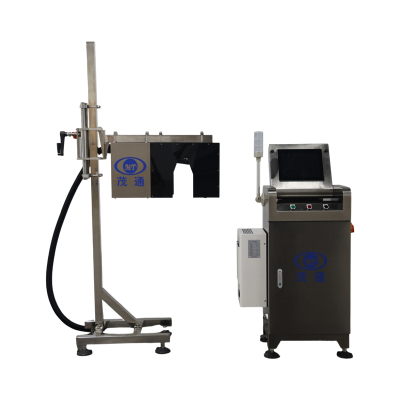
Set Code Inspection Machine Conditions Before Inline Codes Fail
A high-speed packaging line can lose traceability quickly when date codes, batch marks, or inkjet prints become missing, excessive, or unreadable. A Code Inspection Machine helps turn code checking from occasional sampling into inline visual inspection, so nonconforming bottles can be identified and removed before they continue downstream.
What the Machine Checks
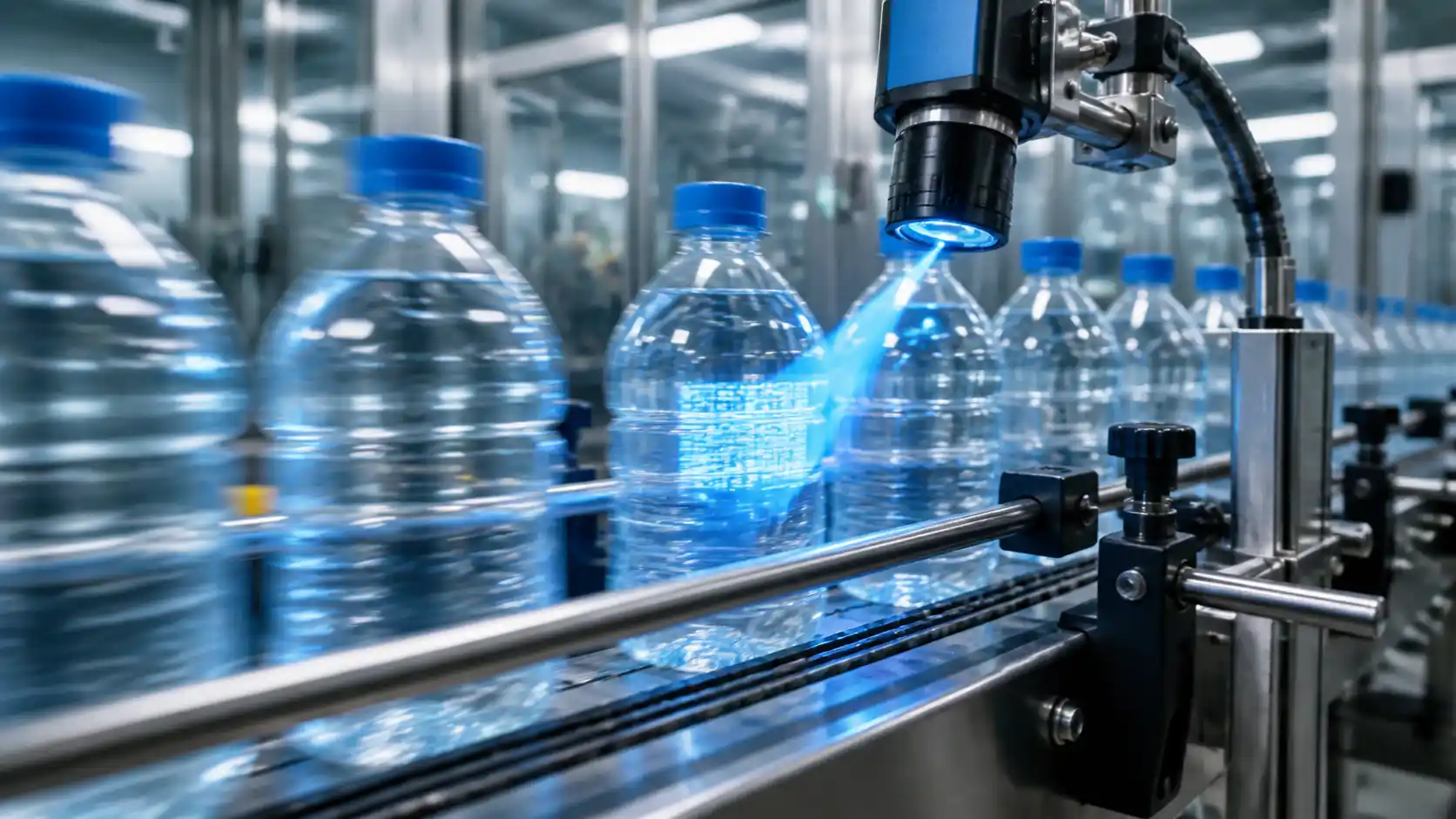
A Code Inspection Machine is used to inspect inkjet printing quality on production lines. In PET bottle inspection projects, the inspection scope includes missing inkjet print and excessive inkjet printing, together with related checks such as missing caps, over-height caps, misaligned caps, damaged anti-theft rings, and low liquid level. This matters because a readable code is part of product traceability, while cap, fill, and ring defects affect the same final release decision.
In practical packaging environments, code inspection is often evaluated alongside cap Inspection and liquid level detection. A Code Inspection Machine can therefore be part of a broader quality station rather than a standalone visual check.
That broader context is important on modern high-speed lines because defects rarely happen in isolation. A missing date code may appear together with unstable bottle spacing, cap handling issues, or variation in product fill. When inspection data is combined at one station, the packaging team can review multiple release-critical points in real time instead of relying on disconnected manual checks. This improves line visibility, strengthens traceability records, and reduces the risk of defective containers moving into secondary packing or shipment.
How Inline Inspection Works
The workflow is straightforward. As each PET bottle passes the positioning sensor, the control unit records the bottle ID and encoder signal. The camera then captures images of the inspection areas, including inkjet markings. The image processor analyzes the images, sends results to the HMI for real-time display, and transmits the final decision to the PLC for rejection logic.
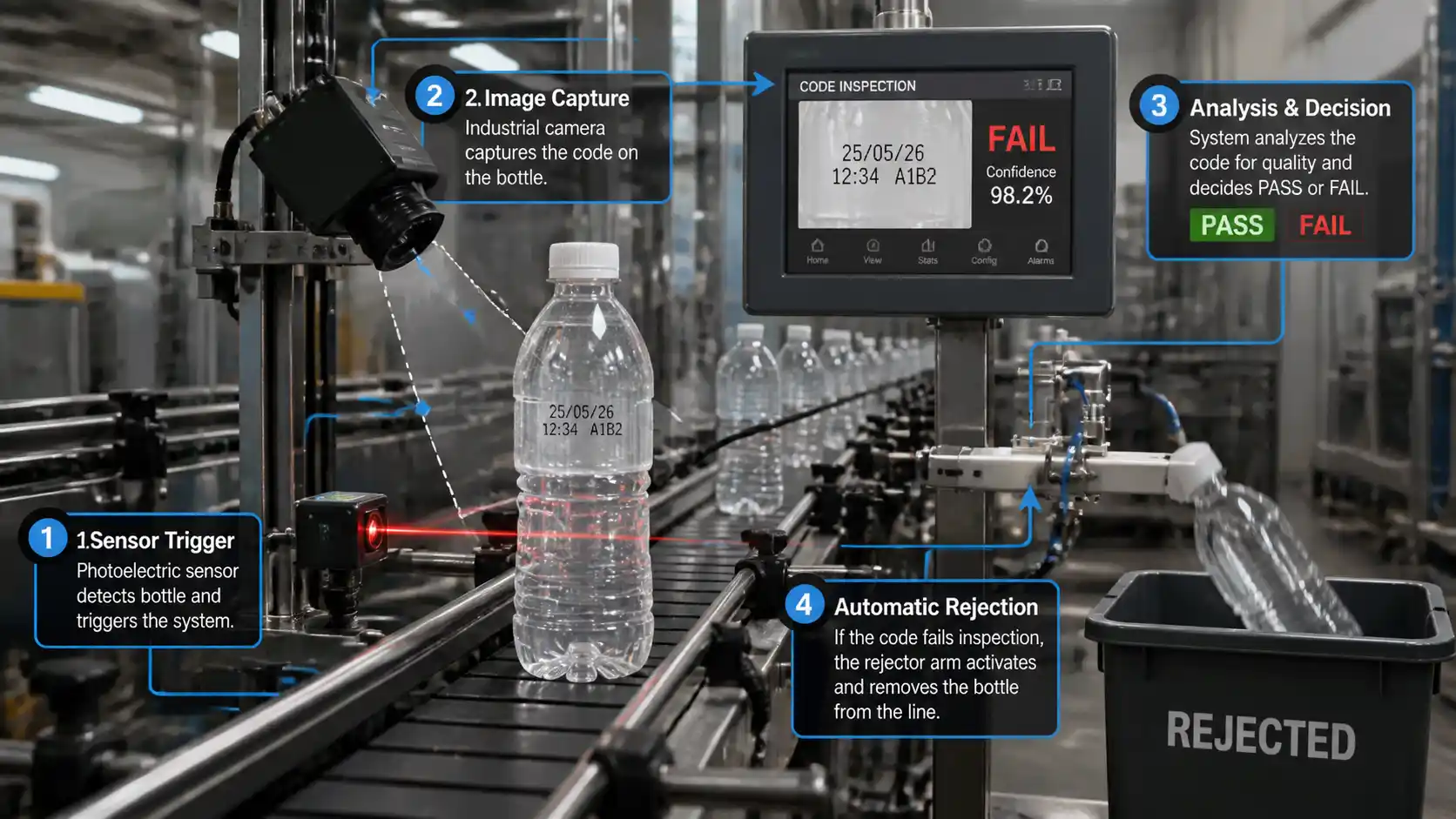
If the system identifies a nonconforming bottle, the rejector removes the bottle associated with the recorded ID. This encoder-linked process helps maintain rejection accuracy even when line speed changes or temporary stops occur. For a Code Inspection Machine, that relationship between sensor, camera, processor, PLC, and rejector is central to stable inline code control.
In daily operation, stable performance depends on timing discipline as much as imaging quality. The trigger point must stay synchronized with bottle movement, lighting must remain consistent across the inspection field, and the software decision threshold must be tuned to the actual print variation on the line. If any of these factors drift, the system may increase false rejects or miss borderline defects. For that reason, inline inspection is best treated as a controlled process rather than simply a camera mounted above a conveyor.
Installation and Operating Environment
Stable imaging depends heavily on the site conditions around the line. The recommended installation altitude is 5–3000 m above sea level. The operating temperature range is 5°C–40°C, and the recommended relative humidity is 50%–65% RH. Floor flatness, load-bearing capacity, and related factory parameters should comply with relevant national standards to support stable and reliable equipment operation.
These requirements are not just formal specifications. Uneven floors can affect conveyor stability, vibration can reduce image consistency, and poor environmental control can make camera and lighting performance less predictable. A Code Inspection Machine should be installed where container movement remains stable and where the inspection section is clean enough for reliable image capture.
System Composition
A typical Code Inspection Machine uses coordinated mechanical and electrical modules. The distribution cabinet provides power, processes images, and controls rejection. The detection module includes components such as LED light sources, industrial CCD cameras, and sensors for dynamic image capture. The rejection device receives signals and removes defective products from the line.
| Module | Main Function |
|---|---|
| Distribution cabinet | Power supply, image processing, interface processing, strobe control, PLC control |
| Detection module | LED lighting, camera imaging, sensor triggering |
| Encoder and control unit | Bottle ID recording and position tracking |
| HMI | Real-time monitoring and result display |
| Rejector | Automatic removal of nonconforming products |
The inkjet printing visual inspection configuration described for PET bottle projects supports code-related defect checks and can operate within a larger machine vision inspection architecture. Listed project data for related PET bottle inspection systems includes maximum capacity up to 60,000 bottles per hour, while the inkjet printing visual inspection machine feature description notes a maximum speed up to 72,000 BPH.
Buyer Checklist
Before purchasing or installing a Code Inspection Machine, buyers should confirm the following practical conditions:
A Code Inspection Machine performs best when mechanical stability, optical clarity, and rejection timing are treated as one system. For packaging plants handling PET bottles, glass bottles, or cans, the goal is not only to find bad codes, but to keep every rejection decision traceable, repeatable, and aligned with the real position of each container.
FAQs
What defects can a Code Inspection Machine inspect?
It can inspect inkjet-related issues such as missing inkjet print and excessive inkjet printing. In combined PET bottle inspection systems, it may be used with checks for caps, anti-theft rings, and liquid levels.
What operating environment is recommended?
The recommended conditions are 5–3000 m altitude, 5°C–40°C operating temperature, and 50%–65% relative humidity.
How does automatic rejection work?
The control unit records bottle ID and encoder position, the camera captures inspection images, and the PLC triggers the rejector to remove the corresponding defective product.
Why are storage conditions important?
Proper storage, lubrication, and preventive maintenance help prevent corrosion, deformation, and surface damage that could affect later installation and normal operation.
Is the Code Inspection Machine only for PET bottles?
The inkjet printing visual inspection project described here is for PET bottles, while related inspection systems cover glass bottles and cans in other inspection applications.