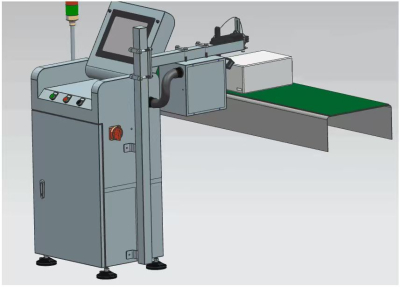
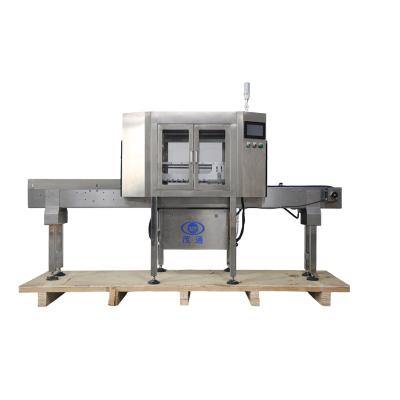
Let PET Label Inspection Machine Track Every Bottle
On a fast PET bottling line, label defects are more than cosmetic issues. A missing, high, low, or incorrectly oriented label can affect product presentation before the bottle reaches packaging. A Pet Bottle Label Inspection Machine is designed to inspect PET bottle labels online through non-contact machine vision, helping production teams identify unqualified bottles before they continue downstream.

Why Bottle Tracking Matters Before Rejection
The PET Label Inspection Machine is installed on the single-row straight conveyor line behind the labeling machine. This position is important because each bottle has already passed through labeling, but defects can still be removed before later handling or packaging steps.
The system uses machine vision technology for fully automated, non-contact online inspection. Its inspection items include label presence and label height verification, with listed defect categories such as no label, high label, low label, and incorrect label orientation. The product information also describes 360-degree inspection using multi-view stitching and color recognition technology.
The Three Step Workflow Behind PET Label Inspection Machine Operation

3.1 Presence Detection and Encoder Recording
As each bottle passes the positioning sensor, its presence is detected. At the same time, the control unit records the bottle ID and the corresponding encoder value. This step gives the PET Label Inspection Machine a clear reference for matching each physical bottle with the inspection result generated later.
For high-speed production, this synchronization is essential. Without bottle ID and encoder tracking, a system may detect a defect but fail to reject the correct container. By recording both values at the moment of detection, the PET Label Inspection Machine builds the timing foundation for accurate downstream rejection.
3.2 Image Capture, Vision Processing, and HMI Display
After the positioning sensor detects the bottle, it triggers the camera to capture an image of the bottle label. Once the image is acquired, the vision processor analyzes it and sends inspection results to the HMI for real-time display. The same data is also transmitted to the control unit for defect handling.
The image acquisition components include an LED area light source with front illumination and a fixed-focus manual aperture lens. The camera is described as an area-array CCD analog camera with 640 × 480 pixel resolution and a maximum capture rate of 60 frames per second. Together, these components help the PET Label Inspection Machine capture usable label images during online inspection.
3.3 Defect Signal and Rejector Action
If a defect is identified, the control unit sends a command to the rejector, which removes the corresponding bottle from the production line according to the recorded ID. This closes the inspection loop: detect the bottle, capture and analyze the label image, display the result, and reject the unqualified container.
A rejection verification module is also included in the equipment structure. Its role is to support online monitoring of rejection performance and help keep defect removal aligned with inspection results.
Key Technical Conditions Buyers Should Check
The PET Label Inspection Machine is presented with defined environmental and operating requirements. These conditions should be reviewed before installation to support stable commissioning and long-term operation.
| Category | Stated Requirement |
|---|---|
| Installation position | Single-row straight conveyor line behind the labeling machine |
| Applicable container | PET bottles |
| Optimum altitude | 5–3000 meters above sea level |
| Operating temperature | 5°C–40°C |
| Operating humidity | 50%–65% RH |
| Noise level | ≤85 dB, depending on container, power, and acoustics |
| Voltage | 220V, 50Hz, single-phase; special voltages require prior notification |
| Total power | Approximately 1.0kW; control voltage 24VDC |
| Compressed air | 0.5MPa, about 0.01L per rejection cycle |
The product information lists a designed throughput of 60,000 bottles per hour in the project design basis, while the key feature section also presents a maximum inspection speed of up to 36,000 BPH. Buyers should confirm the exact line condition and configuration during project communication.
Inspection Items and Accuracy
The PET Label Inspection Machine focuses on practical label defects that are common after labeling. The listed inspection contents include:
•No label
•High label with deviation requirements stated at ≥2mm
•Low label with deviation requirements stated at ≥2mm
•Incorrect label orientation
•Connection label detection, requiring significant color difference
The inspection accuracy table lists a 100% rejection rate for no-label detection, ≥99.9% rejection for high-label and low-label defects meeting the stated deviation condition, and a false rejection rate of ≤0.03% in the table. These figures help buyers understand how the PET Label Inspection Machine is positioned for online label quality control.
Equipment Structure in Practical Terms
A complete PET Label Inspection Machine includes inspection modules, an HMI, industrial-grade control computers, imported PLCs, sensors, a control program, and a rejection verification module. The power distribution cabinet includes industrial air conditioning, and the compact design is intended to reduce equipment footprint.
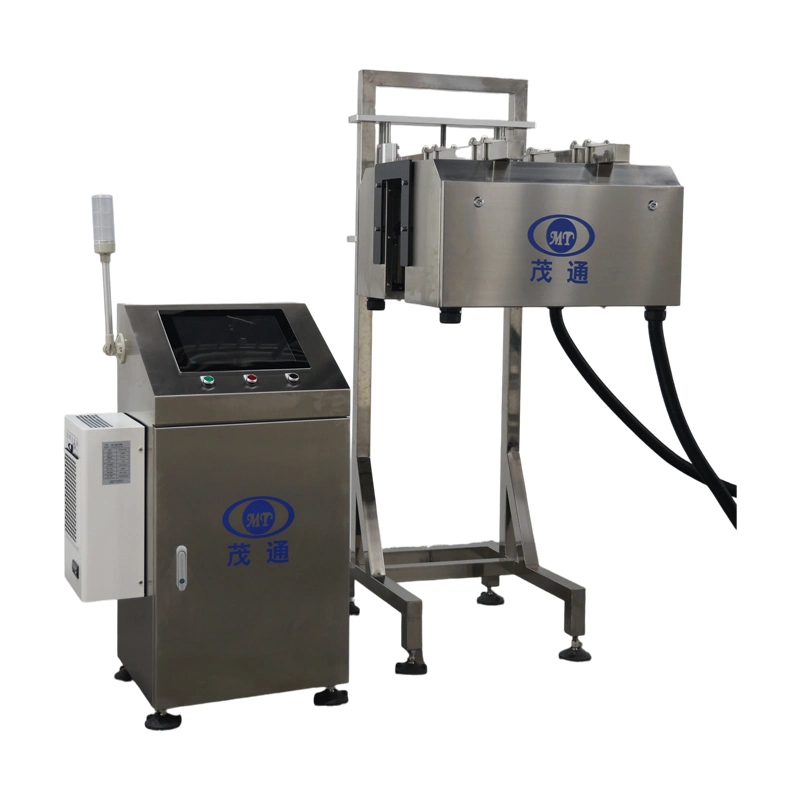
For operators, the HMI is especially useful because operating conditions and fault diagnostics are visually displayed. For maintenance teams, modular architecture, reserved interfaces, and user-friendly maintenance features can make the PET Label Inspection Machine easier to integrate and manage on production lines.
Procurement Takeaway
A PET Label Inspection Machine should be evaluated not only by inspection items, but also by how reliably it tracks each bottle from sensor detection to rejector action. Buyers should pay close attention to installation position, line speed requirements, compressed air supply, environmental conditions, inspection accuracy, HMI visibility, and rejection verification.
For PET bottle lines that need inline label presence and height verification, the PET Label Inspection Machine provides a structured workflow: sensor detection, encoder tracking, camera imaging, vision processing, real-time HMI display, and targeted rejection.
FAQs
What does a PET Label Inspection Machine inspect?
It inspects PET bottle label defects including no label, high label, low label, and incorrect label orientation. The product information also describes label presence and label height verification.
Where is the machine installed?
It is installed on the single-row straight conveyor line behind the labeling machine.
How does the system know which bottle to reject?
When a bottle passes the positioning sensor, the control unit records the bottle ID and encoder value. If the vision processor identifies a defect, the control unit commands the rejector to remove the corresponding bottle.
What operating utilities are required?
The stated requirements include 220V, 50Hz, single-phase power, approximately 1.0kW total power, 24VDC control voltage, and compressed air at 0.5MPa.
What should buyers confirm before ordering?
Buyers should confirm line speed, bottle type, label defect requirements, factory conditions, installation space, compressed air supply, and any special voltage requirements.