PET Label Inspection Machine Reduces Packaging Risk Early
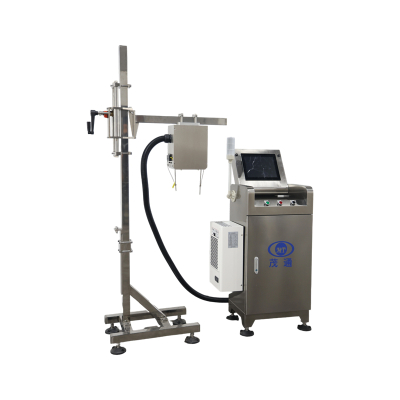
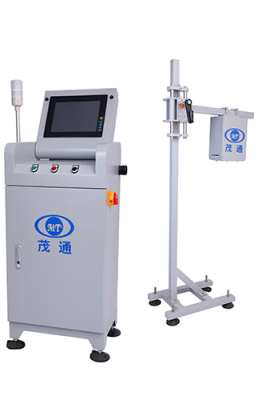
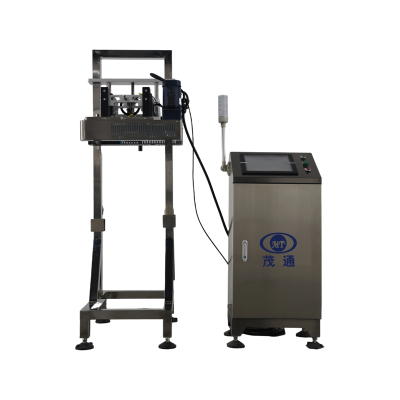
For PET bottle production lines, label quality is not a small finishing detail. A missing, high, low, or wrongly oriented label can move downstream quickly if inspection relies only on sampling. The PET Label Inspection Machine is designed for fully automatic, non-contact online inspection of PET bottle labels, with checks for label presence and label height. Installed behind the labeling machine on a single-row straight conveyor, it supports continuous inspection while defective bottles are identified and removed through the rejector.

Why Inline Label Inspection Matters
The PET Label Inspection Machine uses machine vision technology to inspect PET bottle labels online without touching the container. Its inspection content focuses on practical label faults that often affect packaging appearance and product presentation: no label, high label, low label, and incorrect label orientation.
The system is designed with 360-degree inspection capability, multi-view stitching, and color recognition technology. For PET bottle lines where every container passes the labeling station at speed, the PET Label Inspection Machine helps make label defects visible before bottles continue into later handling or packaging stages.
Installed Where Label Problems Start
The PET Label Inspection Machine is installed on the single-row straight conveyor line behind the labeling machine. This location is important because it places inspection immediately after label application, allowing the system to check each bottle while the label condition is still directly linked to the labeling process.
Its rated output is 60,000 units per hour, and the applicable bottle type is PET bottle. The machine comprises multiple detection units and a Human-Machine Interface, making it suitable for high-speed production line inspection and operator monitoring.
How The PET Label Inspection Machine Works
The operating sequence is straightforward:

Positioning sensor → Bottle ID and encoder → Camera image capture → Image processing → HMI display → Rejector removal
In practice, this workflow lets the PET Label Inspection Machine take a clear role in online quality control: detect the bottle, inspect the label, display the result, and remove the defective product when required.
Inspection Scope And Accuracy
The PET Label Inspection Machine focuses on label presence, position, and orientation. Its documented inspection and rejection data are summarized below.
| Test content | Testing accuracy | Rejection rate | False rejection rate |
|---|---|---|---|
| No label | --- | 100% | ≤0.03% |
| High label | Deviation ≥ 2mm | ≥99.9% | --- |
| Low label | Deviation ≥ 2mm | ≥99.9% | --- |
| Connection label | Requires significant color difference between tape and label | ≥99.9% | --- |
For buyers evaluating a PET Label Inspection Machine, this table is useful because it separates the actual inspection items from broader claims. It shows where the system is intended to work: identifying missing labels, detecting label height deviations, and checking related label conditions under the stated requirements.
Image Acquisition And Control Components
The PET Label Inspection Machine uses an LED area light source with a service life of up to 50,000 hours. Foreground illumination supports clear object measurement display, and the system uses a manual aperture fixed-focus lens for clarity adjustment. The camera is an area array CCD analog camera with 640 × 480 pixels resolution and image acquisition speed up to 60 frames per second.
The detection unit integrates an industrial control computer for processing and communicates with the control unit for inspection information transmission. The electronic control system uses programmable controllers, memory, photoelectric switches, and induction switches. A rejection confirmation unit is included to support accurate removal of defective products.
Operating Conditions Buyers Should Confirm
Before specifying a PET Label Inspection Machine, buyers should check whether the production site matches the required environment and utilities.
| Item | Requirement |
|---|---|
| Noise | ≤85 dB, with actual level affected by container, machine power, and building acoustics |
| Voltage | 220V, 50Hz, single-phase; special voltages require prior notification |
| Total power | Approximately 1.0 kW |
| Control voltage | 24VDC |
| Compressed air | 0.5 MPa |
| Air consumption | Approximately 0.01 L per rejection cycle |
| Optimum altitude | 5–3000 meters above sea level |
| Optimum ambient temperature | 5°C–40°C |
| Optimum ambient humidity | 50–65% RH |
Factory floor levelness, load-bearing capacity, and storage conditions should meet relevant national standards. Lubrication and maintenance are also required to prevent surface damage or deformation that may affect installation, commissioning, and long-term operation.
FAQs
What does the PET Label Inspection Machine inspect?
It inspects PET bottle labels for no label, high label, low label, and incorrect label orientation.
Where is the machine installed?
It is installed on the single-row straight conveyor line behind the labeling machine.
What is the designed throughput?
The designed throughput is 60,000 bottles per hour for PET bottles.
What utilities are required?
The system requires 220V, 50Hz single-phase power, approximately 1.0 kW total power, 24VDC control voltage, and 0.5 MPa compressed air.
How are defective bottles removed?
After image processing identifies an unqualified bottle, the control unit sends a signal to the rejector to remove the bottle with the corresponding ID.