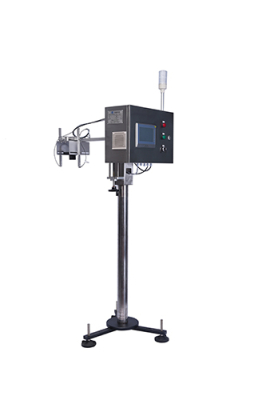
Maotong PET Cap Sealing, Liquid Level, and Inkjet Code Inspection
Maotong PET Cap Sealing, Liquid Level, and Inkjet Code Inspection: Machine Vision Empowering Intelligent Quality Control on Beverage Production Lines
Introduction
In modern high-speed production lines for PET-bottled products such as beverages, mineral water, and daily chemicals, cap sealing quality, filling liquid level accuracy, and inkjet code correctness are the three core indicators of product quality. Traditional manual sampling inspection is not only inefficient but also prone to missed and false inspections, making it inadequate for today's production capacities that often reach tens of thousands of bottles per hour.
Jinan Maotong Testing Equipment Co., Ltd. (hereinafter referred to as "Maotong"), leveraging its extensive expertise in the machine vision inspection field, has developed the PET Bottle Cap Sealing, Liquid Level, and Inkjet Code Intelligent Vision Inspection System (Patent No.: ZL 2021 2 1434511.6). This non-contact, high-speed, and high-precision online inspection solution establishes a robust quality assurance line of defense for PET bottling production lines.
I. System Overview
The Maotong PET Cap Sealing, Liquid Level, and Inkjet Code Inspection System is an integrated online intelligent vision inspection device that combines cap appearance inspection, filling liquid level inspection, and inkjet code OCR character recognition into a single unit. The system is installed on the conveyor line after the capping machine and operates synchronously with the production line, performing 360-degree, comprehensive, real-time quality inspection on every PET bottle that passes through, while automatically rejecting non-conforming products.
Core Technical Specifications
| Parameter | Specification |
|---|---|
| Inspection Speed | Up to 90,000 bottles/hour |
| Power Supply | 220V |
| Power Consumption | 300W |
| Equipment Weight | 60kg |
| Protection Rating | IP65 (compliant with EN 60529 standard) |
| Patent Number | ZL 2021 2 1434511.6 |
| Cooling Method | Industrial air conditioning |
| Communication | Gigabit network image transmission, multiple communication interfaces |
| Operation Interface | LED/LCD display, interactive HMI operation |
II. Three Core Inspection Functions
2.1 Cap Sealing Inspection
Cap sealing is the first quality checkpoint in PET bottle packaging. The Maotong system utilizes a multi-angle camera array to capture 360-degree images of the bottle cap, accurately identifying the following cap defects:
Missing Cap: No cap applied to the bottle mouth
High Cap: Cap not fully tightened, positioned above the standard level
Crooked Cap: Cap tilted, not aligned with the bottle mouth
Broken Bridge: Safety connection bridge fractured
Broken Ring: Safety ring missing or fractured
Mixed/Foreign Cap: Cap type, color, or shape does not match the standard
Cap Top Bulge: Abnormal protrusion on the cap top
The system supports inspection of standard 28mm caps, 38mm caps, double-layer caps, and other non-standard cap types. It features a standard cap self-learning function, enabling rapid adaptation to different bottle type changeover requirements.
2.2 Liquid Level Inspection
The accuracy of filling liquid level directly relates to product net content compliance and consumer rights. The Maotong system employs a unique optical path design and foam compensation technology to effectively overcome interference factors such as liquid surface bubbles and reflections, achieving high-precision liquid level deviation inspection:
Detects whether the filling liquid level falls within the standard tolerance range
Identifies non-conforming products with excessively high or low liquid levels
Foam compensation algorithm improves inspection accuracy and reduces false rejections
2.3 Inkjet Code Inspection (OCR Character Recognition)
Inkjet codes are critical identifiers in product traceability systems, and their completeness and readability are of paramount importance. The Maotong system integrates a powerful OCR character recognition engine to perform comprehensive inspection of inkjet codes on bottle surfaces:
| Inspection Item | Description |
|---|---|
| Missing Code | Inkjet code completely absent |
| Duplicate Code | Code content repeated |
| Unclear Printing | Characters blurred, low legibility |
| Missing Character | One or more characters absent |
| Position Deviation | Code position outside the set range (e.g., positioned too low) |
| Contamination | Foreign matter making the code unreadable |
The system provides a flexible OCR character training function. Users need only enter the correct character sequence and initialize the correct format once; subsequently, the system achieves accurate character missing detection through statistical reconstruction.
III. Technical Principles and System Architecture
3.1 Workflow
The workflow of the Maotong PET Cap Sealing, Liquid Level, and Inkjet Code Inspection System is as follows:
3.2 Core Positioning Technology
The system employs a dual-algorithm architecture combining edge feature positioning and image information positioning:
Edge Feature Positioning: Achieves rapid target positioning by extracting edge contour features of the cap, liquid surface, and inkjet code regions. Accurate positioning of the inspection area is possible even in the absence of characters.
Image Information Positioning: Utilizes overall image information for auxiliary positioning, improving positioning stability under complex working conditions.
The two algorithms work synergistically, offering significant advantages of fast positioning speed, high precision, and high accuracy, while simultaneously detecting character blurriness and the degree of positional offset.
3.3 Character Segmentation and Detection Algorithm
For inkjet code OCR recognition, the system adopts an intelligent character segmentation strategy:
Performs stable feature analysis on the prominent position of each character
Achieves precise character segmentation through parameter configuration
After entering the correct format during initialization, achieves continuous detection through statistical reconstruction
Automatically adapts to different fonts, font sizes, and inkjet code styles
3.4 Anti-False-Rejection Mechanism
Lighting conditions in industrial environments are complex and variable. The Maotong system incorporates multiple anti-false-rejection mechanisms:
Ambient Light Preprocessing: Performs real-time preprocessing of ambient light intensity to eliminate the effects of lighting fluctuations
Lighting Adaptability: Once inspection parameters are locked, the system automatically adapts to minor changes in lighting and focal distance
Rapid Debugging: Simplified debugging after parameter locking, lowering the operational threshold for operators
3.5 Hardware Architecture Design
At the hardware level, the system adopts a hardware circuit implementation (rather than an embedded operating system). This design delivers two core advantages:
Strong Real-Time Performance: Hardware-level processing guarantees millisecond-level response for image acquisition, analysis, and rejection signals
High Stability: Avoids potential freezing and crashes associated with embedded operating systems
Combined with an industrial air conditioning cooling system, the equipment maintains stable performance during extended continuous operation, effectively prolonging service life.
IV. System Features and Advantages
4.1 Ultra-High-Speed Inspection Capability
The inspection speed reaches up to 90,000 bottles/hour, meeting the online inspection demands of the fastest beverage filling lines currently available, achieving true "100% inspection" rather than "sampling inspection."
4.2 Non-Contact Non-Destructive Inspection
The entire process utilizes optical imaging without any physical contact with the product, causing zero damage. This is particularly suitable for industries with strict hygiene requirements, such as food and beverages.
4.3 Full Data Traceability
The system automatically stores inspection photos of every tested product. The storage duration is customizable, and the storage format can be flexibly adjusted according to customer requirements. This function provides comprehensive data support for quality traceability, customer complaint handling, and process optimization.
4.4 Intelligent Human-Machine Interaction
Multi-Level Permission Management: Supports user permission settings with hierarchical access control
Real-Time Data Statistics: LED/LCD display provides real-time inspection data and statistical results
One-Touch Bottle Type Changeover: Optional fully automatic lifting device automatically adjusts equipment height and parameters after bottle type switching
4.5 Industrial-Grade Protection Design
The entire unit is constructed from 304 stainless steel, providing strong environmental adaptability
IP65 protection rating, effectively resistant to water splashes and dust
Compact cabinet design facilitates easy integration of additional inspection modules (e.g., foreign object inspection, weighing inspection)
V. Application Scenarios
The Maotong PET Cap Sealing, Liquid Level, and Inkjet Code Inspection System is widely applied in the following fields:
| Application Field | Typical Products |
|---|---|
| Beverage Industry | Mineral water, carbonated drinks, juice beverages, tea beverages |
| Dairy Industry | Pure milk, yogurt, milk-based beverages |
| Daily Chemical Industry | Shampoo, body wash, hand sanitizer |
| Edible Oil Industry | Various PET-bottled edible oils |
| Alcohol Industry | PET-bottled low-alcohol beverages, premixed drinks |
| Pharmaceutical Industry | PET-bottled oral liquids, syrups, etc. |
Installation Position
The standard installation position is after the capping machine, where cap sealing is complete, filling liquid level is finalized, and inkjet codes have been printed — the optimal station for comprehensive quality inspection.
VI. Comparison with Traditional Inspection Methods
| Comparison Dimension | Manual Sampling Inspection | Maotong Vision Inspection System |
|---|---|---|
| Inspection Method | Manual visual sampling | Machine vision 100% inspection |
| Inspection Speed | Limited by manpower, ~3,600 bottles/hour | Up to 90,000 bottles/hour |
| Inspection Coverage | 5%–10% (sampling) | 100% (full inspection) |
| Miss Rate | High (fatigue, attention dispersion) | Extremely low (stable algorithms) |
| False Rejection Rate | High (subjective judgment variations) | Low (unified objective standards) |
| Data Traceability | No records or manual records | Full automatic photo storage |
| Labor Cost | Multiple shift workers required | One operator for monitoring |
| Night Shift Inspection | Notable quality degradation | 24-hour consistent performance |
VII. Selection and Implementation Recommendations
7.1 Pre-Selection Assessment Points
Before purchasing vision inspection equipment, enterprises are advised to conduct a comprehensive assessment from the following dimensions:
Product Type: Bottle specifications, cap types, inkjet coding method (inkjet/laser)
Inspection Function Requirements: Clearly define the inspection items needed (cap sealing/liquid level/inkjet code/labels, etc.)
Production Line Speed: Current and planned production line speeds to ensure equipment capability matches requirements
Product Database: Prepare standard samples and typical defect samples for system training and debugging
Installation Environment: Assess on-site space, lighting conditions, network interfaces, etc.
7.2 Implementation Process
Maotong provides a full range of services from equipment customization to after-sales maintenance:
7.3 Usage Recommendations
Regularly clean camera lenses and light sources to maintain clear imaging
Periodically calibrate inspection parameters to ensure inspection accuracy
Promptly update the OCR character library to adapt to inkjet code content changes
Utilize stored inspection data for process analysis to continuously optimize upstream filling and capping processes
VIII. Industry Trends and Outlook
With the deep advancement of Industry 4.0 and intelligent manufacturing, quality inspection on PET bottling production lines is evolving from "manual sampling" to "machine full inspection" and onward to "intelligent prediction." The Maotong PET Cap Sealing, Liquid Level, and Inkjet Code Inspection System represents the current technological frontier. Future development trends include:
AI Deep Learning Integration: Incorporating deep learning algorithms to enhance the recognition capability and generalization ability for complex defects
Big Data Quality Analysis: Achieving quality trend prediction and process optimization recommendations through analysis of massive inspection data
Full Production Line Inspection: Evolving from single-station inspection to multi-station collaborative inspection across the entire production line
Cloud-Based Remote Operations: Supporting remote monitoring, fault early warning, and OTA upgrades
Digital Twin Integration: Deep integration with factory MES/ERP systems to build product digital twins
Conclusion
The Maotong PET Cap Sealing, Liquid Level, and Inkjet Code Inspection System, with its ultra-high inspection speed of 90,000 bottles/hour, IP65 industrial-grade protection, and patent-certified technical capabilities, provides a reliable, efficient, and intelligent quality assurance solution for PET bottling production lines. From cap appearance to filling liquid level, from inkjet code recognition to data traceability, Maotong places machine vision technology at its core, empowering enterprises to achieve comprehensive product quality control and continuous improvement.
In the new era of manufacturing where "quality is life," choosing a mature online vision inspection system is not only a responsibility to consumers but also a reflection of an enterprise's core competitiveness. Maotong — safeguarding quality with technology, driving the future with innovation.