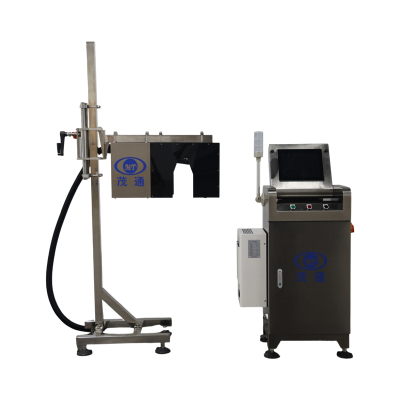
Research on Roof-Top Carton Inkjet Printing Visual Inspection Technology and Applications
In the high-speed production of the dairy and beverage industry, every inkjet-printed code on a roof-top carton is not only the product's "identity card" but also the lifeline for quality traceability.
In the modern food and beverage industry, roof-top cartons, as a common packaging form, are widely used in the packaging of liquid milk, fruit juice, and other products. The inkjet codes on these packages carry critical information such as production date, batch number, and expiration date. This information is not only an important basis for internal quality traceability and logistics management but also a necessary link to protect consumer rights and meet regulatory requirements.
However, in high-speed, continuous production processes, inkjet printing is prone to problems such as misprints, missing prints, blurring, and misalignment. Traditional manual sampling methods can no longer meet the quality control needs of modern production, and inkjet printing visual inspection systems are the key technology developed to solve this problem.
01 Characteristics of Roof-Top Carton Inkjet Printing and Detection Challenges
Roof-top carton inkjet printing detection faces unique challenges. This type of packaging usually uses special coated paper materials with significant surface reflectivity, and moves at high speed on the production line, posing many difficulties for inkjet code detection.
Unlike rigid packaging, roof-top cartons may have slight deformation or uneven surfaces, which places higher demands on the stability and adaptability of the detection system. The production speed in the dairy and beverage industry is extremely fast, processing hundreds of packages per minute, requiring the detection system to complete acquisition, analysis, and judgment in a very short time.
The inkjet printing visual inspection system mimics human vision, using optical systems, industrial cameras, and image processing algorithms to achieve automated evaluation of inkjet print quality. The system can identify whether the inkjet code is present, complete, readable, and correct, including the detection of production date, expiration date, barcodes, and QR codes.
Detection types cover various defect types, including character missing, blurring, tilting, misspellings, and positional deviations. For roof-top cartons, due to possible wrinkles or curvature on the surface, the detection system needs stronger anti-interference capabilities and complex image processing algorithms.
02 Technical Principles of Inkjet Printing Visual Inspection Systems
An inkjet printing visual inspection system is essentially an automated detection device that integrates optical imaging, image processing, and pattern recognition technologies. Its workflow can be divided into four main stages: image acquisition, image processing, feature extraction, and result judgment.
In the image acquisition stage, an industrial camera, in conjunction with a specific light source, quickly captures the inkjet code image on the product surface. Due to the special material of the roof packaging, the lighting system usually needs to be carefully designed to reduce reflection interference and ensure stable and reliable image quality.
In the image processing stage, the system performs pre-processing, character localization, character segmentation, and recognition on the acquired images. Key technologies include dual histogram equalization to enhance image contrast, binarization segmentation to highlight the inkjet printing area, and extreme connected component extraction to remove noise interference.
In the feature extraction and judgment stage, the system compares the recognition results with preset standard templates. Advanced methods include simulating and reconstructing the inkjet printing, generating a simulated inkjet printing model, and then performing stripe skeleton decomposition to evaluate the continuity and uniformity of the inkjet printing.
The introduction of artificial intelligence technologies such as deep learning enables the system to handle more complex inkjet printing backgrounds and more variable defect types, significantly improving the accuracy and adaptability of detection.
03 System Composition and Key Technical Elements
A complete roof packaging inkjet printing visual inspection system includes multiple key components, each with its specific technical requirements and functions.
The optical imaging system consists of an industrial camera, lens, and light source. Camera resolution directly affects detection accuracy, while the design of the light source is crucial for image quality. For roof packaging detection, a light source at a specific angle is often used to reduce surface reflection.
The image processing system is the core of the detection, including a high-performance processor and dedicated image processing algorithms. Modern systems mostly use high-performance processors such as Intel Core i7 to meet the real-time requirements of industrial inspection. The processing speed needs to reach the level of detecting hundreds or even thousands of roof packages per minute.
The detection algorithms mainly include character recognition (OCR), character verification (OCV), and barcode recognition functions. The algorithms need to be specially optimized for the common dot matrix inkjet printing and laser inkjet printing on roof packaging. A good detection system can achieve reliability of 99-99.9%, with a false rejection rate controlled below 0.1%.
The control system is responsible for outputting detection results and triggering corresponding actions. When a defective inkjet print is detected, the system sends a signal to the production line control system, activating the rejection mechanism to remove the defective product from the production line.
04 Detection Workflow and Quality Judgment
The workflow of roof packaging inkjet printing visual inspection begins with image acquisition. When the roof packaging passes through the detection area, a photoelectric sensor triggers the industrial camera to capture an image of the inkjet printing area. This process requires precise timing control to ensure image acquisition occurs when the packaging is in the optimal position.
After image acquisition, the system performs pre-processing to enhance image quality, including contrast enhancement, noise filtering, and image correction. Geometric correction is also performed to eliminate the effects of perspective distortion, addressing potential deformations in the roof packaging.
In the quality judgment phase, the system analyzes the image in two stages: first, overall image matching is performed. If the matching degree is higher than a preset threshold (e.g., 99.9%), it is directly judged as qualified; if the matching degree is lower than a lower threshold (e.g., 40%), it is judged as unqualified; for intermediate cases, it proceeds to the character-level analysis stage.
In the character-level analysis, the system separates individual characters from the inkjet-printed image and performs optical character matching with pre-stored character templates. By comparing each character individually, it can accurately identify missing, blurry, or incorrect characters.
Finally, the system generates a quality assessment report based on the analysis results and records information such as defect type, time, and location. This data provides valuable information for production quality management, helping to trace the status of the inkjet printing equipment and the need for process parameter optimization.
05 Technical Advantages and Application Value
The inkjet printing visual inspection system offers multiple benefits in roof packaging production, significantly improving production quality and efficiency.
Compared with traditional manual inspection, the visual inspection system has the advantages of high consistency and reliability. The system is unaffected by human factors such as fatigue and emotional fluctuations, and can identify subtle defects that are difficult for the human eye to detect with extremely high resolution and stability.
In terms of detection efficiency, the system's detection speed is synchronized with the production line, meeting the detection needs of hundreds or even thousands of roof packages per minute, avoiding production bottlenecks caused by slow detection speeds. High-speed detection capabilities enable manufacturers to achieve 100% full inspection, significantly reducing the risk of defective products reaching the market.
From a quality control perspective, the system can detect and remove unqualified products in real time, preventing serious problems such as product mixing and defective products reaching the market due to inkjet printing errors, effectively reducing the company's quality risks and recall costs.
In addition, the detailed detection data generated by the system provides a basis for production process optimization. By analyzing the data, it is possible to trace the root causes such as wear and tear of the inkjet printing equipment, fluctuations in ink quality, or minor vibrations of the production line machinery, thereby achieving continuous optimization of the production process. 06 Industry Application Prospects and Development Trends
With the in-depth advancement of Industry 4.0 and intelligent manufacturing, rooftop carton printing and visual inspection systems are developing towards greater intelligence and integration.
The application of deep learning and artificial intelligence technologies will enable the inspection system to possess self-learning and optimization capabilities. The system will be able to accumulate historical data, continuously optimize detection algorithms, and adapt to new types of printing defects and complex background conditions.
Future inspection systems will no longer be isolated detection units, but will serve as an important node in the Industrial Internet of Things (IIoT), seamlessly integrating with systems such as MES (Manufacturing Execution System) and ERP (Enterprise Resource Planning). Detection data will be uploaded to the cloud in real time, enabling full lifecycle management and remote monitoring of quality data.
In terms of technology integration, multispectral imaging and 3D vision technologies may be introduced to further enhance the detection capabilities for this special type of packaging, the rooftop carton. For example, 3D vision can better address the unevenness of the packaging surface, while multispectral imaging can identify the characteristics of different inks and materials.
With technological advancements, the application scope of printing and visual inspection systems will expand from simple presence detection to comprehensive quality assessment, not only determining whether the printing is complete but also evaluating the impact of printing quality on the entire product lifecycle.
As Industry 4.0 technology deepens, printing and visual inspection systems will no longer be merely quality control tools, but key nodes in the intelligent manufacturing ecosystem. They will seamlessly integrate with MES, ERP, and other systems, building a complete chain quality traceability system from production to logistics.
For rooftop carton manufacturers, investing in advanced printing and visual inspection systems is not only a measure to improve product quality, but also a strategic choice for building a digital factory and achieving intelligent transformation. Future visual inspection systems will be more intelligent and adaptive, capable of handling complex and ever-changing production environments, creating sustained value for enterprises.