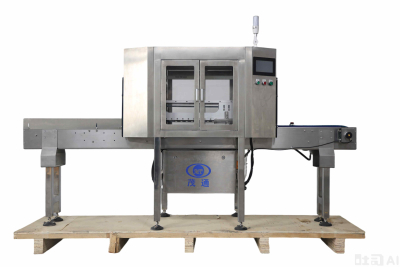
PET Bottle Liquid Level Visual Inspection: The "Smart Eyes" and Quality Guardians on the Production Line
On modern filling production lines in industries such as beverages, daily chemicals, and pharmaceuticals, every bottle must undergo a crucial "visual inspection"—liquid level visual inspection—before capping. This technology acts like a tireless "smart eye" on the production line, accurately and quickly safeguarding the filling quality of the product and the company's brand reputation. Just as your order specifies the technical specifications and urgent delivery requirements for the Tetra Pak straw inspection machine, a mature and reliable PET bottle liquid level visual inspection system is also a core piece of automated equipment to ensure the efficient and stable operation of the production line.
I. Why It's Indispensable: From Quality Bottom Line to Efficiency Peak
Unqualified liquid levels (too high or too low) are one of the most common problems in the filling process. Insufficient liquid level means insufficient capacity, directly violating regulations and harming consumer rights; excessive liquid level leads to material waste, resulting in a significant increase in costs over the long term. Traditional manual sampling inspection methods are inefficient, prone to fatigue, inconsistent in standards, and risky of missed inspections, making them unsuitable for high-speed production lines (often reaching tens of thousands of bottles per hour) and the pursuit of "zero defects."
Therefore, automated, high-precision online visual inspection systems have become an inevitable choice. They can achieve 100% full inspection, real-time rejection of defective products, ensuring 100% compliance with standards for outgoing products, fundamentally eliminating related customer complaints, while precisely controlling filling volume and optimizing costs.
II. Core Technology: How to Achieve Precise "Insight"
The accuracy of a typical PET bottle liquid level visual inspection system mainly relies on optimized imaging schemes and intelligent image processing algorithms.
1. Imaging Scheme: Creating Optimal Observation Conditions for the "Eye" The core of liquid level detection is clearly capturing the liquid-gas interface. The system typically uses backlighting or forward lighting at a specific angle. Under backlighting, the liquid portion below the level will appear as a darker outline due to differences in light transmittance, creating a sharp contrast with the bright portion above, making the liquid surface edge extremely clear, especially suitable for transparent or semi-transparent liquids. For bottles with complex shapes or high reflectivity, a multi-camera layout and combined mirrors may be necessary to acquire images of the bottle from multiple angles, eliminating blind spots in single-viewpoints and ensuring the stability and comprehensiveness of the detection.
2. Intelligent Algorithm: Extracting Key Information from Images
After acquiring high-quality images, the core algorithm begins operation. One efficient method is grayscale projection gradient analysis: the system projects grayscale values vertically onto the image of the detection area, analyzes its gradient changes, and the liquid level position typically corresponds to the peak point of the gradient change, thus achieving sub-pixel-level precise positioning with a detection accuracy of ±0.5mm or even higher. The system has built-in flexible detection tools, allowing engineers to quickly set detection areas and judgment thresholds for different bottle shapes and liquid level standards (such as full bottle, median line, empty bottle detection), achieving "one-click type change."
III. Beyond Liquid Level: Integrated Detection Creates Higher Value
The functions of modern high-end visual inspection equipment go far beyond liquid level detection. Just like the straw inspection machine in your order, which boasts multi-functional inspection and rejection capabilities, an integrated vision system can simultaneously complete multiple tasks at a single workstation:
• Bottle cap inspection: Automatically identifies defects such as missing caps, crooked caps, high caps, improperly pressed caps, broken caps, and foreign objects.
• Label inspection: Checks for the presence, misalignment, wrinkles, dirt, and accuracy and clarity of printed information (such as production date and batch number) on labels.
• Bottle appearance inspection: Detects defects such as bottle neck defects, bottle stains, scratches, and deformation.
This integrated inspection solution significantly saves production line layout space, reduces the complexity and cost of coordinating multiple single-point inspection devices, and significantly improves overall inspection efficiency.
IV. Selection and Implementation: Considerations from Order to Stable Operation
When procuring and implementing this type of equipment, a comprehensive consideration of specific needs is required. This logic is similar to that used in processing your order for the "Tetra Pak straw inspection machine":
1. Define Technical Requirements: Determine the production line's maximum speed, inspection accuracy, types of defects to be detected, compatible bottle types, and communication interfaces with existing production lines (PLC, rejection devices), etc. The "single camera" and "with rejection mesh" in the order are specific technical requirements.
2. Focus on Core Performance:
◦ Inspection Accuracy and Stability: This is the core value; a low false rejection rate and high detection rate must be maintained at high speeds.
Processing Speed: Must match or exceed the production line's cycle time, with sufficient margin.
Usability and Maintainability: Is the software interface user-friendly? Are the changeover parameters easy to set? Is maintenance convenient?
3. Supplier Selection: Examine the supplier's technical strength, industry case studies, after-sales support response speed (as reflected in the "urgent" designation in the order, emphasizing timeliness), and ability to provide continuous upgrade services.
Conclusion
PET bottle liquid level visual inspection technology is a sophisticated microcosm of intelligent manufacturing in the packaging field. It's not merely a simple "replacement of the human eye," but rather a deep integration of optics, mechanics, electronics, and computing to achieve digital and intelligent control over production quality. Investing in such a system is essentially investing in absolute quality control, meticulous cost management, and a robust defense for brand reputation. In today's increasingly competitive market, where consumers have ever more stringent quality demands, deploying such a precise and efficient "quality guardian" has become an inevitable choice for modern bottling plants to enhance their core competitiveness and achieve sustainable development.