Three-Piece Can Leak Detection Technology: Principles, Methods, and Industry Applications
Introduction: The Sealing Challenges of Three-Piece Cans
Three-piece cans, widely used packaging containers in the beverage, food, and cosmetic industries, consist of a body, bottom, and lid connected by welding. This structure presents multiple potential leakage points during manufacturing, particularly at the weld seams, making it a critical aspect of quality control. Leaks not only lead to loss of contents and product spoilage but can also cause food safety issues and damage to brand reputation. Therefore, establishing a systematic leak detection system is crucial for ensuring product quality, extending shelf life, and ensuring consumer safety.
I. The Importance of Leak Detection and Industry Needs
1.1 The Impact of Leaks on Product Quality
Even minor leaks can cause carbon dioxide loss in carbonated beverages, resulting in a poor taste; oxygen intrusion can lead to oxidation and spoilage in beer; and increased risk of microbial contamination can cause food safety issues. For food products, leaks can also lead to contamination and spoilage of the contents, severely impacting shelf life.
1.2 Safety and Regulatory Requirements
According to national food safety standards, aluminum can suppliers are required to arrange for third-party testing of relevant products annually. Standards such as the *National Food Safety Standard for Coatings and Finishes for Food Contact* (GB 4806.10-2016) specify clear requirements for the sealing performance of aluminum cans. Beverage and brewery companies need to evaluate whether the external inspection reports provided by suppliers meet the requirements of the new national food safety standards.
1.3 Economic Considerations
Leakage leading to returns, recalls, and brand reputation damage can cause significant economic losses to enterprises. Effective leak detection can reduce scrap rates, improve production efficiency, and reduce production interruptions caused by leaks.
II. Main Leakage Detection Methods and Technical Principles
2.1 Positive Pressure Method (Pressure Decay Method)
Working Principle: Compressed air (usually 0.5-0.6 MPa) is introduced into the can. The presence of a leak is determined by monitoring the pressure decay value. The acceptable standard is typically a pressure decay value ≤ 1.0 kPa/30 seconds.
Technical Features:
Pressure sensor resolution up to 0.01MPa
Leak detection sensitivity ≤0.1mL/min
Supports automatic pressurization, data saving, and report generation
Suitable for online testing and laboratory environments
Application Advantages: High sensitivity, capable of detecting minute leaks; rapid detection, improving production efficiency; non-destructive, products can continue to be used after testing.
2.2 Vacuum Attenuation Method
Working Principle: Based on ASTM F2338 standard, the sample is placed in the test chamber and a vacuum is drawn. Pressure and differential pressure sensors monitor the change in vacuum within the test chamber. A pressure difference is created inside and outside the sample, and gas enters the vacuum attenuation chamber through the leak. The change in vacuum is used to determine whether the sample is qualified.
Technical Parameters:
Pressure Range: 0 ~ -101kPa
Pressure Accuracy: ±0.1%FS
Resolution: 0.1Pa
Measurement Range: ≥2μm (Customization required for special lower limits)
Equipment Features: Employs a dual-sensor method based on vacuum and micro-differential pressure; equipped with a high-speed, high-precision sampling chip; uses world-renowned brand pneumatic components and imported micro-differential pressure and pressure sensors.
2.3 Water Immersion Method (Bubble Test)
Traditional Method: Immerse the can in water and observe for bubbles to determine the leak point. This method is intuitive but inefficient, suitable for rapid on-site inspections.
Modern Improvement: Employ an automated water immersion system. Place the can in a container filled with water, and introduce compressed air into the top space above the water level. The can is submerged in expanding water, and the leak point is identified by a series of bubbles.
2.4 Ultrasonic Detection Technology
Working Principle: Utilizes high-frequency sound waves to scan welds, detecting internal defects such as cracks or porosity. Ultrasonic sensors detect the sound signals generated by leaks, and signal analysis determines the leak location and size.
Application Features: Non-contact detection; detects internal defects; suitable for online detection systems.
2.5 Helium Mass Spectrometry Leak Detection Method
Technical Principle: Uses helium as a tracer gas, and a mass spectrometer detects minute leaks. Extremely high sensitivity, capable of detecting leak rates as low as 10⁻¹² cubic Pascals per second.
Advantages and Disadvantages Analysis:
Advantages: Extremely high sensitivity, capable of detecting minute leaks; quantitative detection, allowing for leakage rate calculation; not limited by packaging materials.
Disadvantages: Expensive equipment; complex operation; requires professional personnel.
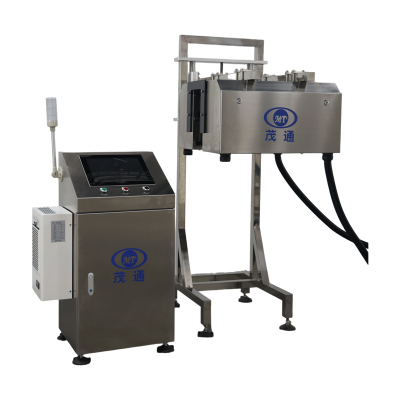
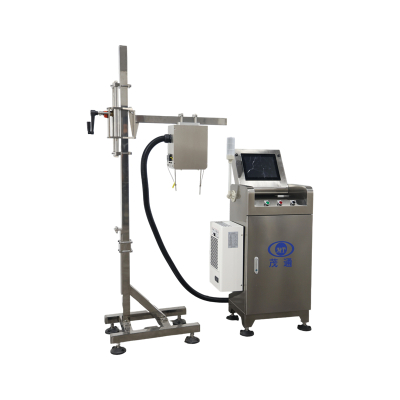
2.6 Acoustic Detection Technology (Vacuum Inspection Machine)
Innovative Technology: Employs a non-contact online detection method. When a container passes the probe, the probe applies a non-contact tapping motion to the top of the container, causing it to emit a sound. Containers with different vacuum levels will emit different sounds. Advanced acoustic technology uses this sound to determine whether a leak has occurred, with very high accuracy.
Technical Parameters:
Detection Speed: 400-1500 cans/minute
Accuracy: ≥99.999%
Power: 500W
Applicable Products: Three-piece cans, three- or four-piece screw caps, and products with metal tamper-evident caps
III. Specific Testing Equipment and Technology Development for Three-Piece Cans
3.1 Three-Piece Can Vacuum Inspection Machine
Equipment Features:
Adopts acoustic technology, non-contact online inspection
Automatic control uses Siemens components
Main unit reduction gear uses SEW products
Suitable for three-piece cans, three- or four-piece screw caps, and products with metal tamper-evident caps
Working Principle:
Container to be inspected → Conveyor belt → Probe tapping → Sound acquisition → Signal analysis → Rejection of non-conforming products
3.2 Maotong Vacuum Inspection Machine Technical Advantages:
* Touchscreen display with a fully Chinese menu interface
* Dual-probe detection method with reliable digital signal processing technology
* Stores 10 different product detection parameters
* Automatically rejects and alarms for non-conforming products
* Electrical components are all imported brands, ensuring stable and reliable performance
Detection Functions:
* Leakage detection
* Vacuum defect detection
* Can bulging detection
* Missing lid detection
* Reverse can detection
* Can tipping detection
3.3 Easy-open three-piece can micro-leakage sealing tester
Advanced Features:
* Employs a vacuum and micro-differential pressure dual-sensor method
* Precise pressure testing system, significantly improving testing accuracy
* Equipped with a high-speed, high-precision sampling chip
* Uses world-renowned brand pneumatic components
Standards Compliance:
* ASTM F2338-13 Standard Method for Testing Leakage in Packaging
* USP1207 United States Pharmacopeia Standard
* Chinese Pharmacopoeia 2020 Edition
* Pharmaceutical GMP Guidelines—Sterile Drugs
IV. Industry Applications and Case Studies
4.1 Beverage Industry Applications
* In carbonated beverage production, the sealing performance of three-piece cans is particularly important. The retention of carbon dioxide directly affects the product's taste and quality. A positive pressure sealing tester can quickly detect minute leaks, ensuring the integrity of every can.
Typical Case: After a well-known carbonated beverage brand introduced an online vacuum testing machine, the return rate due to leaks decreased from 0.5% to 0.01%, saving over 5 million yuan annually.
4.2 Beer Industry Applications
Beer is extremely sensitive to oxygen; even minor leaks can lead to oxidation and spoilage. Systematic sealing testing using the GB/T 9106.2-2019 standard can effectively control quality risks and extend product shelf life.
Testing Points:
Break-opening force test: Measure the force at the moment the pull tab opens (standard requirement ≤30 N)
Full-opening force test: Measure the force when the pull tab completely tears off (standard requirement ≤150 N)
4.3 Food Canning Industry
Products such as eight-treasure porridge, condiments, and canned syrups require long-term storage and have extremely high requirements for sealing. The combined acoustic and curved surface scanning technology in the testing equipment can simultaneously detect multiple defects such as leaks, poor vacuum, bulging cans, and missing caps.
4.4 Pharmaceutical Industry Applications Pharmaceutical packaging has the most stringent requirements for airtightness, especially for sterile drugs. Using a micro-leakage seal tester that meets USP1207 and GMP requirements can ensure the stability and safety of drugs throughout their shelf life.
V. Technological Development Trends and Innovation Directions
5.1 Intelligent Detection System
Modern leak detection equipment is developing towards intelligence, possessing the following characteristics:
Adaptive Detection: Automatically detects and adjusts detection parameters according to product line speed
Big Data Analysis: Utilizes detection data for quality trend analysis and prediction
Remote Monitoring: Supports remote upgrades and maintenance, enabling real-time monitoring of equipment status
5.2 Multi-Technology Fusion Detection
Integrates multiple detection technologies into one system, improving the accuracy and comprehensiveness of detection:
Acoustic + Surface Scanning: Simultaneously detects vacuum and can lid deformation
Pressure + Flow Monitoring: Simultaneously measures pressure decay and leakage flow
Vision + Sensor: Combines image recognition and sensor data
5.3 High-Speed Online Detection Technology
To meet the demands of large-scale production, detection speed is continuously improving:
Detection speed has increased from 400 cans/minute to 1500 cans/minute
Adopts high-speed digital signal processors with a response time of 6.8ns
Multi-probe parallel detection improves detection efficiency
VI. Conclusion and Outlook
After years of development, three-piece can leak detection technology has formed a complete technical system from traditional methods to modern intelligent detection. The mature application of technologies such as positive pressure testing, vacuum attenuation testing, and acoustic detection has provided reliable solutions for various industries. With the increasing intelligence of testing equipment and the continuous improvement of testing standards, the accuracy, efficiency, and automation level of leak detection will continue to improve.
Future development trends will focus on the following aspects:
Further improvement in detection accuracy, moving towards nanometer-level leak detection
Continued improvement in detection speed to meet the needs of ultra-high-speed production lines
Deepening of intelligence, enabling predictive maintenance and quality early warning
Promotion of green and environmentally friendly technologies to reduce the environmental impact of the testing process
Improvement of standardization systems to promote global unification of testing technologies
For manufacturing enterprises, establishing a comprehensive leak detection system is not only a necessary measure to meet regulatory requirements, but also a strategic choice to improve product quality, reduce operating costs, and enhance market competitiveness. As consumers' demands for product quality and safety continue to increase, three-piece can leak detection technology will play an increasingly important role in the packaging industry.
Through continuous technological innovation and strict quality control, three-piece can leak detection technology will make a greater contribution to ensuring product safety, improving the consumer experience, and promoting the healthy development of the industry.