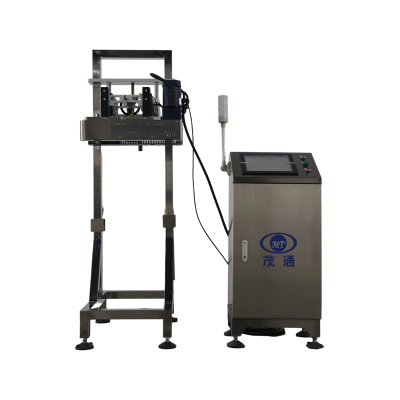
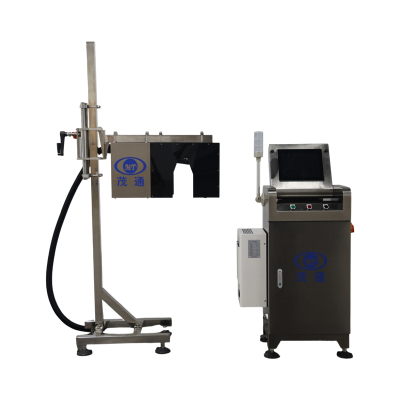
Make Liquid Level Errors Visible Before Codes Fail
A Code Inspection Machine is most valuable when it does more than confirm whether a printed code exists. On PET bottle lines, the same inspection point can also identify cap defects, anti-theft ring problems, liquid level deviations, and inkjet printing issues before non-conforming bottles move downstream. For plants running high-speed beverage or liquid packaging, this integrated Code Inspection Machine approach supports consistent quality control with far less dependence on manual checking.

Why Liquid Level Detection Matters in Code Inspection
In a PET bottle production line, code quality and fill consistency are closely linked to overall product acceptance. A readable inkjet code may still be attached to a bottle with a low liquid level, tilted cap, or damaged anti-theft ring. That is why the Code Inspection Machine is designed around a broader inspection scope rather than code reading alone.
The specified inspection items include missing cap, over-height cap, tilted cap, broken anti-theft ring, low liquid level, missing inkjet print, and excessive inkjet printing. For PET bottles from 200 ml to 2 L, the Code Inspection Machine is configured for automated detection and rejection of non-conforming bottles, with project throughput listed at up to 60,000 bottles per hour. The product category also notes a maximum speed of up to 72,000 BPH for code inspection applications, which is critical for high-speed filling and packaging lines.
How the CCD Liquid Level Module Works
The liquid level module in the Code Inspection Machine uses a CCD camera to capture frontal images of the bottle’s fill area. When the bottle is stationary, the liquid surface is expected to appear nearly horizontal. Through image processing, the region below the liquid level is displayed in black, while the empty area above it appears white. This contrast allows the Code Inspection Machine to distinguish whether the liquid level is above or below the preset threshold.
This method is especially practical for PET bottle inspection because it fits naturally into a vision-based station that also checks caps and inkjet markings. In the documented accuracy table, liquid level detection for a level 3 mm below or above the standard is listed at ≥99.92% detection accuracy. For buyers comparing inspection solutions, this is one of the most important figures to review alongside line speed, bottle format, installation conditions, and rejection requirements.
One Station for Caps, Levels, and Inkjet Printing
A Code Inspection Machine is built around coordinated image capture, processing, and rejection control. As each PET bottle passes the positioning sensor, the control unit records the bottle ID and encoder signal. The sensor then triggers cameras to capture images of the cap, liquid level, and inkjet code. The image processor analyzes the captured data and sends results to the HMI for monitoring and to the PLC for rejection preparation.

For cap inspection, three CCD cameras capture bottle images from different angles to reduce blind spots. The module is used to identify missing caps, overhanging caps, crooked caps, and broken caps. For inkjet printing inspection, a CCD camera captures frontal images of markings on bottles and caps, and the Code Inspection Machine supports combinations such as black ink on yellow caps and white ink on black caps.
Related systems such as the Cap and Liquid Level Inspection Machine and the PET Full Bottle Inspection Machine show how this type of Code Inspection Machine fits into broader PET bottle quality control, from full-bottle checks to specific cap and liquid level modules.
Installation and Operating Conditions to Confirm
Before selecting a Code Inspection Machine, buyers should confirm that site conditions match the equipment requirements. The documented operating environment includes an altitude range of 5–3000 m, temperature of 5°C–40°C, and relative humidity of 50%–65% RH. Factory floor flatness, load-bearing capacity, and related infrastructure should comply with relevant national standards for stable operation.
The equipment operating conditions include 220 V, 50 Hz, single-phase power, approximately 2.4 kW total power consumption, 24 VDC control voltage, and compressed air of 4–12 Pa, with the customer responsible for providing the air pipeline from source to main unit. These details matter because even a well-designed Code Inspection Machine depends on stable conveying, consistent triggering, reliable illumination, and accurate rejection timing.
For facilities running multiple PET bottle formats between 200 ml and 2 L, it is also sensible to confirm how the Code Inspection Machine handles changeovers, camera adjustment, and recipe management within these operating conditions.
Practical Buyer Checklist for Code Inspection Machines
When evaluating a Code Inspection Machine for PET bottle production, procurement teams can use the following checklist:
A properly specified Code Inspection Machine helps make fill-level errors, cap defects, and printing problems visible before products leave the controlled inspection area, reducing downstream complaints and rework.
FAQs
What does a Code Inspection Machine inspect?
A Code Inspection Machine can inspect PET bottle cap defects, anti-theft ring condition, liquid level deviation, and inkjet printing quality, then reject non-conforming bottles automatically based on the recorded bottle ID.
How does the liquid level module detect low fill levels?
In the Code Inspection Machine, a CCD camera captures a frontal image of the bottle. Image processing separates the area below the liquid level from the empty area above it, then compares the result with the preset threshold so low or high levels can be flagged.
What bottle range is supported?
The documented applicable capacity range for the PET bottle Code Inspection Machine is 200 ml to 2 L.
What should buyers confirm before installation?
Buyers should confirm power supply, compressed air, factory conditions, conveyor layout, bottle specifications, and the required inspection items so the Code Inspection Machine can run reliably at the intended speed.