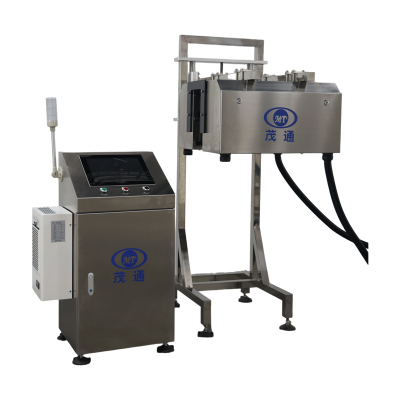
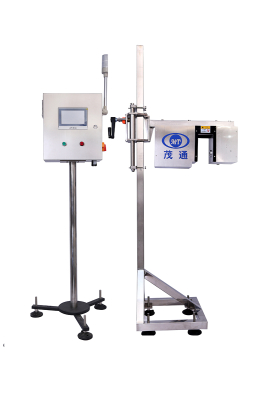
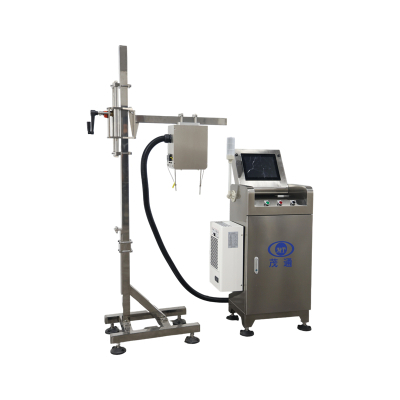
Visual Sealing Inspection Machine Finds Bad Seals Early
Ensuring product integrity is paramount in the fast-paced packaging industry. Our Visual Sealing Inspection Machine provides production teams with a robust solution to inspect container sealing quality directly on the production line, all without physical contact or potential product damage. By leveraging a high-resolution camera coupled with a unique 360-degree sidewall lens, our system meticulously photographs the sealing-area sidewall, analyzing minute grayscale changes. When a product's seal falls outside our precisely configured defect thresholds, it's automatically identified and rejected. This advanced configuration supports non-contact online inspection, achieving remarkable speeds of up to 72,000 cans per hour for high-speed can and bottle-cap lines.
Why Inline Seal Inspection Matters
Sealing defects pose a significant risk, potentially compromising product safety and brand reputation. Such flaws can propagate rapidly through a packaging line if not caught early at the inspection point. Our Visual Sealing Inspection Machine is specifically engineered to scrutinize the cap and sealing area as containers move seamlessly along the conveyor. This non-contact approach is particularly valuable where high repeatability, blistering speed, and utmost product protection are critical priorities. We understand that preventing individual defective products is essential, but the true value lies in identifying sealing abnormalities in real-time. This capability helps pinpoint and rectify faults within the sealing machine itself, preventing a cascade of defective containers from moving further downstream and safeguarding your production efficiency and bottom line.
How Our 360-Degree Sidewall Imaging Works
Our inspection principle is rooted in advanced image capture and sophisticated grayscale comparison. A high-resolution camera, integrated with a specialized 360-degree sidewall lens, meticulously photographs the entire sealing inspection sidewall. The system first accurately locates the bottle cap, then establishes a precise circular detection area at the edge of the sidewall within the captured image. This focused approach ensures comprehensive coverage of the critical sealing zone.
If the bottle cap exhibits poor sealing, a distinct grayscale value change emerges within this defined circular detection area. Our system then utilizes the degree of this grayscale variation to set an appropriate threshold parameter. When the measured grayscale value surpasses this pre-configured threshold, the product is immediately classified as defective and flagged for rejection. This precise methodology allows us to effectively filter out even subtle imperfections, ensuring only perfectly sealed products proceed.

Our Inspection Sequence
| Step | Function | Result |
|---|---|---|
| 1 | Locate the bottle cap | Establishes the cap's precise position in the image |
| 2 | Define the circular area | Focuses inspection on the critical sidewall edge |
| 3 | Analyze grayscale change | Detects visible sealing abnormalities with high precision |
| 4 | Compare with threshold | Classifies products as qualified or defective based on set parameters |
| 5 | Trigger rejection | Automatically removes defective products from the line |
This robust sequence underscores the importance of stable imaging. Our Visual Sealing Inspection Machine relies on consistent container positioning, controlled illumination, and the correct threshold setup to deliver reliable inline classification. Our latest inspection software also effectively filters out interference from features like can-bottom logos or minor scratches, significantly minimizing false rejects and optimizing throughput.
Key Mechanical and Electrical Composition
Our machines are built for endurance and precision. The mechanical system incorporates a robust distribution cabinet, a finely tuned detection module, and a dependable rejection device. The distribution cabinet is the nerve center, supplying power to the entire system, processing intricate images, and controlling the precise rejection of defective products. The detection module is responsible for dynamically capturing high-quality images, while the rejection device receives instantaneous signals to swiftly and accurately remove any non-conforming products from your production line.
On the electrical front, our systems are equipped with high-performance components designed for industrial reliability. This includes an Intel 5 image-processing industrial computer for rapid data analysis, a customizable full-view camera, a dedicated camera I/O module, and a customizable all-around lens. We utilize a specially customized camera cable, an advanced MT-9000 DSP for signal processing, an intuitive touchscreen for operator control, an OPT light-source controller, and a powerful LISHI light source. These components work in concert to support flawless image capture, lightning-fast processing, optimized illumination, user-friendly operation, and precise rejection capabilities. Our systems also feature an industrial-grade cooling system to prevent system crashes and ensure stable operation even during extended periods in high-temperature environments.
For related configurations, our Can Body Seal Inspection Machine follows the same documented 360-degree imaging and grayscale-threshold inspection methods, showcasing the versatility and consistency of our core technology.
Installation Conditions for Optimal Inspection Accuracy
Achieving peak performance from our Visual Sealing Inspection Machine depends on consistent container presentation to the camera. Our specified installation arrangement utilizes a 1.8 m single-row chain conveyor. For optimal results, the conveyor slope should never exceed 20°, and containers must maintain a precise 3–5 mm spacing between them. These conditions are vital for the camera's ability to capture clear and consistent images.
The inspection section around the bottle neck demands stability, cleanliness, and freedom from water droplets. Any vibration near the bottle neck can adversely affect camera inspection accuracy. Therefore, if neck vibration is observed at the installation location, we recommend adding a 60–80 mm clamping device to stabilize the containers and ensure consistent image acquisition. Our expert team can guide you through these requirements to guarantee seamless integration and performance.
Practical Installation Checklist
These same stringent conveyor and imaging requirements are also applicable to our Tin Can Inspection Machine configurations, underscoring our commitment to consistent quality across our product range.
Production Value for High-Speed Lines
Operating at impressive speeds of up to 72,000 cans/hour, our Visual Sealing Inspection Machine establishes a critical quality gate for cap and seal control on your production lines. It offers comprehensive 360° online bottle-cap inspection, ensuring no blind spots, coupled with non-contact operation that preserves product integrity, and automatic rejection of defective items. We've also incorporated an encoder-based synchronous counting system, which guarantees precise rejection even if your line speed fluctuates or stops, providing unwavering accuracy.
For businesses evaluating inline inspection equipment, the key considerations should revolve around camera stability, complete sidewall visibility, consistent conveyor conditions, accurate threshold setup, and precise rejection timing. When these factors are meticulously controlled, our Visual Sealing Inspection Machine delivers a practical, highly efficient method for detecting visually identifiable sealing abnormalities. This proactive approach ensures defective containers are removed before they proceed further into packaging, saving you time, resources, and protecting your brand's reputation. Moreover, our systems offer 24/7 remote access for monitoring and control, along with automatic defect photo storage, organized daily with adjustable retention periods, providing invaluable data for continuous improvement.