Bottle Fill Level Detection at 1000 Bottles Per Minute
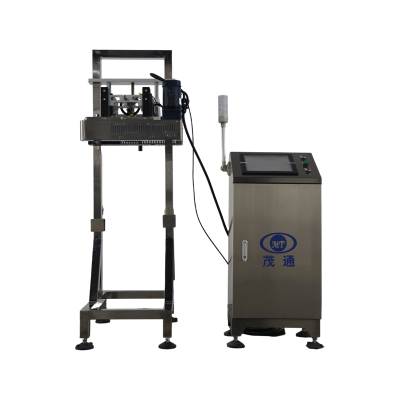
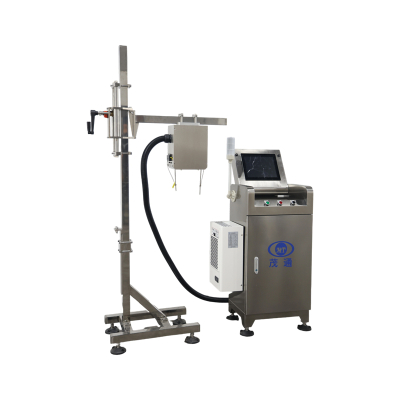
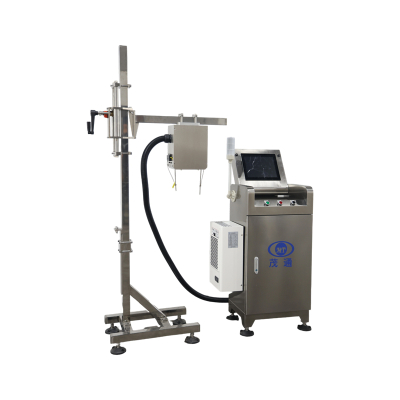
Bottle Fill Level Detection becomes a critical quality-control step when a glass bottle line is running at high speed. Our Glass Bottle Liquid Level Online Inspection System is designed for fully automated, non-contact inspection of liquid level defects in glass bottles during production. In its standard configuration, the system is specified for 1,000 bottles per minute, glass bottles, and a filling volume range of 100 mL to 1,000 mL.

What the System Is Built to Inspect
The system applies machine vision inspection technology to identify glass bottle liquid level defects online. A workstation camera captures images at the inspection point, the software analyzes the liquid level, and the control system supports automatic online rejection of defective products. This gives production teams continuous monitoring without relying on manual visual checks.
| Item | Specification |
|---|---|
Project name | Glass Bottle Liquid Level Online Inspection System |
Equipment name | Glass Bottle Liquid Level Detector |
Model | MT-RB-CYW-02 |
Container type | Glass bottles |
Filling volume range | 100 mL–1,000 mL |
Rated capacity | 1,000 bottles/minute, standard configuration |
Applicable line | Glass bottle packaging lines not exceeding 1,000 bottles/minute |
For buyers comparing Bottle Fill Level Detection options, these specifications make the system suitable for high-speed glass bottle packaging lines where manual inspection is difficult to keep stable and consistent.
Site Conditions That Support Stable Detection
A Bottle Fill Level Detection system does not work in isolation. Line layout, environment, utilities, and bottle presentation all affect inspection stability. The specified operating environment includes an altitude range of 5–3,000 meters, ambient temperature of 5°C–40°C, and relative humidity of 50–65% RH.
Factory floor flatness and load-bearing capacity should meet relevant national standards and support normal machine operation. After delivery, the machine and parts should be stored in a compliant location, with proper lubrication and maintenance to prevent surface damage or deformation that could affect installation, commissioning, or operation.
Power and operating parameters
| Parameter | Requirement |
Noise level | ≤85 dB, with actual noise affected by containers, machine power, and building acoustics |
Main power | 3 × 380 V AC ±10%, 50 Hz, 3 PH + N + PE |
Lighting power | 220 V AC, 50 Hz, single-phase |
Total power | Approximately 1.0 kW |
Control voltage | 24 VDC |
Special voltages should be communicated in advance, as equipment specifications, delivery time, and price may vary.
How Inline Bottle Fill Level Detection Works
The inline inspection process follows a clear sequence designed for continuous production on glass bottle lines:
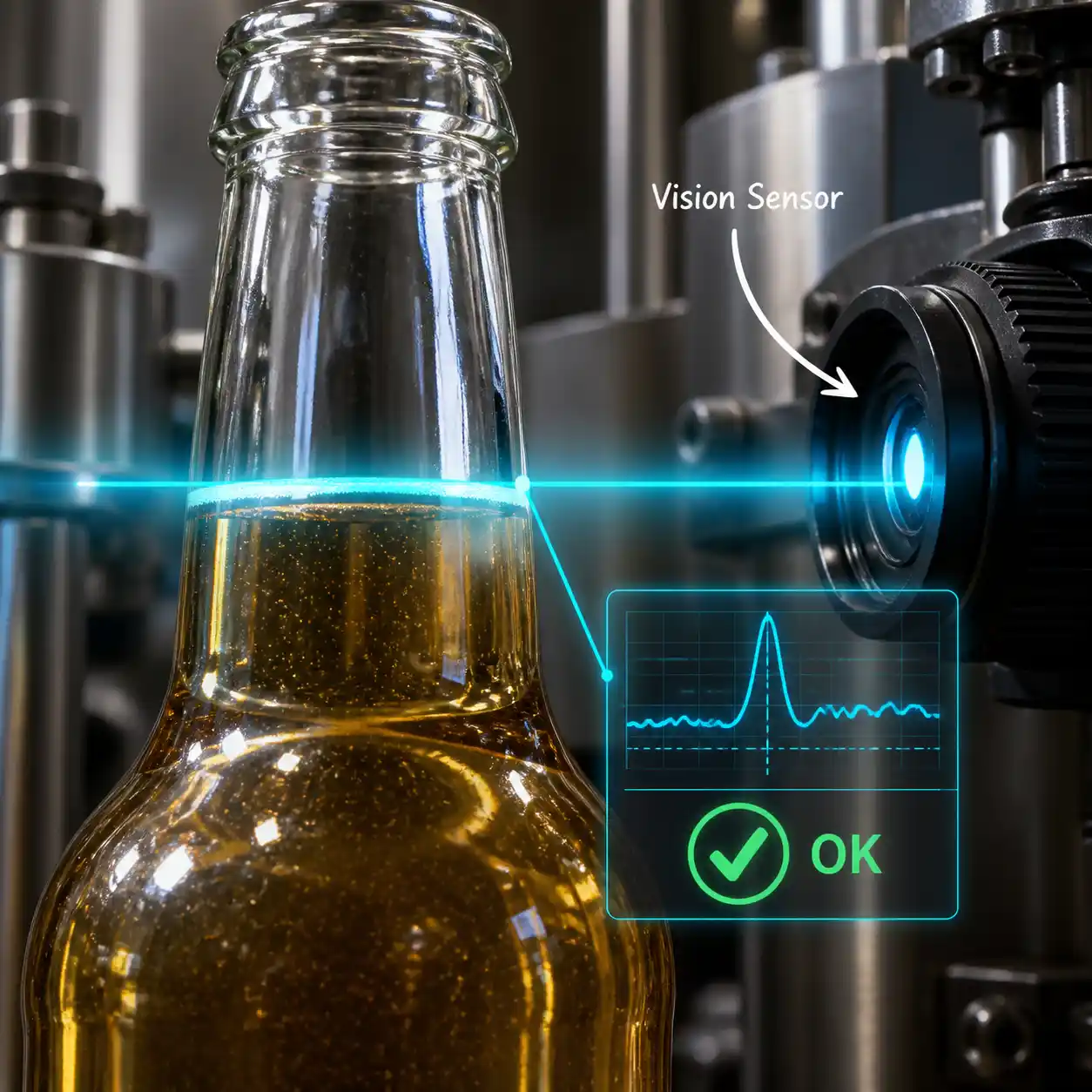
1.Bottle arrival detection — A positioning sensor detects each incoming glass bottle and registers the encoder value.
2.Image capture — The sensor triggers the camera at the detection station to capture the liquid level image.
3.Image processing — The image processor analyzes the captured image, displays results on the human-machine interface, and sends data to the control unit.
4.Liquid level judgment — The control unit calculates whether the liquid level is within the acceptable range.
5.Online rejection — If a defect is detected, the PLC sends a command to the reject mechanism to remove the nonconforming bottle.
This non-contact workflow helps Bottle Fill Level Detection operate continuously without interrupting the glass bottle packaging line, while keeping operators focused on exceptions instead of routine inspection.
Installation Points Buyers Should Confirm
The Glass Bottle Liquid Level Detector is installed on a single-lane conveyor after the filler, where the liquid level is stratified. At the inspection position, a clear liquid level boundary line should be visible so that the camera can capture a usable image for analysis.
Key installation requirements include:
•Bottle spacing on the conveyor must be greater than 2 cm.
•The conveyor should provide a 2-meter straight section without bottle blockage.
•The detection position should show liquid level stratification with a clear boundary line.
•The line speed should not exceed 1,000 bottles per minute for the specified application.
These details matter because even a capable machine vision liquid level inspection system needs stable bottle presentation and clear visual contrast to deliver consistent inspection results.
Detection Performance for Low Liquid Level Defects
The detection module is specified for low liquid level detection. For production and quality teams, the most relevant indicators are accuracy, rejection rate, and false rejection rate.
| Test item | Detection content | Detection accuracy | Rejection rate | False rejection rate |
Liquid level test | Low liquid level detection | ±2 mm | ≥99.9% | ≤0.05% |
A Bottle Fill Level Detection project should therefore be evaluated not only by rated speed, but also by conveyor conditions, bottle spacing, environmental readiness, and the visibility of the liquid level boundary. When these conditions are planned correctly, the system can support more consistent glass bottle quality control on high-speed packaging lines. If you would like to evaluate Bottle Fill Level Detection for your own glass bottle line, you can share your line speed and container parameters so the configuration can be matched to your application.
FAQs
What is the main purpose of this Bottle Fill Level Detection system?
It is used for fully automated, non-contact online inspection of liquid level defects in glass bottles, with automatic rejection of defective products to protect downstream quality.
What bottle range does the system support?
The system is specified for glass bottles with filling volumes from 100 mL to 1,000 mL.
What is the rated capacity?
The standard configuration is rated at 1,000 bottles per minute.
Where should the detector be installed?
It should be installed on a single-lane conveyor after the filler, with liquid level stratification and a clear boundary at the inspection point.
Why is a clear liquid level boundary required?
A clear boundary line helps the camera capture a usable image for liquid level analysis, supporting stable machine vision inspection and reducing false rejects.
What accuracy is specified for low liquid level detection?
The specified detection accuracy is ±2 mm, with a rejection rate of ≥99.9% and a false rejection rate of ≤0.05%.