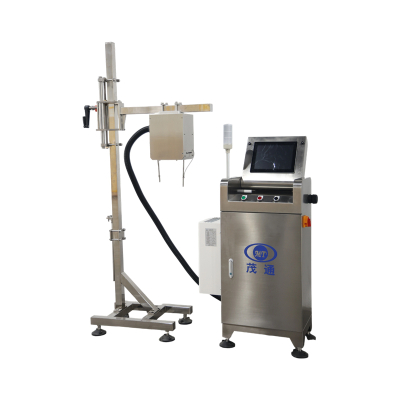
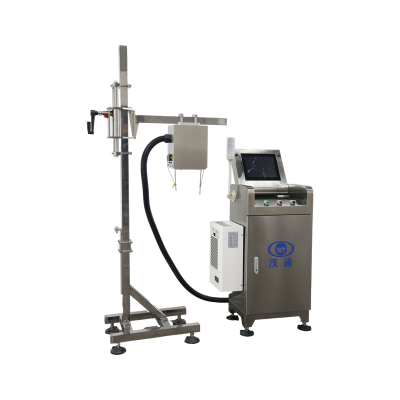
Keep PET Bottle Lines Stable at 60000 BPH
For high-speed PET beverage lines, inspection must happen continuously without slowing production. Our Cap and Liquid Level Inspection Machine is designed for online inspection of PET bottles after filling, covering cap defects, anti-theft ring condition, liquid level accuracy, and inkjet printing quality. With automatic rejection of non-conforming bottles, it supports stable quality control for PET bottles from 200 ml to 2 L at speeds of up to 60,000 bottles per hour.

Project Equipment Overview
| Requirement | Specification |
|---|---|
| Project Name | PET Bottle Inspection System for Cap, Anti-theft Ring, Liquid Level, and Inkjet Printing |
| Project Description | Online inspection and automatic rejection of PET bottles with defects in caps, anti-theft rings, liquid levels, or inkjet printing |
| Maximum Throughput | Up to 60,000 bottles/hour |
| Bottle Type | PET bottles |
| Filling Capacity Range | 200 ml – 2 L |
Our Cap and Liquid Level Inspection Machine combines several critical inspection points in one online quality-control stage. This arrangement is practical for production lines where manual inspection is not suitable for line speed, product volume, or consistency requirements.
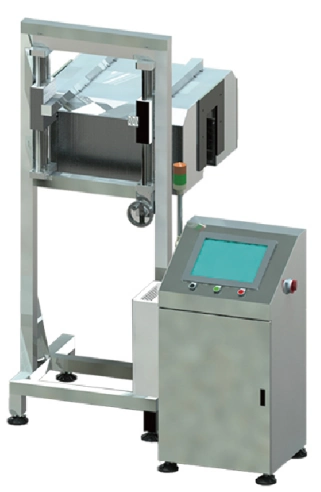
Inspection Scope for Filled PET Bottles
The inspection scope focuses on defects that commonly affect appearance, sealing confidence, tamper evidence, filling consistency, and traceability on PET lines.

Cap inspection identifies missing caps, over-height caps, and misaligned or tilted caps. These checks help prevent bottles with visible closure problems from continuing downstream.
Anti-theft ring verification detects damaged or broken anti-theft rings. Since the anti-theft ring is part of the package’s tamper-evident structure, this inspection supports packaging integrity before products move toward secondary packaging.
Liquid level inspection detects low liquid levels. For buyers evaluating a Cap and Liquid Level Inspection Machine, this is often one of the most important functions because underfilled products can affect customer perception and filling-line control.
Inkjet printing inspection detects missing inkjet print and excessive inkjet print. For production lines with broader coding requirements, PET bottle code detection can be considered as a related inspection option within the PET bottle inspection equipment range.
Operating Environment and Conditions
Stable operating conditions are important for reliable online inspection. The Cap and Liquid Level Inspection Machine is specified for the following environment and utility requirements:
| Requirement | Value |
|---|---|
| Installation Altitude | 5 – 3000 m above sea level |
| Operating Temperature | 5°C – 40°C |
| Relative Humidity | 50% – 65% RH |
| Power Supply | 220V AC, 50 Hz, single-phase |
| Total Power Consumption | Approx. 2.4 kW |
| Control Voltage | 24 VDC |
| Compressed Air | 4 Pa – 12 Pa |
Factory floor flatness, load-bearing capacity, and related site conditions should comply with relevant standards to support stable equipment operation. After delivery, equipment and spare parts should also be stored properly, with regular lubrication and maintenance during storage to avoid damage, corrosion, or deformation that may affect installation or commissioning.
Installation Position and Workflow
Our Cap and Liquid Level Inspection Machine is installed on the conveyor line at a suitable point downstream of the filling machine. This position allows sealed PET bottles to move through the inspection area under stable conveying conditions.
A typical workflow is straightforward:
For best performance, production teams should maintain smooth conveying before and after the inspection point, align the inspection position with line speed, and keep site conditions within the specified operating range.
Building a Broader PET Inspection Setup
A Cap and Liquid Level Inspection Machine can also be evaluated alongside other inspection equipment when a production line requires wider quality coverage. For example, a 360° Label Inspection Machine may be used where label presence and positioning are important. A Weight Sorting Machine can support weight verification in relevant production stages. For lines with more focused fill-control needs, liquid level measurement devices may provide an additional inspection layer.
By combining these options, buyers can build a PET bottle inspection setup that reflects actual product, regulatory, and branding requirements.
Practical Buying Considerations
When selecting a Cap and Liquid Level Inspection Machine, buyers should confirm the bottle size range, target line speed, installation position, power supply, compressed air connection, and reject handling method. It is also sensible to review the exact defect list required by the production process, especially whether the main priority is cap condition, anti-theft ring integrity, low liquid level detection, inkjet print quality, or a combination of all four.
For PET bottle lines running up to 60,000 bottles per hour, the Cap and Liquid Level Inspection Machine offers a focused way to control key post-filling defects and remove non-conforming products before they continue downstream.
FAQs
Q1: What bottle type is this inspection system designed for? It is designed for PET bottles.
Q2: What filling capacity range does the system support? The specified PET bottle capacity range is 200 ml to 2 L.
Q3: What defects can the Cap and Liquid Level Inspection Machine detect? It detects missing caps, over-height caps, tilted caps, broken anti-theft rings, low liquid levels, missing inkjet print, and excessive inkjet print.
Q4: Where is the machine installed on the line? It is installed on the conveyor line at a suitable point downstream of the filling machine.
Q5: Does the system reject defective bottles automatically? Yes. Non-conforming bottles identified during inspection are automatically rejected from the production line.
Q6: What is the maximum throughput? The specified maximum throughput is up to 60,000 bottles per hour.