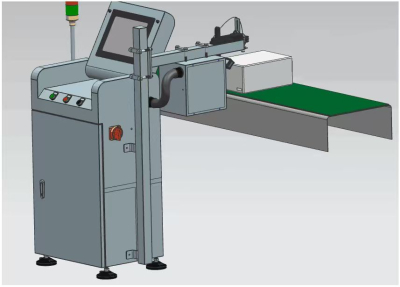
Choose a Beer Level Detection Machine for 72000 BPH
For beer producers running high-speed filling lines, fill-level stability directly affects product consistency, package quality, and downstream efficiency. Our Beer Level Detection Machine is part of the Liquid Level Detection System, model MT-HFX-06, designed for real-time liquid level detection and precise online rejection of nonconforming containers. In its high-performance configuration, the system supports up to 72,000 bottles or cans per hour, so inspection can reliably keep pace with the filler even in demanding beverage production environments.

Liquid Level Detection System at a Glance
The Beer Level Detection Machine is positioned for online inspection after filling, where it identifies containers with high or low liquid levels and removes them before they continue to packaging. The system supports aluminum, tinplate, PE, PET, PP, ceramics, glass, and other common packaging materials. It is specified for products from 200–2000 ml, with container diameters of 30–90 mm and heights of 50–200 mm.
| Item | Specification |
|---|---|
| Project title | Liquid Level Detection System |
| Equipment model | MT-HFX-06 |
| Maximum throughput | Up to 72,000 bottles/cans per hour |
| Inspection scope | Low liquid level detection and auxiliary high liquid level detection |
| Supported materials | Aluminum, tinplate, PE, PET, PP, ceramics, glass |
| Product range | 200–2000 ml; diameter 30–90 mm; height 50–200 mm |
How the Beer Level Detection Machine Works
The Beer Level Detection Machine uses the X-ray penetration principle. As containers move through the inspection area, different liquid levels create different projections at the receiving end. These signal values are compared with user-defined standard parameters. If a container falls outside the acceptable range, the detection system sends a rejection signal and the unqualified container is removed online.

This non-contact inspection method is especially suitable for beer lines because it does not touch the container or interfere with the flow of production. The system uses a soft ray design without a radioisotope source and automatically blocks X-ray emission when idle, supporting safer and more energy-conscious operation over long production shifts.
Performance Features for High-Speed Lines
The Beer Level Detection Machine automatically adapts to different production line speeds for dynamic inspection, so it stays synchronized with the filler without frequent manual adjustment. Its conveyor speed specification is ≤1.6 m/s, with static resolution of ±1 mm and dynamic resolution of ±1.5 mm, although foam and liquid shaking may influence detection accuracy. At an inspection speed of 400 containers per minute, the unqualified container rejection rate is specified at ≥99.99%.
Encoder counting is another important feature. The encoder is installed on the synchronous motor of the chain where defective containers are located, helping the rejection system maintain accuracy even when the line stops or changes speed. For factories with frequent product changeovers or fluctuating conveyor conditions, this tracking method helps keep rejection timing stable and reduces the risk of good containers being removed by mistake.
Installation and Site Requirements
The Beer Level Detection Machine is typically installed downstream of the filling machine, either before or after the inkjet printer. The production line should provide a single-row conveyor chain with at least 2 meters of straight section. A guardrail opening of ≤15 cm should be prepared in the straight section so rejected containers can exit smoothly. Under normal conditions, installation is scheduled for completion within approximately 24 hours.
Key operating requirements include a 220V, 50Hz, single-phase power supply, approximately 1.0 kW total power consumption, 24 VDC control voltage, and 4–12 Pa compressed air. Site planning conditions include an altitude range of 5–3000 meters, ambient temperature of 5°C–40°C, and relative humidity of 50%–65% RH. The factory floor and load-bearing conditions should meet relevant national standards to support stable operation.
Why Beverage Producers Evaluate This System
For beer filling lines, underfilled containers can create compliance and customer satisfaction problems, while overfilled products increase waste and raise unit costs. A Beer Level Detection Machine helps move this quality check from manual sampling to continuous inline inspection, providing a more consistent view of real production performance.
Its stainless steel housing and sealed mainframe design provide resistance to fog and water droplets, making the system suitable for humid production areas around rinsers, fillers, and pasteurizers. The Beer Level Detection Machine is mainly composed of an inspection unit, rejection unit, power distribution cabinet, HMI, electronic assemblies, and mechanical parts. Independent inspection and control cabinets help reduce electromagnetic interference between electronic components, supporting long-term stable operation and reducing unplanned downtime.
FAQs
What does the Beer Level Detection Machine inspect?
It detects low liquid levels as the standard function and high liquid levels as an auxiliary function, then rejects nonconforming containers online according to user-defined thresholds.
What container materials can it support?
The system supports aluminum, tinplate, PE, PET, PP, ceramics, glass, and other common packaging materials within the specified size range.
Where should the machine be installed?
It is installed after the filling machine and may be positioned either before or after the inkjet printer, with at least 2 meters of straight single-row conveyor section reserved for stable inspection and rejection.
Is the inspection contact-free?
Yes. The Beer Level Detection Machine performs non-contact online inspection, so it does not damage containers during normal inspection or affect the product inside.
What accuracy should buyers consider?
The listed static resolution is ±1 mm, and dynamic resolution is ±1.5 mm. Foam and shaking may affect dynamic detection accuracy, so actual performance will depend on the beverage type and line conditions.